Box Bug

Box Bug

Gonocerus acuteangulatus

Daily sighting probability <5% · Rare
at Sierra de Guadarrama National Park

In 3 days ~10% in a week ~30%

7 Verified sightings at Sierra de Guadarrama National Park From 2019 to 2026
131 In all 9 parks
April Best month
☀️ Diurnal When it's spotted

About the Box Bug

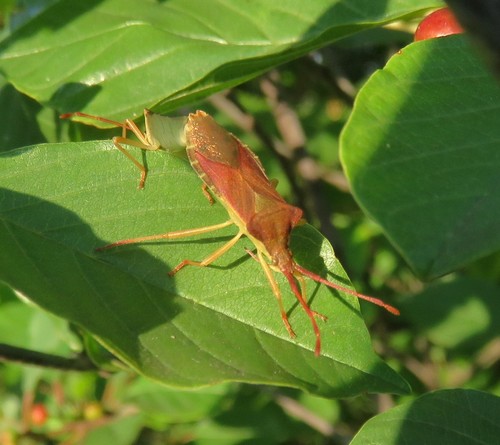
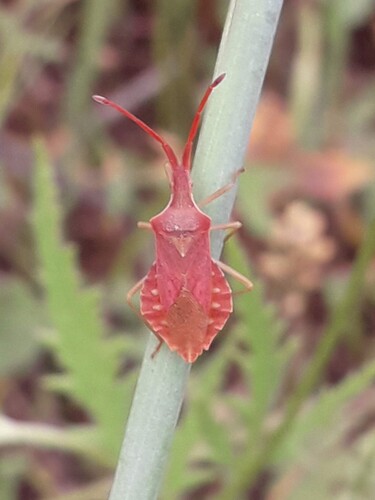
Gonocerus acuteangulatus is a herbivorous species of true bug in the family Coreidae. It is commonly known as the box bug in the UK as it once only occurred in Box Hill in Surrey where it fed on box trees. This species was formally described by the German zoologist Johann Goeze in 1778, under the name Cimex acuteangulatus.

This species commonly occurs throughout the Mediterranean region and extends to Central Asia and parts of northwestern Europe. These heat-loving bugs inhabit mainly dry and warm, south-exposed environments, bushes and forest edges with shrubs that bear berries and small trees of various families, especially Buxaceae and Rhamnaceae, as well as Rosa canina and Crataegus species (Rosaceae) or Lonicera xylosteum (Caprifoliaceae).

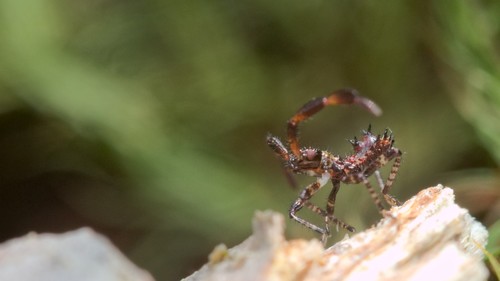
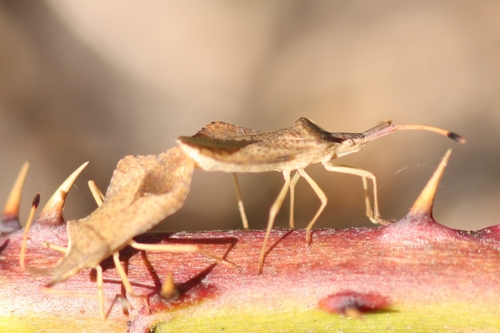
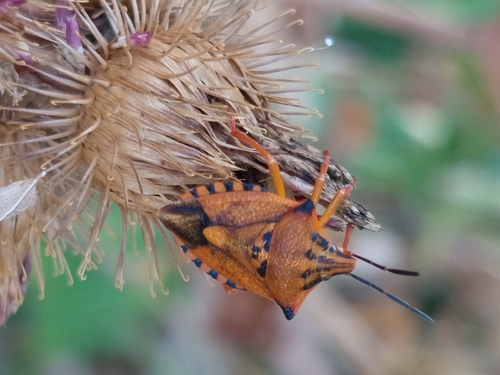
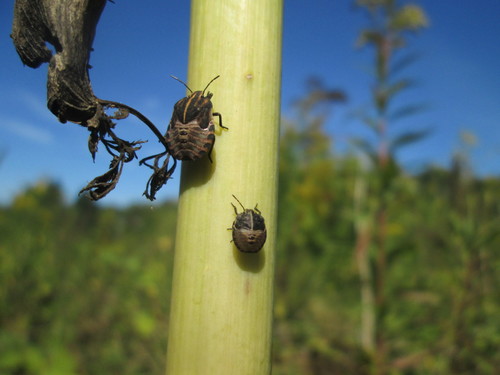
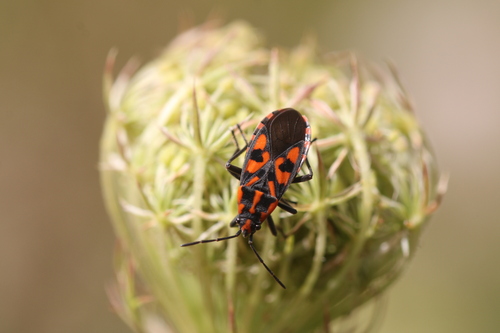
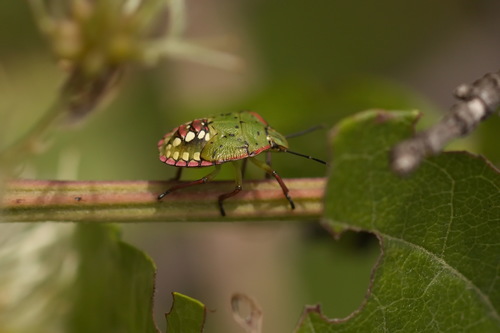
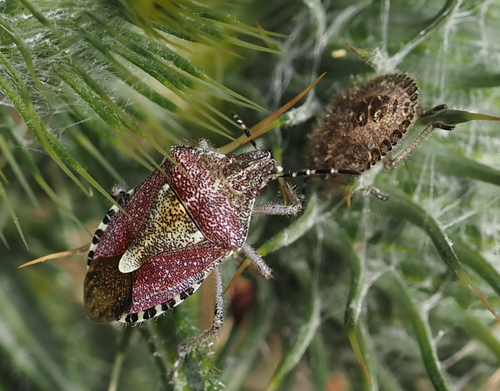
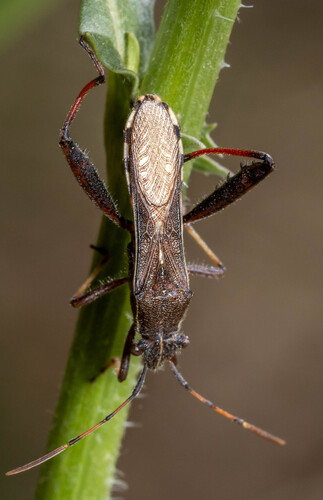
Gonocerus acuteangulatus is a medium-sized insect, between 11 and 14 mm long as an adult. These bugs are speckled reddish-brown with a slightly expanded abdomen. The nymphs have a green abdomen. This species is rather similar to Coreus marginatus, but it shows a narrower abdomen and has sharper lateral margins of the pronotum (hence the Latin species name acuteangulatus).... Wikipedia →

Global Distribution

Parks Where Found

# Park Country Daily sighting probability
1 Cévennes National Park 🇫🇷 France
~10%
2 Sierra Nevada National Park 🇪🇸 Spain
~10%
3 Aigüestortes National Park 🇪🇸 Spain
~10%
4 Triglav National Park 🇸🇮 Slovenia
~10%
5 Bavarian Forest National Park 🇩🇪 Germany
~10%
6 Fertő-Hanság National Park 🇭🇺 Hungary
~10%
7 Wadden Sea National Park 🇩🇪 Germany
~10%
8 Pyrénées National Park 🇫🇷 France
<5%
9 Sierra de Guadarrama National Park 🇪🇸 Spain
<5%

Cities Where Found

# City Country Daily sighting probability
1 Lyon 🇫🇷 France
~10%
2 Vienna 🇦🇹 Austria
~10%
3 Paris 🇫🇷 France
~10%
4 Essen 🇩🇪 Germany
~10%
5 Brussels 🇧🇪 Belgium
~10%
6 London 🇬🇧 United Kingdom
~10%
7 Hamburg 🇩🇪 Germany
~10%
8 Cologne 🇩🇪 Germany
~10%
9 Kyiv 🇺🇦 Ukraine
~10%
10 Kharkiv 🇺🇦 Ukraine
~10%

Before you go

What are the chances of seeing a Box Bug in Sierra de Guadarrama National Park?

Rare

Under 5% of wildlife watchers report a Box Bug sighting in Sierra de Guadarrama National Park on a given day, based on 7 verified sightings from GBIF citizen-science data from 2019 to 2026. It is the 416th most-seen of the 597 insects we can rate there. Over three days the chance rises to about 10%, and over a week to about 30%, if each day is a fresh chance.

When is the best time to see a Box Bug in Sierra de Guadarrama National Park?

March and April

In those months about 10% of wildlife watchers report a Box Bug in Sierra de Guadarrama National Park on a given day, against under 5% in May to February, the lowest months.

What time of day is best to see a Box Bug?

Between 1 and 4 pm

Across all the parks we cover, that three-hour window holds the most Box Bug sightings with a recorded time, and about 8 in 10 of them come between 6 am and 6 pm: it is a daytime animal.

Which relatives of the Box Bug live in Sierra de Guadarrama National Park?

Same family: Coreidae

The closest relatives of the Box Bug that you can see in Sierra de Guadarrama National Park (family Coreidae, Leaf-footed Bugs) are Western Conifer Seed Bug (about 10%), Dock Bug (about 10%) and Rhombic Leatherbug (about 10%), with each one's daily chance of a sighting.

Where does the Box Bug sighting chance come from?

GBIF citizen-science records

It is estimated from how often the Box Bug is recorded against all the insects logged in Sierra de Guadarrama National Park (7 verified sightings from 2019 to 2026), calibrated against known sighting rates. Figures are rounded to the nearest 10% because citizen-science data supports honest approximations, not decimals, and months with records from fewer than five people show "—". How it works.

← Back to Sierra de Guadarrama National Park