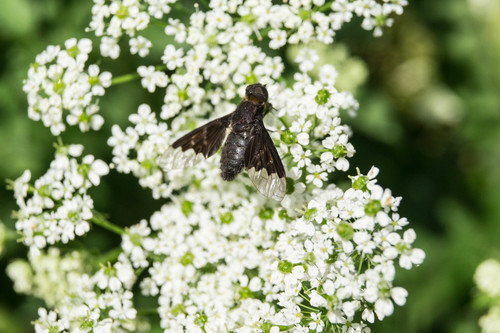
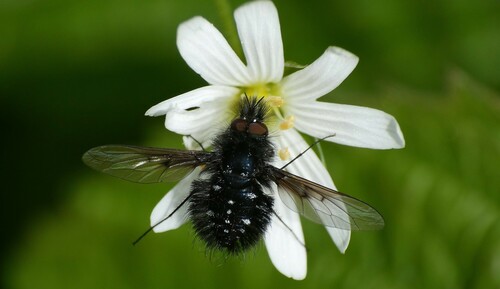
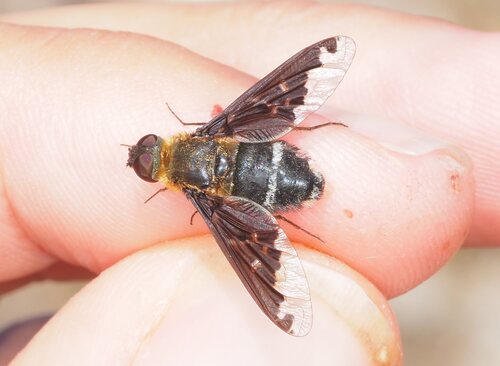
Broad Centurion Fly

Broad Centurion Fly

Chloromyia formosa

Daily sighting probability ~10% · With luck
at Sierra de Guadarrama National Park

In 3 days ~10% in a week ~30%

14 Verified sightings at Sierra de Guadarrama National Park From 2019 to 2026
79 In all 5 parks
May Best month
🌅 Crepuscular When it's spotted

About the Broad Centurion Fly

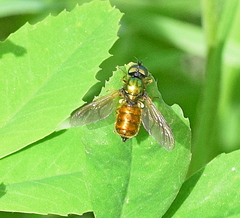
Chloromyia formosa is a species of soldier flies belonging to the family Stratiomyidae. Another name for it is Broad centurion. This species is present in most of Europe (Austria, Belgium, Bulgaria, Czech Republic, Denmark, Finland, France, Germany, Greece, Ireland, Italy, Luxembourg, Netherlands, Norway, Poland, Russia, Spain, Sweden, Switzerland, United Kingdom), in the Near East, in the Nearctic realm, and in North Africa.

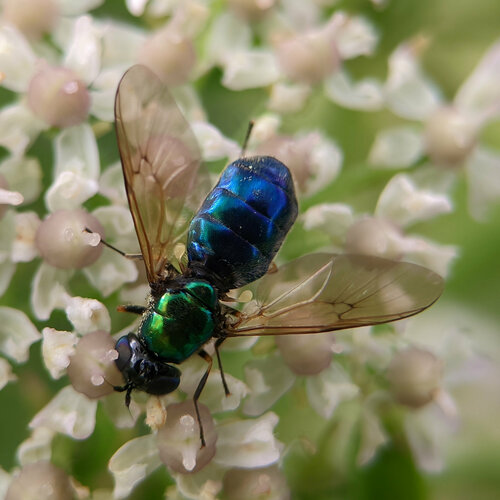
These flies mainly inhabit wooded areas, hedge rows, moist forests, wet meadows, parks and gardens. Chloromyia formosa can reach a length of 7.3–9 millimetres (0.29–0.35 in) and a wing length of 6–7 millimetres (0.24–0.28 in). Their body is elongated, the thorax is metallic green, the head is hemispherical without hair, while the eyes are quite hairy. Antennae are short, the first antennal segment is longer than the second. The legs are black, only the knees are yellow. The abdomen is flattened and broad.

An evident dimorphism exists between the males and the females of this species. In females the abdomen is blue-green with a purple sheen (depending on the light), while in males it shows a copper-green sheen... Wikipedia →
Global Distribution

Parks Where Found

# Park Country Daily sighting probability
1 Cévennes National Park 🇫🇷 France
~10%
2 Fertő-Hanság National Park 🇭🇺 Hungary
~10%
3 Pyrénées National Park 🇫🇷 France
~10%
4 Sierra de Guadarrama National Park 🇪🇸 Spain
~10%
5 Wadden Sea National Park 🇩🇪 Germany
~10%

Cities Where Found

# City Country Daily sighting probability
1 Turin 🇮🇹 Italy
~20%
2 Liverpool 🇬🇧 United Kingdom
~20%
3 London 🇬🇧 United Kingdom
~10%
4 Birmingham 🇬🇧 United Kingdom
~10%
5 Rome 🇮🇹 Italy
~10%
6 Algiers 🇩🇿 Algeria
~10%
7 Warsaw 🇵🇱 Poland
~10%
8 Naples 🇮🇹 Italy
~10%
9 Lyon 🇫🇷 France
~10%
10 Milan 🇮🇹 Italy
~10%

Before you go

What are the chances of seeing a Broad Centurion Fly in Sierra de Guadarrama National Park?

With luck

About 10% of wildlife watchers report a Broad Centurion Fly sighting in Sierra de Guadarrama National Park on a given day, based on 14 verified sightings from GBIF citizen-science data from 2019 to 2026. It is the 281st most-seen of the 597 insects we can rate there. Over three days the chance rises to about 10%, and over a week to about 30%, if each day is a fresh chance.

When is the best time to see a Broad Centurion Fly in Sierra de Guadarrama National Park?

May and June

In those months about 10% of wildlife watchers report a Broad Centurion Fly in Sierra de Guadarrama National Park on a given day, against under 5% in July to April, the lowest months.

What time of day is best to see a Broad Centurion Fly?

Between 5 and 8 pm

Across all the parks we cover, that three-hour window holds the most Broad Centurion Fly sightings with a recorded time, and about 7 in 10 of them come between 6 am and 6 pm: it is most active around dawn and dusk.

Is Sierra de Guadarrama National Park the best place to see a Broad Centurion Fly?

Among the best

Of the 5 parks where we can rate Broad Centurion Fly sightings, Sierra de Guadarrama National Park ranks 4th at about 10%, level with the leaders once rounded. The best odds are in Cévennes National Park (France, about 10%), Fertő-Hanság National Park (Hungary, about 10%) and Pyrénées National Park (France, about 10%).

Which relatives of the Broad Centurion Fly live in Sierra de Guadarrama National Park?

Same order: Diptera

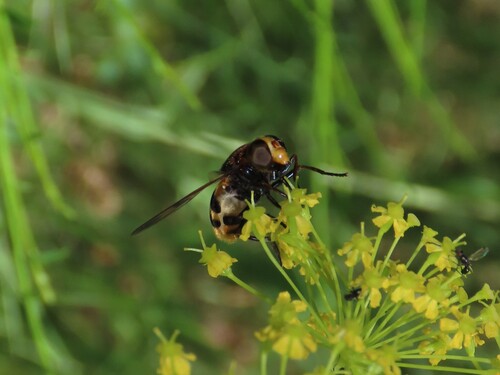
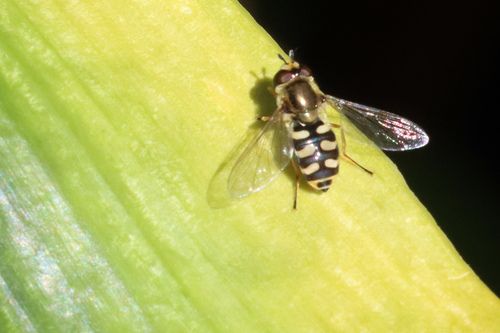
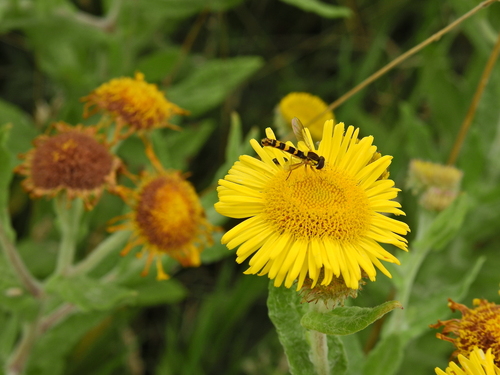
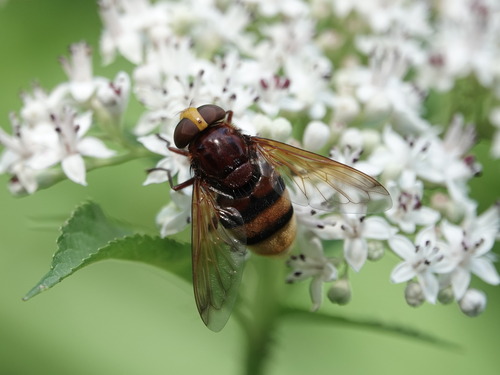
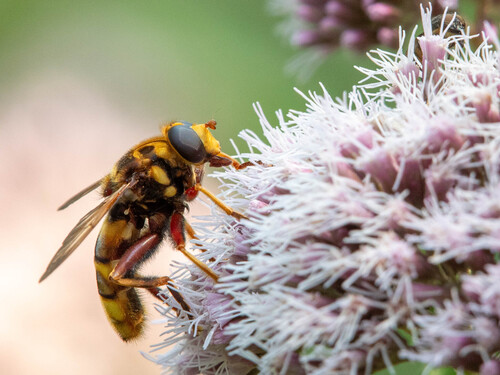
The closest relatives of the Broad Centurion Fly that you can see in Sierra de Guadarrama National Park (order Diptera, Flies) are Common Drone Fly (about 10%), Volucella elegans (about 10%) and Tapered Drone Fly (about 10%), with each one's daily chance of a sighting.

Where does the Broad Centurion Fly sighting chance come from?

GBIF citizen-science records

It is estimated from how often the Broad Centurion Fly is recorded against all the insects logged in Sierra de Guadarrama National Park (14 verified sightings from 2019 to 2026), calibrated against known sighting rates. Figures are rounded to the nearest 10% because citizen-science data supports honest approximations, not decimals, and months with records from fewer than five people show "—". How it works.

← Back to Sierra de Guadarrama National Park