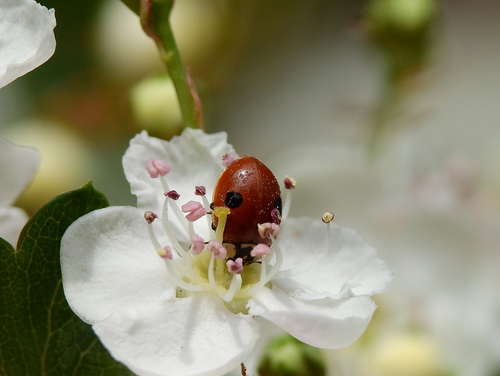
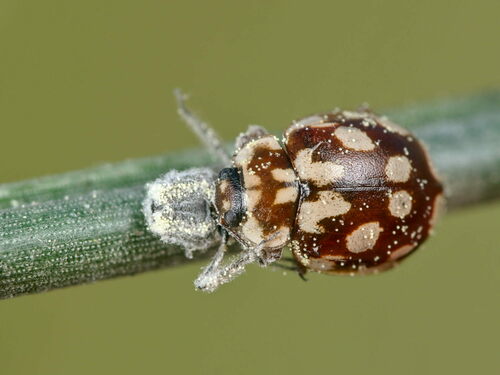
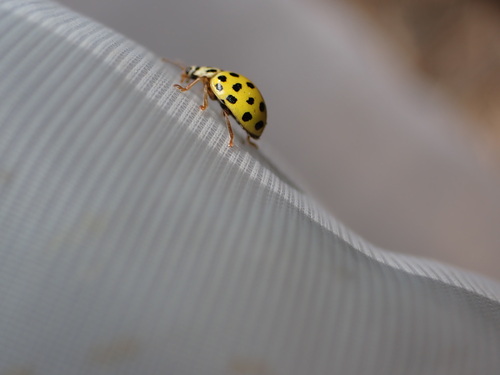
Heather Ladybird

Heather Ladybird

Chilocorus bipustulatus

Daily sighting probability <5% · Rare
at Sierra de Guadarrama National Park

In 3 days ~10% in a week ~30%

11 Verified sightings at Sierra de Guadarrama National Park From 2019 to 2026
18 In all 2 parks
February Best month
☀️ Diurnal When it's spotted

About the Heather Ladybird

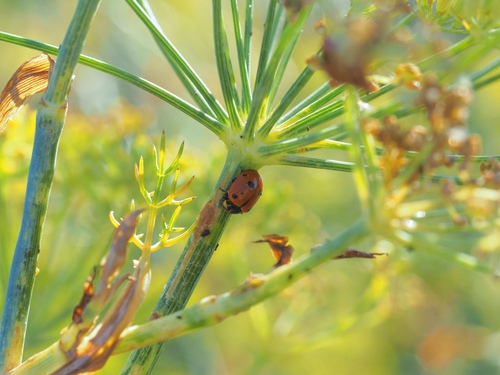
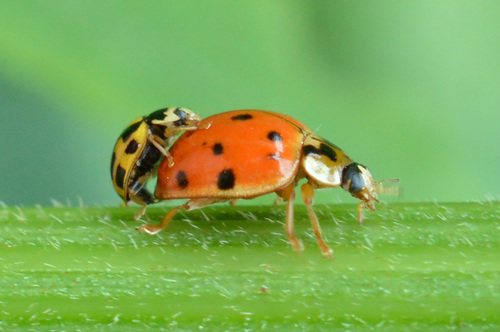
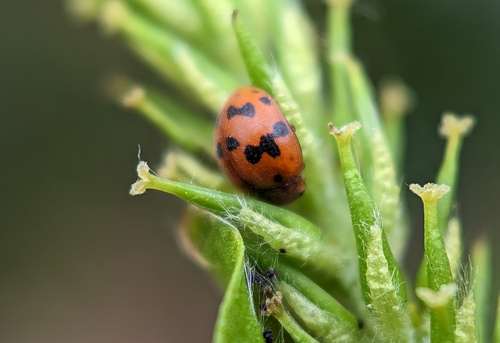
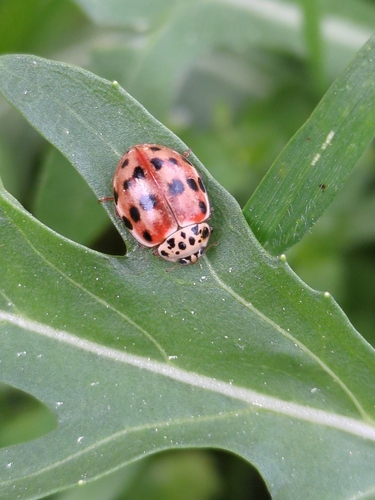
Chilocorus bipustulatus, the heather ladybird, is a beetle species belonging to the family Coccinellidae. These beetles are found in most of the Palearctic realm, (Europe, North Africa, Asia north of the Himalayan foothills, and northern and central Arabian Peninsula),

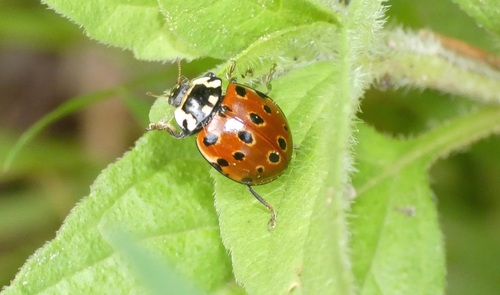
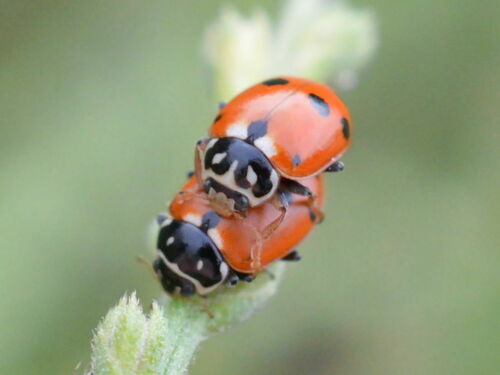
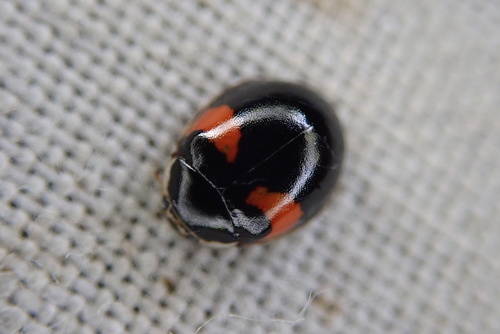
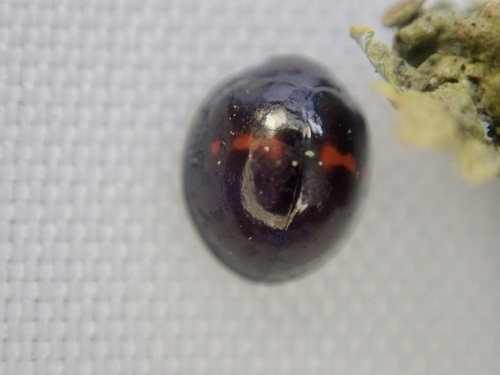
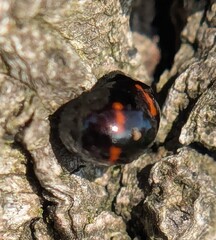
and has been introduced to tropical Africa, Hawaii, and North America. The elytra of this small beetle are a shiny brown with two reddish-orange spots on each elytron (hence the Latin word bipustulatus, meaning two-blistered). Sometime three spots run in an horizontal line and join into two larger stains.

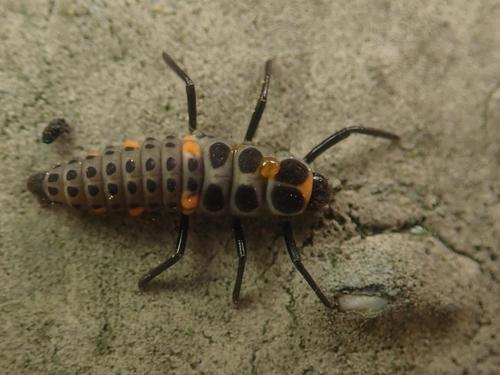
The mature larva is about 5 millimetres (0.20 in) long. Wintering occurs as an adult. The adults grow up to 3–5 millimetres (0.12–0.20 in) long and can be encountered from May through October. In Europe it occurs in fruit gardens, pine forests, and stone quarries. In Poland it was found on grasses, low vegetation and bushes, on heath lands, under flakes of bark on pines and fruit trees, occasionally in leaf litter and in moss

Heather ladybirds feed on aphids and scale insects (mainly belonging to the family Coccidae and Diaspididae) and is often introduced as a biological control in cases of infestation. Wikipedia →
Global Distribution

Parks Where Found

# Park Country Daily sighting probability
1 Sierra Nevada National Park 🇪🇸 Spain
~10%
2 Sierra de Guadarrama National Park 🇪🇸 Spain
<5%

Cities Where Found

# City Country Daily sighting probability
1 Istanbul 🇹🇷 Turkey
~10%
2 Bucharest 🇷🇴 Romania
~10%
3 Rome 🇮🇹 Italy
~10%
4 Lyon 🇫🇷 France
~10%
5 Tel Aviv 🇮🇱 Israel
~10%
6 Athens 🇬🇷 Greece
~10%
7 Warsaw 🇵🇱 Poland
~10%
8 Vienna 🇦🇹 Austria
~10%
9 Paris 🇫🇷 France
~10%
10 Sacramento 🇺🇸 United States
<5%

Before you go

What are the chances of seeing a Heather Ladybird in Sierra de Guadarrama National Park?

Rare

Under 5% of wildlife watchers report a Heather Ladybird sighting in Sierra de Guadarrama National Park on a given day, based on 11 verified sightings from GBIF citizen-science data from 2019 to 2026. It is the 300th most-seen of the 597 insects we can rate there. Over three days the chance rises to about 10%, and over a week to about 30%, if each day is a fresh chance.

When is the best time to see a Heather Ladybird in Sierra de Guadarrama National Park?

February–April, August and November–December

In those months about 10% of wildlife watchers report a Heather Ladybird in Sierra de Guadarrama National Park on a given day, against under 5% in January, May–July and September–October, the lowest months.

What time of day is best to see a Heather Ladybird?

Between noon and 3 pm

Across all the parks we cover, that three-hour window holds the most Heather Ladybird sightings with a recorded time, and about 8 in 10 of them come between 6 am and 6 pm: it is a daytime animal.

Is Sierra de Guadarrama National Park the best place to see a Heather Ladybird?

2nd of 2

Of the 2 parks where we can rate Heather Ladybird sightings, Sierra de Guadarrama National Park ranks 2nd at under 5%. The best odds are in Sierra Nevada National Park (Spain, about 10%).

Which relatives of the Heather Ladybird live in Sierra de Guadarrama National Park?

Same family: Coccinellidae

The closest relatives of the Heather Ladybird that you can see in Sierra de Guadarrama National Park (family Coccinellidae, Lady Beetles) are Seven-Spotted Lady Beetle (about 20%), Eyed Ladybird Beetle (about 10%) and Variegated Lady Beetle (about 10%), with each one's daily chance of a sighting.

Where does the Heather Ladybird sighting chance come from?

GBIF citizen-science records

It is estimated from how often the Heather Ladybird is recorded against all the insects logged in Sierra de Guadarrama National Park (11 verified sightings from 2019 to 2026), calibrated against known sighting rates. Figures are rounded to the nearest 10% because citizen-science data supports honest approximations, not decimals, and months with records from fewer than five people show "—". How it works.

← Back to Sierra de Guadarrama National Park