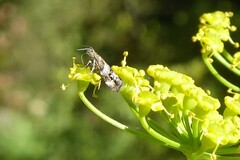
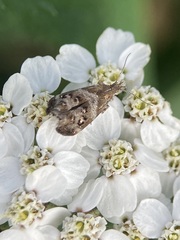
Small Thistle Moth

Small Thistle Moth

Tebenna micalis

Daily sighting probability <5% · Rare
at Sierra de Guadarrama National Park

In 3 days ~10% in a week ~30%

8 Verified sightings at Sierra de Guadarrama National Park From 2019 to 2026
26 In all 3 parks
June Best month
☀️ Diurnal When it's spotted

About the Small Thistle Moth

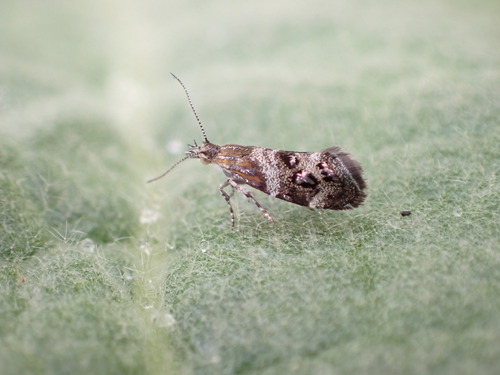
Tebenna micalis, also known as the small thistle moth, is a species of moth in the family Choreutidae found worldwide. It was first described by the German Bohemian entomologist, Joseph Johann Mann in 1857. The wingspan is about 13 millimetres (0.51 in). It is similar in appearance to the Nearctic Tebenna gnaphaliella and can be found between June and August. It comes to light and can be found during the day on the flowers of the larval foodplant.

The larvae feed on Asteraceae within a blotch, sometimes leaving the mine and starting another. Later instars can live freely in a web on the leaf. Larval foodplants recorded include, on common fleabane (Pulicaria dysenterica) in the United Kingdom. In Australia on capeweed (Arctotheca calendula), spear thistle (Cirsium vulgare), horseweed (Erigeron canadensis), cotton thistle (Onopordum acanthium) and golden everlasting (Xerochrysum bracteatum); and in Réunion on globe artichoke (Cynara scolymus).

Larvae pupate on the underside of a leaf of the host plant, in a spindle-shaped cocoon. In Europe it is found south of the line Ireland, Great Britain, France and Slovakia. In Britain it is an immigrant that... Wikipedia →
Global Distribution

Parks Where Found

# Park Country Daily sighting probability
1 Blue Mountains National Park 🇦🇺 Australia
~10%
2 Addo Elephant National Park 🇿🇦 South Africa
~10%
3 Sierra de Guadarrama National Park 🇪🇸 Spain
<5%

Cities Where Found

# City Country Daily sighting probability
1 Melbourne 🇦🇺 Australia
~10%
2 Auckland 🇳🇿 New Zealand
~10%
3 Madrid 🇪🇸 Spain
<5%
4 Lisbon 🇵🇹 Portugal
<5%

Before you go

What are the chances of seeing a Small Thistle Moth in Sierra de Guadarrama National Park?

Rare

Under 5% of wildlife watchers report a Small Thistle Moth sighting in Sierra de Guadarrama National Park on a given day, based on 8 verified sightings from GBIF citizen-science data from 2019 to 2026. It is the 388th most-seen of the 597 insects we can rate there. Over three days the chance rises to about 10%, and over a week to about 30%, if each day is a fresh chance.

When is the best time to see a Small Thistle Moth in Sierra de Guadarrama National Park?

May and June

In those months about 10% of wildlife watchers report a Small Thistle Moth in Sierra de Guadarrama National Park on a given day, against under 5% in July to April, the lowest months.

What time of day is best to see a Small Thistle Moth?

Between 8 and 11 am

Across all the parks we cover, that three-hour window holds the most Small Thistle Moth sightings with a recorded time, and about 7 in 10 of them come between 6 am and 6 pm: it is a daytime animal.

Is Sierra de Guadarrama National Park the best place to see a Small Thistle Moth?

3rd of 3

Of the 3 parks where we can rate Small Thistle Moth sightings, Sierra de Guadarrama National Park ranks 3rd at under 5%. The best odds are in Blue Mountains National Park (Australia, about 10%) and Addo Elephant National Park (South Africa, about 10%).

Which relatives of the Small Thistle Moth live in Sierra de Guadarrama National Park?

Same order: Lepidoptera

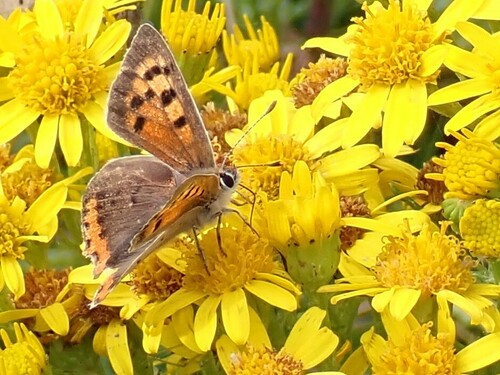
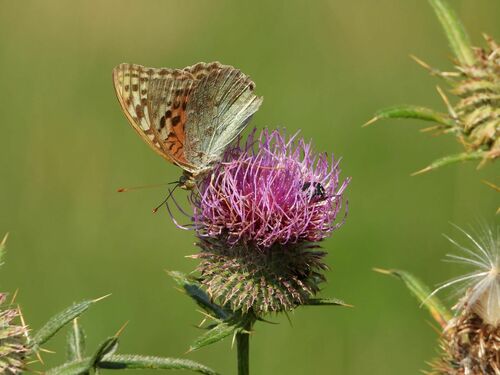
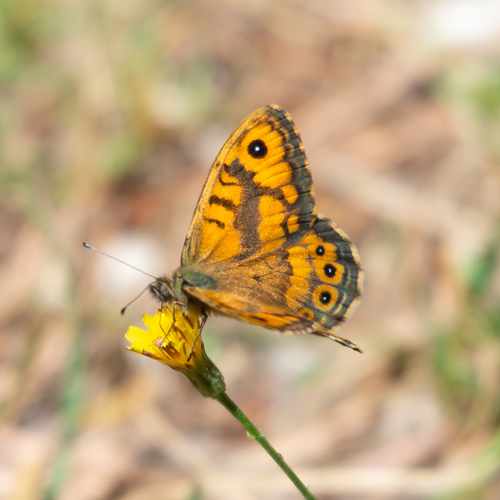
The closest relatives of the Small Thistle Moth that you can see in Sierra de Guadarrama National Park (order Lepidoptera, Butterflies and Moths) are Queen Of Spain Fritillary (about 40%), Small Copper (about 30%) and Speckled Wood (about 30%), with each one's daily chance of a sighting.

Where does the Small Thistle Moth sighting chance come from?

GBIF citizen-science records

It is estimated from how often the Small Thistle Moth is recorded against all the insects logged in Sierra de Guadarrama National Park (8 verified sightings from 2019 to 2026), calibrated against known sighting rates. Figures are rounded to the nearest 10% because citizen-science data supports honest approximations, not decimals, and months with records from fewer than five people show "—". How it works.

← Back to Sierra de Guadarrama National Park