Southern Skimmer

Southern Skimmer

Orthetrum brunneum

Daily sighting probability <5% · Rare
at Sierra de Guadarrama National Park

In 3 days ~10% in a week ~30%

11 Verified sightings at Sierra de Guadarrama National Park From 2019 to 2026
59 In all 3 parks
July Best month
☀️ Diurnal When it's spotted

About the Southern Skimmer

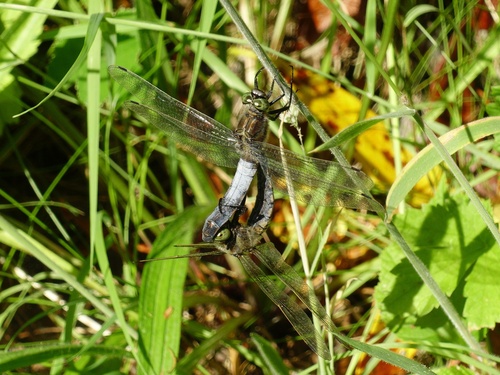
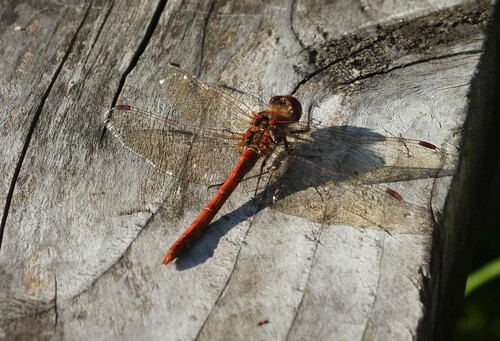
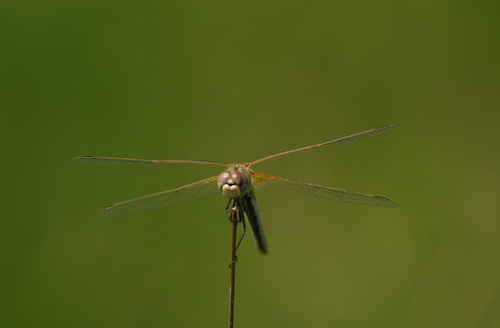
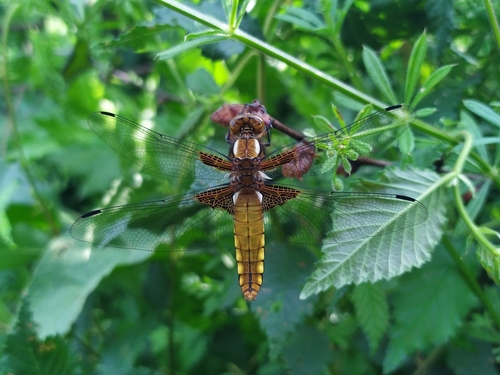
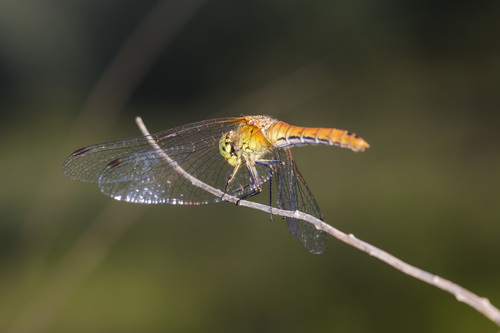
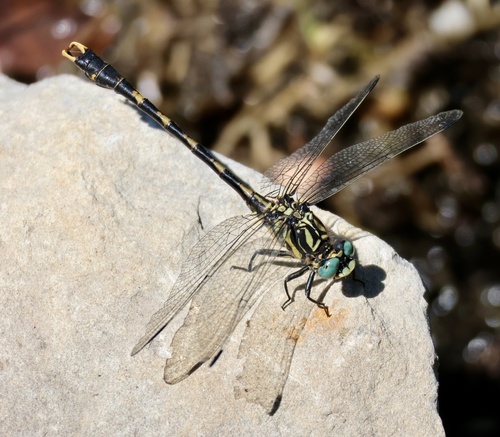
Orthetrum brunneum, the southern skimmer, is a species of 'skimmers' belonging to the family Libellulidae. This 'skimmer' is present in most of Europe and the range extends to Mongolia and North Africa. It occurs in Afghanistan, Albania, Algeria, Andorra, Armenia, Austria, Belarus, Belgium, Bosnia and Herzegovina, Bulgaria, China, Croatia, Cyprus, Czech Republic, Egypt, France, Germany, Greece, Hungary, Italy, Latvia, Liechtenstein, Lithuania, Luxembourg, Republic of Macedonia, Malta, Moldova, Montenegro, Netherlands, Poland, Portugal, Romania, Russia, Serbia; Slovakia, Slovenia, Spain, Switzerland, Turkey, and Ukraine.

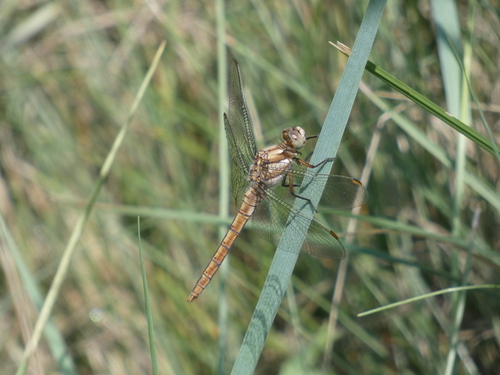
This species mainly prefers small streams, canals and ditches, with shallow, fast warming water. The adults grow up to 40–45 millimetres (1.6–1.8 in) long. Their dimensions on average are larger than in Orthetrum coerulescens.

The thorax and the abdomen are pale blue in males, yellowish-brown or greyish-brown in females. Young males are... Wikipedia →
Global Distribution

Parks Where Found

# Park Country Daily sighting probability
1 Cévennes National Park 🇫🇷 France
~10%
2 Sierra de Guadarrama National Park 🇪🇸 Spain
<5%
3 Pyrénées National Park 🇫🇷 France
<5%

Cities Where Found

# City Country Daily sighting probability
1 Rostov-on-Don 🇷🇺 Russia
~20%
2 Milan 🇮🇹 Italy
~10%
3 Budapest 🇭🇺 Hungary
~10%
4 Rome 🇮🇹 Italy
~10%
5 Athens 🇬🇷 Greece
~10%
6 Madrid 🇪🇸 Spain
<5%
7 Istanbul 🇹🇷 Turkey
<5%
8 Barcelona 🇪🇸 Spain
<5%
9 Vienna 🇦🇹 Austria
<5%
10 Paris 🇫🇷 France
<5%

Before you go

What are the chances of seeing a Southern Skimmer in Sierra de Guadarrama National Park?

Rare

Under 5% of wildlife watchers report a Southern Skimmer sighting in Sierra de Guadarrama National Park on a given day, based on 11 verified sightings from GBIF citizen-science data from 2019 to 2026. It is the 300th most-seen of the 597 insects we can rate there. Over three days the chance rises to about 10%, and over a week to about 30%, if each day is a fresh chance.

When is the best time to see a Southern Skimmer in Sierra de Guadarrama National Park?

June and July

In those months about 10% of wildlife watchers report a Southern Skimmer in Sierra de Guadarrama National Park on a given day, against under 5% in August to May, the lowest months. Those are among Sierra de Guadarrama National Park's driest months, with about 45 mm of rain a month against 110 mm in November.

What time of day is best to see a Southern Skimmer?

Between noon and 3 pm

Across all the parks we cover, that three-hour window holds the most Southern Skimmer sightings with a recorded time, and about 9 in 10 of them come between 6 am and 6 pm: it is a daytime animal.

Is Sierra de Guadarrama National Park the best place to see a Southern Skimmer?

2nd of 3

Of the 3 parks where we can rate Southern Skimmer sightings, Sierra de Guadarrama National Park ranks 2nd at under 5%. The best odds are in Cévennes National Park (France, about 10%).

Which relatives of the Southern Skimmer live in Sierra de Guadarrama National Park?

Same genus: Orthetrum

The closest relatives of the Southern Skimmer that you can see in Sierra de Guadarrama National Park (genus Orthetrum) are Keeled Skimmer (about 10%) and Black-Tailed Skimmer (about 10%), with each one's daily chance of a sighting.

Where does the Southern Skimmer sighting chance come from?

GBIF citizen-science records

It is estimated from how often the Southern Skimmer is recorded against all the insects logged in Sierra de Guadarrama National Park (11 verified sightings from 2019 to 2026), calibrated against known sighting rates. Figures are rounded to the nearest 10% because citizen-science data supports honest approximations, not decimals, and months with records from fewer than five people show "—". How it works.

← Back to Sierra de Guadarrama National Park