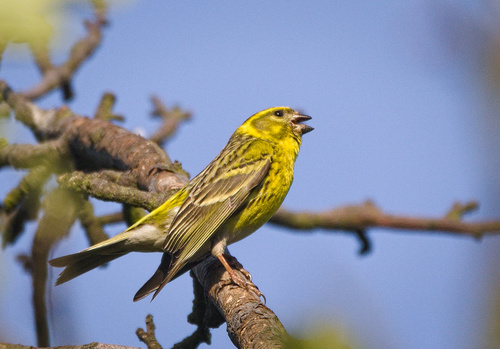
Alpine Accentor

Alpine Accentor

Prunella collaris

Silhouette: Matej Frantisek Calfa · PhyloPic

LCLeast ConcernNTVUENCR
Daily sighting probability <5% · Rare
at Sierra Nevada National Park

In 3 days ~10% in a week ~30%

145 Verified sightings at Sierra Nevada National Park From 2019 to 2026
2,407 In all 15 parks
October Best month
☀️ Diurnal When it's spotted

About the Alpine Accentor

The alpine accentor (Prunella collaris) is a small passerine bird in the family Prunellidae, which is native to Eurasia and North Africa. The Alpine accentor was described by the Italian naturalist Giovanni Antonio Scopoli in 1769. He coined the binomial name Sturnus collaris and specified the type locality as the Carinthia region of southern Austria. The specific epithet is from the Latin collaris "of the neck". This species is now placed in the genus Prunella that was introduced by the French ornithologist Louis Pierre Vieillot in 1816. The Alpine accentor, along with the Altai accentor is sometimes separated from the other accentors, into the genus Laiscopus.

The word "accentor" is from post-classical Latin and means a person who sings with another. The genus name Prunella is from the German Braunelle, "dunnock", a diminutive of braun, "brown". Nine subspecies are recognised: Wikipedia →

Sounds

Call0:08

France · 2026

© Chèvremont Fabian · XC1179938 · CC BY-NC-SA 4.0

Alarm call0:21

France · 2022

© Stanislas Wroza · XC730560 · CC BY-NC-SA 4.0

Flight call0:23

Spain · 2021

© Marcel Gil Velasco · XC625476 · CC BY-NC-SA 4.0

Global Distribution

Parks Where Found

# Park Country Daily sighting probability
1 Picos de Europa National Park 🇪🇸 Spain
~30%
2 Taroko National Park 🇹🇼 Taiwan
~20%
3 Tatra National Park 🇸🇰 Slovakia
~20%
4 Ordesa y Monte Perdido National Park 🇪🇸 Spain
~20%
5 Langtang National Park 🇳🇵 Nepal
~10%
6 Vanoise National Park 🇫🇷 France
~10%
7 Ecrins National Park 🇫🇷 France
~10%
8 Triglav National Park 🇸🇮 Slovenia
~10%
9 Pyrénées National Park 🇫🇷 France
~10%
10 Hohe Tauern National Park 🇦🇹 Austria
~10%
11 Aigüestortes National Park 🇪🇸 Spain
~10%
12 Sierra Nevada National Park 🇪🇸 Spain
<5%
13 Gobi Gurvansaikhan National Park 🇲🇳 Mongolia
<5%
14 Cévennes National Park 🇫🇷 France
<5%
15 Sierra de Guadarrama National Park 🇪🇸 Spain
<5%

Cities Where Found

# City Country Daily sighting probability
1 Seoul 🇰🇷 South Korea
<5%

Before you go

What are the chances of seeing an Alpine Accentor in Sierra Nevada National Park?

Rare

Under 5% of wildlife watchers report an Alpine Accentor sighting in Sierra Nevada National Park on a given day, based on 145 verified sightings from GBIF citizen-science data from 2019 to 2026. It is the 99th most-seen of the 153 birds we can rate there. Over three days the chance rises to about 10%, and over a week to about 30%, if each day is a fresh chance.

When is the best time to see an Alpine Accentor in Sierra Nevada National Park?

January, July and September–October

In those months about 10% of wildlife watchers report an Alpine Accentor in Sierra Nevada National Park on a given day, against under 5% in February–June, August and November–December, the lowest months.

What time of day is best to see an Alpine Accentor?

Between 11 am and 2 pm

Across all the parks we cover, that three-hour window holds the most Alpine Accentor sightings with a recorded time, and about 8 in 10 of them come between 6 am and 6 pm: it is a daytime animal.

Is Sierra Nevada National Park the best place to see an Alpine Accentor?

12th of 15

Of the 15 parks where we can rate Alpine Accentor sightings, Sierra Nevada National Park ranks 12th at under 5%. The best odds are in Picos de Europa National Park (Spain, about 30%), Taroko National Park (Taiwan, about 20%) and Tatra National Park (Slovakia, about 20%).

Where does the Alpine Accentor sighting chance come from?

GBIF citizen-science records

It is estimated from how often the Alpine Accentor is recorded against all the birds logged in Sierra Nevada National Park (145 verified sightings from 2019 to 2026), calibrated against known sighting rates. Figures are rounded to the nearest 10% because citizen-science data supports honest approximations, not decimals, and months with records from fewer than five people show "—". How it works.

← Back to Sierra Nevada National Park