Hairy Rose Beetle

Hairy Rose Beetle

Tropinota squalida

Daily sighting probability ~10% · With luck
at Sierra Nevada National Park

In 3 days ~30% in a week ~60%

9 Verified sightings at Sierra Nevada National Park From 2019 to 2026
49 In all 5 parks
March Best month
☀️ Diurnal When it's spotted

About the Hairy Rose Beetle

Tropinota squalida is a species of beetle belonging to the family Scarabaeidae, subfamily Cetoniinae. These beetles are mainly found in France, Italy, Greece, Portugal, former Yugoslavia, Spain, in the Near East and in North Africa. They are not present in North or South America.

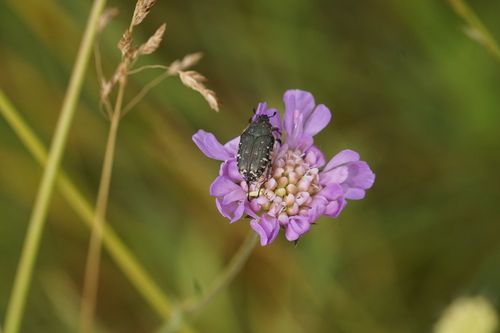
Larvae feed on roots, while the adults can be encountered from May through July feeding on flowers. They are 10–15 millimetres (0.39–0.59 in) long. The adults are considered an agricultural pest in many zones. They eat the flowers of a variety domestic plants, notably fruit trees, apple, pear, cherries, quince but also strawberries and flowers such as roses and irises. They will eat the pistil, stamens and petals leaving no possibility for fruit production. After feeding they will return to the soil in the area and come out again within a few days if the temperature is warm enough and continue feeding.

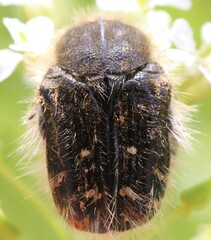
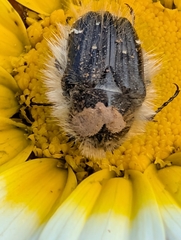
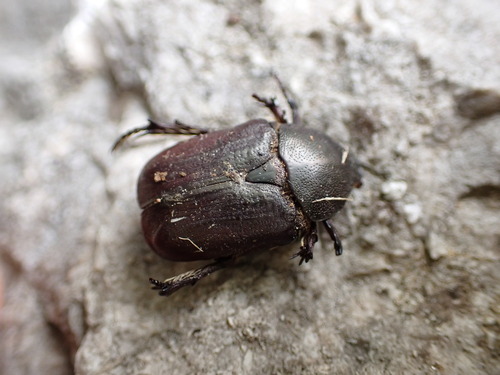
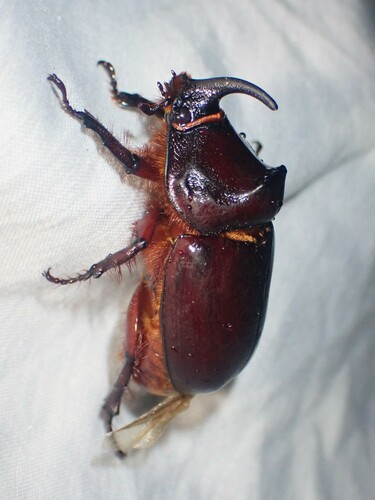
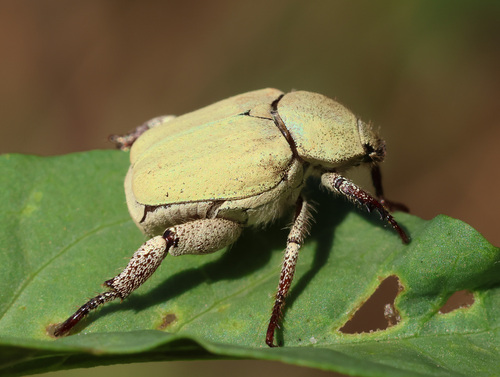
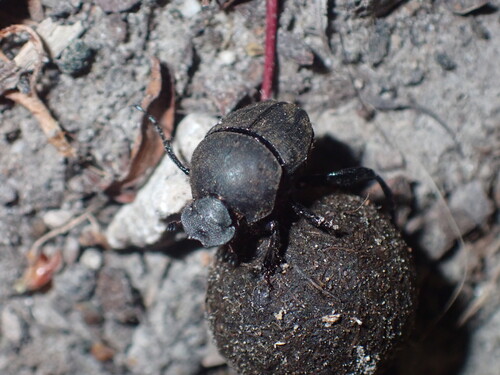
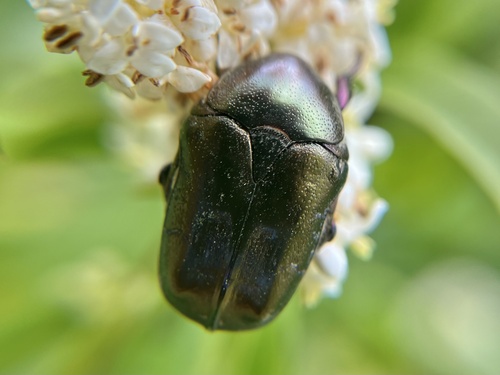
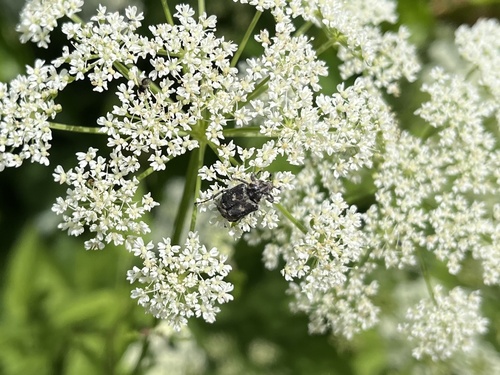
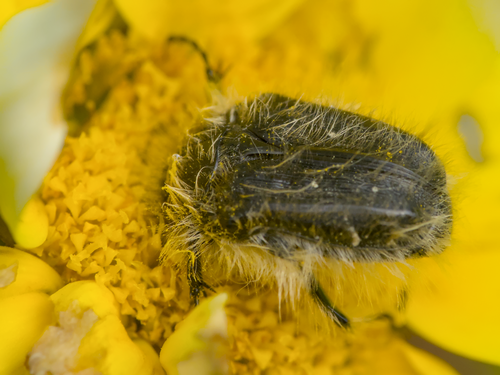
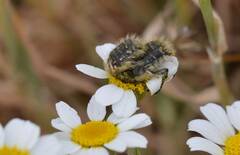
Head, scutellum and elytra are dark-brown, with a thick and long tawny hair on elytra and abdomen. Elytra show two series of white spots on the sides of the central hull. Scutellun is rounded and hairy, but glabrous in the posterior. The fifth humeral slot is bifurcated. Wikipedia →
Global Distribution

Parks Where Found

# Park Country Daily sighting probability
1 Sierra Nevada National Park 🇪🇸 Spain
~10%
2 Doñana National Park 🇪🇸 Spain
~10%
3 Cévennes National Park 🇫🇷 France
~10%
4 Sierra de Guadarrama National Park 🇪🇸 Spain
<5%
5 Pyrénées National Park 🇫🇷 France
<5%

Cities Where Found

# City Country Daily sighting probability
1 Tunis 🇹🇳 Tunisia
~30%
2 Algiers 🇩🇿 Algeria
~20%
3 Naples 🇮🇹 Italy
~10%
4 Barcelona 🇪🇸 Spain
~10%
5 Valencia 🇪🇸 Spain
~10%
6 Rome 🇮🇹 Italy
~10%
7 Madrid 🇪🇸 Spain
~10%
8 Lisbon 🇵🇹 Portugal
<5%

Before you go

What are the chances of seeing a Hairy Rose Beetle in Sierra Nevada National Park?

With luck

About 10% of wildlife watchers report a Hairy Rose Beetle sighting in Sierra Nevada National Park on a given day, based on 9 verified sightings from GBIF citizen-science data from 2019 to 2026. It is the 211th most-seen of the 479 insects we can rate there. Over three days the chance rises to about 30%, and over a week to about 60%, if each day is a fresh chance.

When is the best time to see a Hairy Rose Beetle in Sierra Nevada National Park?

March

In that month about 30% of wildlife watchers report a Hairy Rose Beetle in Sierra Nevada National Park on a given day, against under 5% in January–February and July–November, the lowest months. That is one of Sierra Nevada National Park's wettest months, with about 130 mm of rain against 30 mm in July.

What time of day is best to see a Hairy Rose Beetle?

Between 1 and 4 pm

Across all the parks we cover, that three-hour window holds the most Hairy Rose Beetle sightings with a recorded time, and about 9 in 10 of them come between 6 am and 6 pm: it is a daytime animal.

Is Sierra Nevada National Park the best place to see a Hairy Rose Beetle?

Yes

Of the 5 parks where we can rate Hairy Rose Beetle sightings, Sierra Nevada National Park has the highest daily chance: about 10%. Next come Doñana National Park (Spain, about 10%) and Cévennes National Park (France, about 10%).

Where does the Hairy Rose Beetle sighting chance come from?

GBIF citizen-science records

It is estimated from how often the Hairy Rose Beetle is recorded against all the insects logged in Sierra Nevada National Park (9 verified sightings from 2019 to 2026), calibrated against known sighting rates. Figures are rounded to the nearest 10% because citizen-science data supports honest approximations, not decimals, and months with records from fewer than five people show "—". How it works.

← Back to Sierra Nevada National Park