About the Thekla Lark
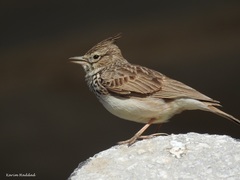
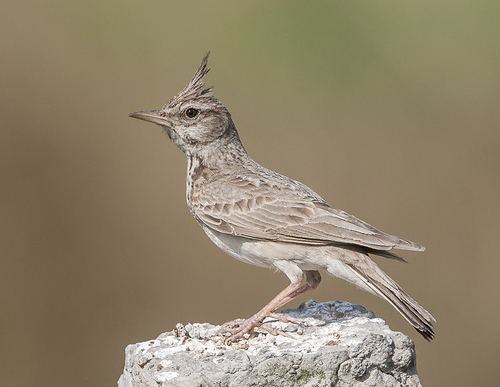
Thekla's lark (Galerida theklae), also known as the Thekla lark, is a species of lark that breeds on the Iberian Peninsula and in North and East Africa south to Kenya. It is a sedentary (non-migratory) species. This is a common bird of dry open country, often at some altitude. Thekla's lark was named by Alfred Edmund Brehm in 1857 for his recently deceased sister Thekla Brehm (1833–1857). The name is a modern Greek one, Θέκλα (Thekla), which comes from ancient Greek Θεόκλεια (Theokleia) derived from θεός (theos, "god") and κλέος (kleos, "glory" or "honour"). The population is declining in parts of Spain, but this is a common bird with a very wide range and the International Union for Conservation of Nature has rated its conservation status as being of "least concern".
Thekla's lark has several East African subspecies that show deep genetic divergence both among themselves and from the Mediterranean populations and are consequently strong candidates for consideration as separate species. Formerly, some authorities considered Thekla's lark and the Malabar lark to be conspecific. Alternate names for Thekla's lark include short-crested lark and Thekla crested... Wikipedia →