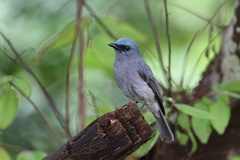
Dull-blue Flycatcher

Dull-blue Flycatcher

Eumyias sordidus

Silhouette: Martin Bulla, based on François Desbordes' illustration · PhyloPic

LCNTNear ThreatenedVUENCR Endemic
Daily sighting probability <5% · Rare
at Sinharaja Forest Reserve

In 3 days ~10%

25 Verified sightings at Sinharaja Forest Reserve From 2019 to 2026
567 In all 2 parks
August Best month
🌅 Crepuscular When it's spotted

About the Dull-blue Flycatcher

The dull-blue flycatcher (Eumyias sordidus) is a small passerine bird in the flycatcher family, Muscicapidae. This species is an endemic resident breeder in the hills of central Sri Lanka. It was previously included in the genus Muscicapa.

This species is 15 cm (5.9 in) long. It is similar in shape to the spotted flycatcher and has a loud melodic song.. Adults are ashy blue, with a whitish belly. There is a black patch between the broad black bill and the eye, bordered with brighter blue above and below. Sexes are similar, but females are slightly duller.

Juvenile dull-blue flycatchers are brown, heavily spotted on the head, back, wing-coverts and breast with pale buff; their flight feathers are broadly edged with blue-grey. The dull-blue flycatcher breeds in deciduous mountain forest, invariably above 600 m (2,000 ft), although it is not common below 900 m (3,000 ft). The main breeding season is in March and April, but a second brood is often reared later in the year.

The cup-shaped nest is a lined compact mass of moss. The site is usually a well-shaded rock ledge. The normal clutch is two or three brown-spotted pink eggs are laid.... Wikipedia →

Sounds

Song0:17

Sri Lanka · 2022

© THILANKA EDIRISINGHE · XC722532 · CC BY-NC-SA 4.0

Call0:28

Sri Lanka · 2007

© Jelle Scharringa · XC645276 · CC BY-NC-SA 4.0

Song0:43

Sri Lanka · 2016

© Peter Boesman · XC311274 · CC BY-NC-ND 4.0

Global Distribution

Parks Where Found

# Park Country Daily sighting probability
1 Horton Plains National Park 🇱🇰 Sri Lanka
~80%
2 Sinharaja Forest Reserve 🇱🇰 Sri Lanka
<5%

Before you go

What are the chances of seeing a Dull-blue Flycatcher in Sinharaja Forest Reserve?

Rare

Under 5% of wildlife watchers report a Dull-blue Flycatcher sighting in Sinharaja Forest Reserve on a given day, based on 25 verified sightings from GBIF citizen-science data from 2019 to 2026. It is the 120th most-seen of the 156 birds we can rate there. Over three days the chance rises to about 10%, if each day is a fresh chance.

When is the best time to see a Dull-blue Flycatcher in Sinharaja Forest Reserve?

Any time of year

In every month with enough records, under 5% of wildlife watchers report a Dull-blue Flycatcher in Sinharaja Forest Reserve on a given day, so our monthly data shows no clear season.

What time of day is best to see a Dull-blue Flycatcher?

Between 4 and 7 am

Across all the parks we cover, that three-hour window holds the most Dull-blue Flycatcher sightings with a recorded time, and about 6 in 10 of them come between 6 am and 6 pm: it is most active around dawn and dusk.

Is Sinharaja Forest Reserve the best place to see a Dull-blue Flycatcher?

2nd of 2

Of the 2 parks where we can rate Dull-blue Flycatcher sightings, Sinharaja Forest Reserve ranks 2nd at under 5%. The best odds are in Horton Plains National Park (Sri Lanka, about 80%).

Which relatives of the Dull-blue Flycatcher live in Sinharaja Forest Reserve?

Same family: Muscicapidae

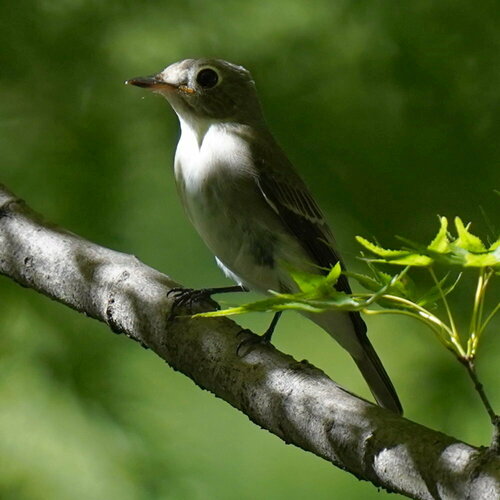
The closest relatives of the Dull-blue Flycatcher that you can see in Sinharaja Forest Reserve (family Muscicapidae, Old World Flycatchers, Robins, and Chats) are Brown-breasted Flycatcher (about 40%), Oriental Magpie-Robin (about 40%) and Asian Brown Flycatcher (about 20%), with each one's daily chance of a sighting.

Where does the Dull-blue Flycatcher sighting chance come from?

GBIF citizen-science records

It is estimated from how often the Dull-blue Flycatcher is recorded against all the birds logged in Sinharaja Forest Reserve (25 verified sightings from 2019 to 2026), calibrated against known sighting rates. Figures are rounded to the nearest 10% because citizen-science data supports honest approximations, not decimals, and months with records from fewer than five people show "—". How it works.

← Back to Sinharaja Forest Reserve