Sri Lanka Whistling-Thrush

Sri Lanka Whistling-Thrush

Myophonus blighi

Silhouette: Martin Bulla, based on François Desbordes' illustration · PhyloPic

LCNTVUENEndangeredCR Endemic
Daily sighting probability <5% · Rare
at Sinharaja Forest Reserve

In 3 days <5% in a week ~10%

24 Verified sightings at Sinharaja Forest Reserve From 2019 to 2026
302 In all 2 parks
August Best month
🌅 Crepuscular When it's spotted

About the Sri Lanka Whistling-Thrush

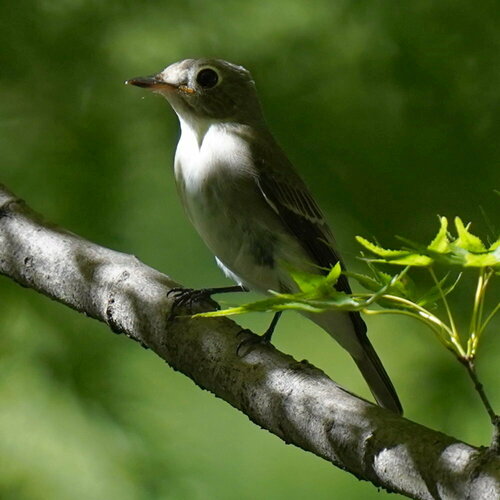
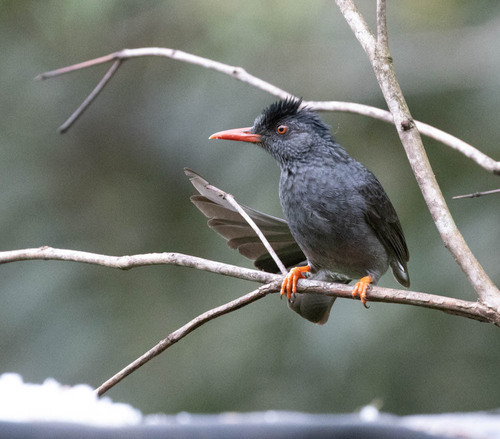
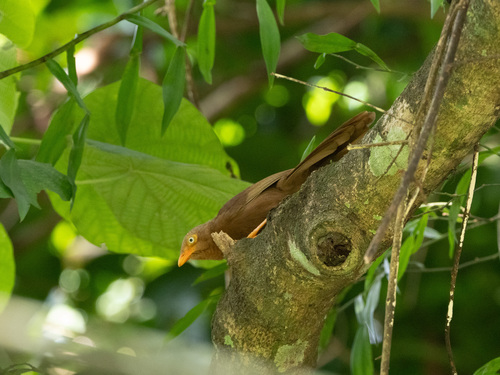
The Sri Lanka whistling thrush (Myophonus blighi) is a whistling thrush in the family Muscicapidae. It is a resident endemic bird in Sri Lanka. It is found in the highlands of Sri Lanka in jungle or other dense forest near water. It is omnivorous, eating a wide range of insects, frogs, earthworms and berries. It lays one or two eggs in a neat cup-shaped nest in a bush or on a ledge near water.

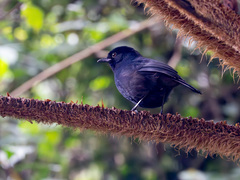
It does not form flocks, although several birds may be loosely associated in suitable habitat. This is a small whistling thrush, at only 20 cm. Adult males are dark blue with a darker head and back. There are bright blue patches on the shoulders, supercilia and forehead. The female is brown above and chestnut below, but has a bright blue shoulder patch like the male.

The male sings its simple whistling song from trees, usually in deep cover. This is a notoriously difficult species to see, even when the males are singing in the breeding season, which starts in February. It is very shy, scarce, localised and declining due to habitat loss. Perhaps the best chance is at dawn at Horton Plains National Park 2000m up in the highlands of Sri Lanka and a site near the Haggala Botanical Gardens close to Nuwara Eliya town. Wikipedia →

Sounds

Song1:10

Sri Lanka · 2022

© Okamoto Keita Sin · XC756641 · CC BY-NC-SA 4.0

Call1:00

Sri Lanka · 2016

© Peter Boesman · XC311387 · CC BY-NC-ND 4.0

Song0:37

Sri Lanka

© Craig Robson · XC19384 · CC BY-NC-ND 2.5

Global Distribution

Parks Where Found

# Park Country Daily sighting probability
1 Horton Plains National Park 🇱🇰 Sri Lanka
~60%
2 Sinharaja Forest Reserve 🇱🇰 Sri Lanka
<5%

Before you go

What are the chances of seeing a Sri Lanka Whistling-Thrush in Sinharaja Forest Reserve?

Rare

Under 5% of wildlife watchers report a Sri Lanka Whistling-Thrush sighting in Sinharaja Forest Reserve on a given day, based on 24 verified sightings from GBIF citizen-science data from 2019 to 2026. It is the 126th most-seen of the 156 birds we can rate there. Over three days the chance rises to under 5%, and over a week to about 10%, if each day is a fresh chance.

When is the best time to see a Sri Lanka Whistling-Thrush in Sinharaja Forest Reserve?

August

In that month about 10% of wildlife watchers report a Sri Lanka Whistling-Thrush in Sinharaja Forest Reserve on a given day, against under 5% in September to July, the lowest months.

What time of day is best to see a Sri Lanka Whistling-Thrush?

Between 2 and 5 am

Across all the parks we cover, that three-hour window holds the most Sri Lanka Whistling-Thrush sightings with a recorded time, and about 7 in 10 of them come between 6 pm and 6 am: it is most active around dawn and dusk.

Is Sinharaja Forest Reserve the best place to see a Sri Lanka Whistling-Thrush?

2nd of 2

Of the 2 parks where we can rate Sri Lanka Whistling-Thrush sightings, Sinharaja Forest Reserve ranks 2nd at under 5%. The best odds are in Horton Plains National Park (Sri Lanka, about 60%).

Which relatives of the Sri Lanka Whistling-Thrush live in Sinharaja Forest Reserve?

Same family: Muscicapidae

The closest relatives of the Sri Lanka Whistling-Thrush that you can see in Sinharaja Forest Reserve (family Muscicapidae, Old World Flycatchers, Robins, and Chats) are Brown-breasted Flycatcher (about 40%), Oriental Magpie-Robin (about 40%) and Asian Brown Flycatcher (about 20%), with each one's daily chance of a sighting.

Where does the Sri Lanka Whistling-Thrush sighting chance come from?

GBIF citizen-science records

It is estimated from how often the Sri Lanka Whistling-Thrush is recorded against all the birds logged in Sinharaja Forest Reserve (24 verified sightings from 2019 to 2026), calibrated against known sighting rates. Figures are rounded to the nearest 10% because citizen-science data supports honest approximations, not decimals, and months with records from fewer than five people show "—". How it works.

← Back to Sinharaja Forest Reserve