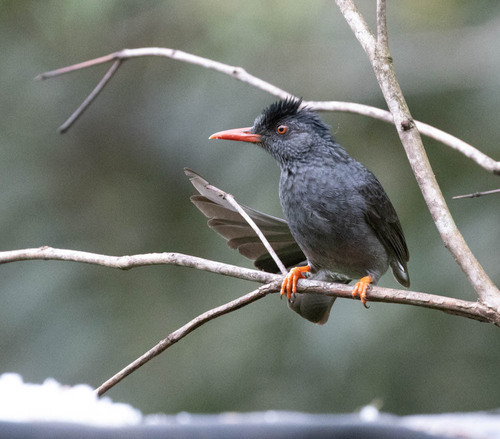
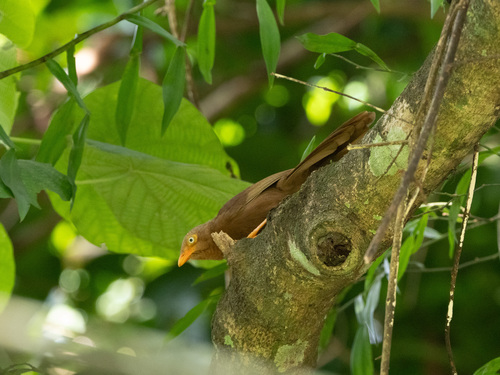
Kashmir Flycatcher

Kashmir Flycatcher

Ficedula subrubra

Silhouette: Rachael Joakim · PhyloPic

LCNTVUVulnerableENCR
Daily sighting probability <5% · Rare
at Sinharaja Forest Reserve

In 3 days <5%

9 Verified sightings at Sinharaja Forest Reserve From 2019 to 2026
55 In all 3 parks
January Best month
☀️ Diurnal When it's spotted

About the Kashmir Flycatcher

The Kashmir flycatcher (Ficedula subrubra) is a small passerine bird in the flycatcher family Muscicapidae. It breeds in the Northwest Himalayas and winters in southern India and Sri Lanka. It was formerly considered to be a subspecies of the red-breasted flycatcher, Ficedula parva, which is its closest living relative. Males are distinctive in having a blackish border to the reddish throat while the females can easily be confused with those of F. parva.

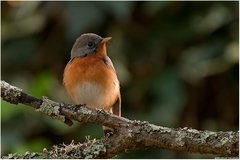
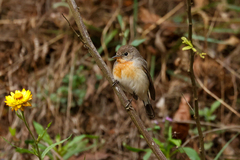
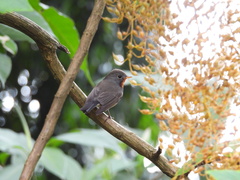
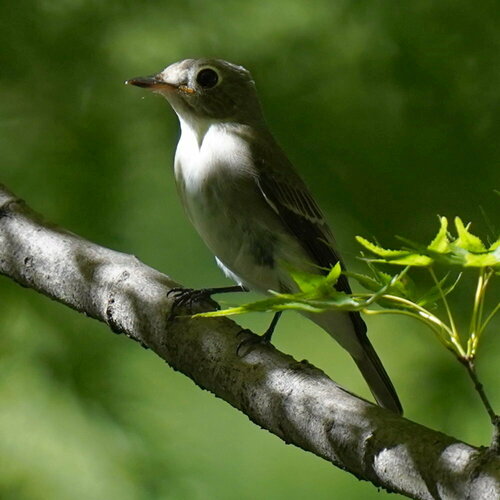
The Kashmir flycatcher is 13 cm long, an insectivorous species closely related to the red-breasted flycatcher and sharing the habits of flicking its tail up while perching. The male has a grey-brown back with an orange-red throat, breast and flanks, bordered with black on the throat and breast. Females and first-winter birds have slightly browner upperparts, and the red of the underparts may be reduced to just a pinkish wash. The females have the tail darker than the back with white on the lower basal half of the outer feathers. The male of the similar taiga flycatcher, Ficedula albicilla, has the reddish-orange area limited to the throat and the top of the breast, and lacks the black border.

It breeds in the north... Wikipedia →

Sounds

Call0:11

India · 2025

© Peter Boesman · XC1030581 · CC BY-NC-ND 4.0

Call0:37

Sri Lanka · 2007

© Jelle Scharringa · XC777760 · CC BY-NC-SA 4.0

Call0:22

Sri Lanka · 2014

© Hans Matheve · XC211567 · CC BY-NC-ND 4.0

Global Distribution

Parks Where Found

# Park Country Daily sighting probability
1 Horton Plains National Park 🇱🇰 Sri Lanka
~10%
2 Sinharaja Forest Reserve 🇱🇰 Sri Lanka
<5%
3 Periyar National Park 🇮🇳 India
<5%

Cities Where Found

# City Country Daily sighting probability
1 Jabalpur 🇮🇳 India
~10%
2 Srinagar 🇮🇳 India
<5%

Before you go

What are the chances of seeing a Kashmir Flycatcher in Sinharaja Forest Reserve?

Rare

Under 5% of wildlife watchers report a Kashmir Flycatcher sighting in Sinharaja Forest Reserve on a given day, based on 9 verified sightings from GBIF citizen-science data from 2019 to 2026. It is the 148th most-seen of the 156 birds we can rate there. Over three days the chance rises to under 5%, if each day is a fresh chance.

When is the best time to see a Kashmir Flycatcher in Sinharaja Forest Reserve?

Any time of year

In every month with enough records, under 5% of wildlife watchers report a Kashmir Flycatcher in Sinharaja Forest Reserve on a given day, so our monthly data shows no clear season.

What time of day is best to see a Kashmir Flycatcher?

Between 3 and 6 pm

Across all the parks we cover, that three-hour window holds the most Kashmir Flycatcher sightings with a recorded time, and about 8 in 10 of them come between 6 am and 6 pm: it is a daytime animal.

Is Sinharaja Forest Reserve the best place to see a Kashmir Flycatcher?

2nd of 3

Of the 3 parks where we can rate Kashmir Flycatcher sightings, Sinharaja Forest Reserve ranks 2nd at under 5%. The best odds are in Horton Plains National Park (Sri Lanka, about 10%).

Which relatives of the Kashmir Flycatcher live in Sinharaja Forest Reserve?

Same family: Muscicapidae

The closest relatives of the Kashmir Flycatcher that you can see in Sinharaja Forest Reserve (family Muscicapidae, Old World Flycatchers, Robins, and Chats) are Brown-breasted Flycatcher (about 40%), Oriental Magpie-Robin (about 40%) and Asian Brown Flycatcher (about 20%), with each one's daily chance of a sighting.

Where does the Kashmir Flycatcher sighting chance come from?

GBIF citizen-science records

It is estimated from how often the Kashmir Flycatcher is recorded against all the birds logged in Sinharaja Forest Reserve (9 verified sightings from 2019 to 2026), calibrated against known sighting rates. Figures are rounded to the nearest 10% because citizen-science data supports honest approximations, not decimals, and months with records from fewer than five people show "—". How it works.

← Back to Sinharaja Forest Reserve