Rice Case Bearer

Rice Case Bearer

Parapoynx stagnalis

Daily sighting probability ~10% · With luck
at Sinharaja Forest Reserve

In 3 days ~30% in a week ~60%

9 Verified sightings at Sinharaja Forest Reserve From 2019 to 2026
19 In all 2 parks
January Best month
🌙 Nocturnal When it's spotted

About the Rice Case Bearer

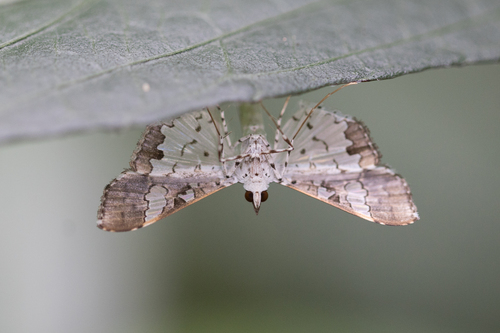
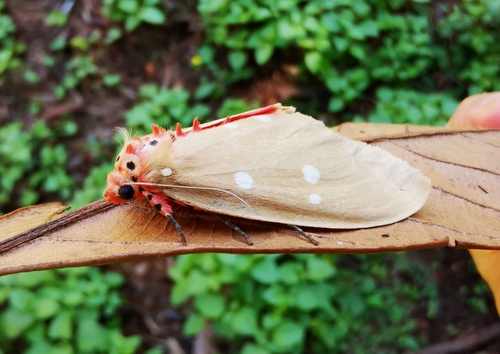
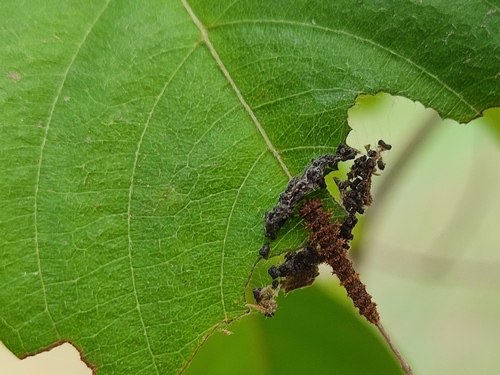
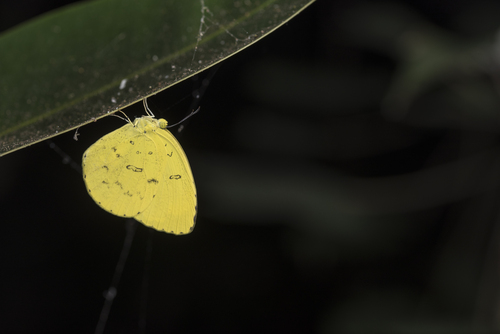
Parapoynx stagnalis, the rice case bearer or rice caseworm, is a species of moth in the family Crambidae. It has a wide distribution and is found in India, Sri Lanka, South-East Asia, South Africa, South America, southern Europe (Spain and Greece), Russia and Australia (the Northern Territory and Queensland).

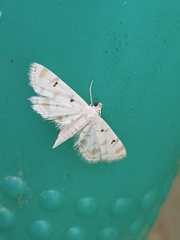
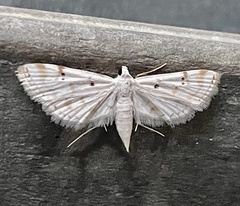
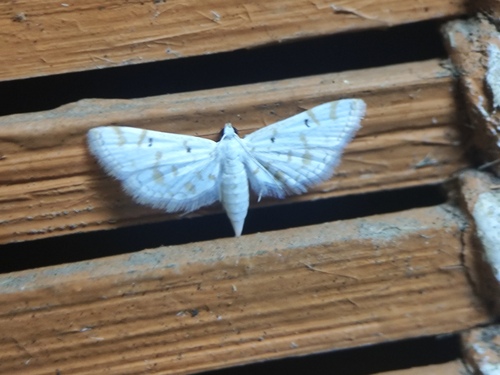
The life cycle is completed in about 35–40 days. The length of the forewings is 15 mm. Adult has whitish wings with pale brown wavy markings. There are two black comma-shaped marks on each forewing. Male can be identified by narrow and uniform abdomen, whereas female abdomen is widest at the middle but tapering posteriorly. Female usually lay 150 eggs and first instar larvae emerge after a week. Final larva emerge after 20 days, and reaches its maximum length of 10-12mm. The moth has six larval instars. Due to branched tubular gills, caterpillars can respire in aquatic media. Therefore, instar can disperse through water. Pupation occurs when the pupal case is attached to the leaf sheath above the water level. After a week of pupation, adult emerges.

As its common name implies, rice caseworm is one of the major pests of rice throughout the world.... Wikipedia →
Global Distribution

Parks Where Found

# Park Country Daily sighting probability
1 Sinharaja Forest Reserve 🇱🇰 Sri Lanka
~10%
2 Daintree National Park 🇦🇺 Australia
~10%

Cities Where Found

# City Country Daily sighting probability
1 Kochi 🇮🇳 India
~10%
2 Colombo [Sri Jayawardenepura Kotte] 🇱🇰 Sri Lanka
~10%
3 Pune 🇮🇳 India
~10%
4 Kolkata 🇮🇳 India
~10%
5 Bengaluru 🇮🇳 India
~10%
6 Hyderabad 🇮🇳 India
<5%
7 Chennai 🇮🇳 India
<5%
8 Singapore 🇸🇬 Singapore
<5%

Before you go

What are the chances of seeing a Rice Case Bearer in Sinharaja Forest Reserve?

With luck

About 10% of wildlife watchers report a Rice Case Bearer sighting in Sinharaja Forest Reserve on a given day, based on 9 verified sightings from GBIF citizen-science data from 2019 to 2026. It is the 77th most-seen of the 117 insects we can rate there. Over three days the chance rises to about 30%, and over a week to about 60%, if each day is a fresh chance.

When is the best time to see a Rice Case Bearer in Sinharaja Forest Reserve?

January

In that month about 40% of wildlife watchers report a Rice Case Bearer in Sinharaja Forest Reserve on a given day, against under 5% in March to December, the lowest months. That is one of Sinharaja Forest Reserve's driest months, with about 170 mm of rain against 490 mm in November.

What time of day is best to see a Rice Case Bearer?

Between 7 and 10 pm

Across all the parks we cover, that three-hour window holds the most Rice Case Bearer sightings with a recorded time, and about 9 in 10 of them come between 6 pm and 6 am: it is mostly seen at night.

Is Sinharaja Forest Reserve the best place to see a Rice Case Bearer?

Yes

Of the 2 parks where we can rate Rice Case Bearer sightings, Sinharaja Forest Reserve has the highest daily chance: about 10%. Next come Daintree National Park (Australia, about 10%).

Which relatives of the Rice Case Bearer live in Sinharaja Forest Reserve?

Same family: Crambidae

The closest relatives of the Rice Case Bearer that you can see in Sinharaja Forest Reserve (family Crambidae, Crambid Snout Moths) are Heortia vitessoides (about 20%), Dotted Sable (about 10%) and Mung Bean Moth (about 10%), with each one's daily chance of a sighting.

Where does the Rice Case Bearer sighting chance come from?

GBIF citizen-science records

It is estimated from how often the Rice Case Bearer is recorded against all the insects logged in Sinharaja Forest Reserve (9 verified sightings from 2019 to 2026), calibrated against known sighting rates. Figures are rounded to the nearest 10% because citizen-science data supports honest approximations, not decimals, and months with records from fewer than five people show "—". How it works.

← Back to Sinharaja Forest Reserve