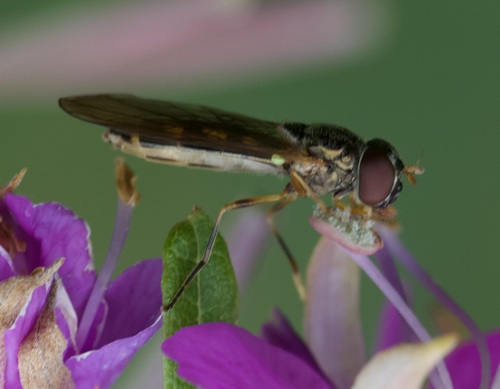
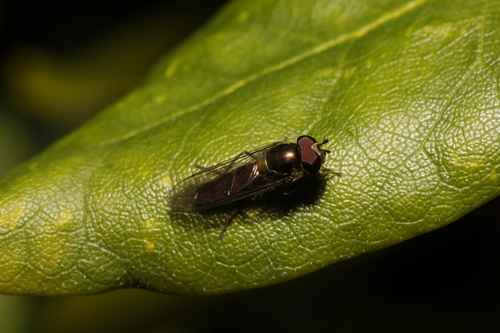
Common Flower Fly

Common Flower Fly

Syrphus ribesii

Daily sighting probability ~10% · With luck
at Snowdonia National Park

In 3 days ~20% in a week ~40%

6 Verified sightings at Snowdonia National Park From 2019 to 2026
17 In all 3 parks
August Best month
☀️ Diurnal When it's spotted

About the Common Flower Fly

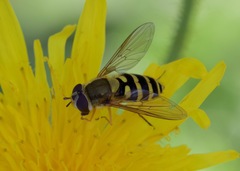
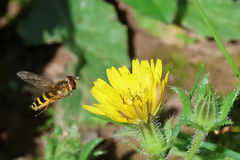
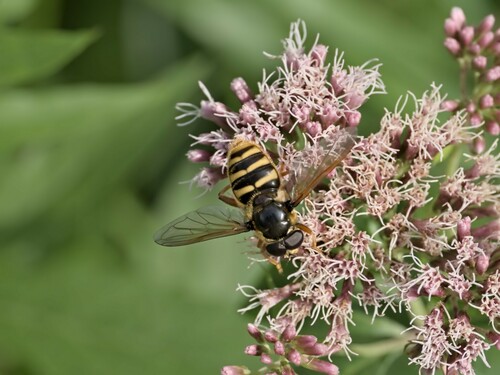
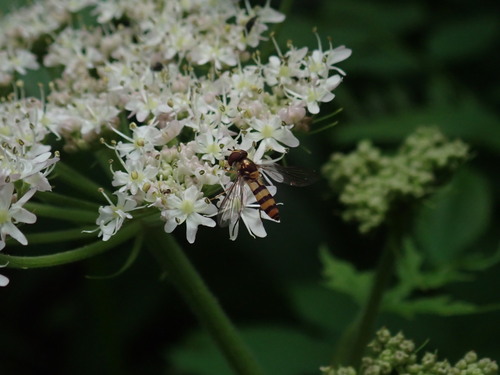
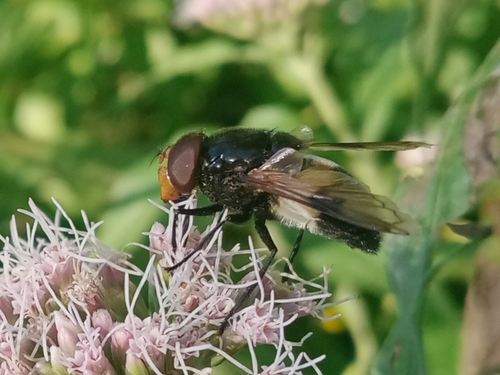
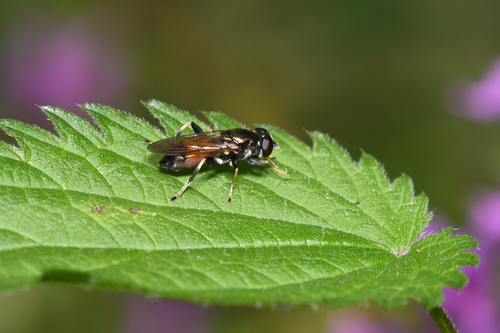
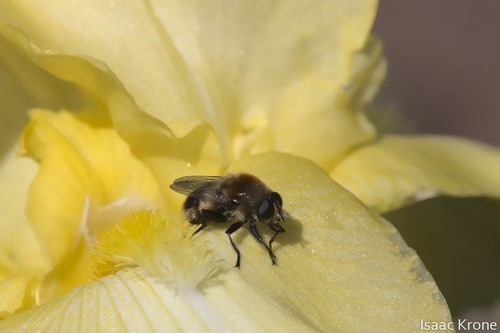
Syrphus ribesii is a very common Holarctic species of hoverfly. Its larvae feed on aphids. In common with many other species of hoverfly, males have the eyes meeting on the top of the head, whilst females have their eyes widely separated.

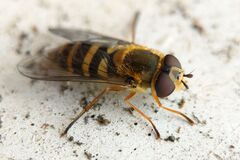
Adults are very similar in appearance to Syrphus vitripennis and Syrphus torvus. Females are distinguished from both by having entirely yellow hind femora, and from the latter by having no hairs present in their eyes. Males also have bare eyes, unlike S. torvus, but are extremely similar to S. vitripennis, differing only in having some black hairs present on the hind femur and in having the second basal cell of the wing entirely covered by microtrichia. The male genitalia and the larva have been described.

Frons is posterior to the lunulae, shiny black. Sternites have lateral and median black marks. Male femora 3 is black for basal 2/3. Femora 3 is yellow. Lateral margins of tergites are black except at the ends of the yellow bands.

Palearctic: Fennoscandia south to Iberia and the Mediterranean basin, Ireland eastward through Europe into Turkey, European Russia and Afghanistan. Also ranges from Urals to Siberia... Wikipedia →
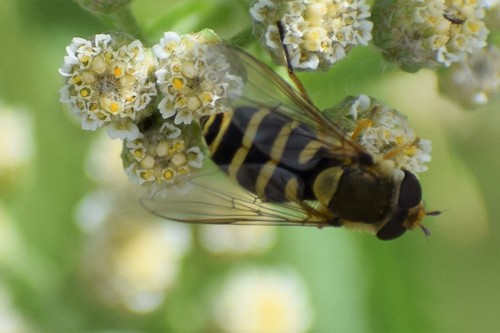
Global Distribution

Parks Where Found

# Park Country Daily sighting probability
1 Snowdonia National Park 🇬🇧 United Kingdom
~10%
2 Bavarian Forest National Park 🇩🇪 Germany
<5%
3 Wadden Sea National Park 🇩🇪 Germany
<5%

Cities Where Found

# City Country Daily sighting probability
1 Birmingham 🇬🇧 United Kingdom
~20%
2 Liverpool 🇬🇧 United Kingdom
~10%
3 Manchester 🇬🇧 United Kingdom
~10%
4 London 🇬🇧 United Kingdom
~10%
5 Leeds 🇬🇧 United Kingdom
~10%
6 Dublin 🇮🇪 Ireland
~10%
7 Brussels 🇧🇪 Belgium
~10%
8 Cologne 🇩🇪 Germany
~10%
9 Essen 🇩🇪 Germany
~10%
10 Copenhagen 🇩🇰 Denmark
~10%

Before you go

What are the chances of seeing a Common Flower Fly in Snowdonia National Park?

With luck

About 10% of wildlife watchers report a Common Flower Fly sighting in Snowdonia National Park on a given day, based on 6 verified sightings from GBIF citizen-science data from 2019 to 2026. It is the 294th most-seen of the 387 insects we can rate there. Over three days the chance rises to about 20%, and over a week to about 40%, if each day is a fresh chance.

When is the best time to see a Common Flower Fly in Snowdonia National Park?

April–May and July–August

In those months about 10% of wildlife watchers report a Common Flower Fly in Snowdonia National Park on a given day, against under 5% in June and September–March, the lowest months.

What time of day is best to see a Common Flower Fly?

Between noon and 3 pm

Across all the parks we cover, that three-hour window holds the most Common Flower Fly sightings with a recorded time, and nearly all of them come between 6 am and 6 pm: it is a daytime animal.

Is Snowdonia National Park the best place to see a Common Flower Fly?

Yes

Of the 3 parks where we can rate Common Flower Fly sightings, Snowdonia National Park has the highest daily chance: about 10%. Next come Bavarian Forest National Park (Germany, under 5%) and Wadden Sea National Park (Germany, under 5%).

Which relatives of the Common Flower Fly live in Snowdonia National Park?

Same family: Syrphidae

The closest relatives of the Common Flower Fly that you can see in Snowdonia National Park (family Syrphidae, Hover Flies) are Tapered Drone Fly (about 20%), Marmalade Hover Fly (about 20%) and Common Drone Fly (about 10%), with each one's daily chance of a sighting.

Where does the Common Flower Fly sighting chance come from?

GBIF citizen-science records

It is estimated from how often the Common Flower Fly is recorded against all the insects logged in Snowdonia National Park (6 verified sightings from 2019 to 2026), calibrated against known sighting rates. Figures are rounded to the nearest 10% because citizen-science data supports honest approximations, not decimals, and months with records from fewer than five people show "—". How it works.

← Back to Snowdonia National Park