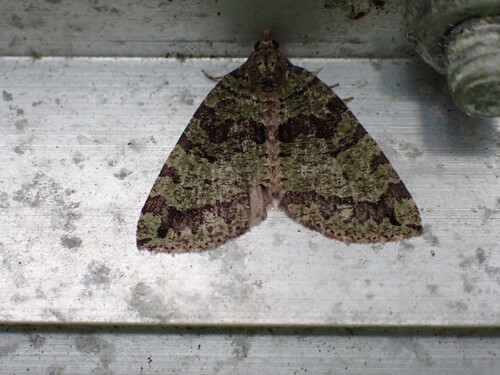
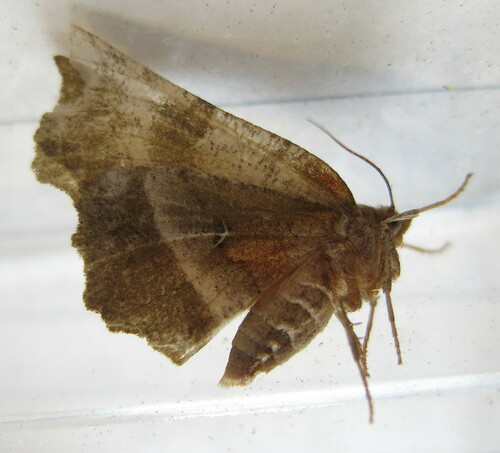
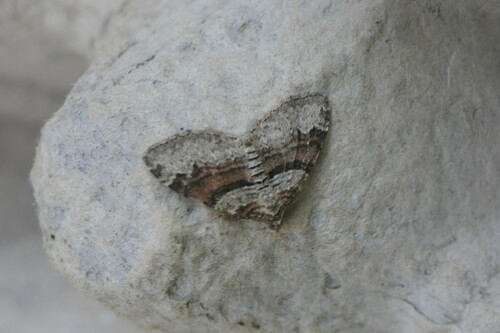
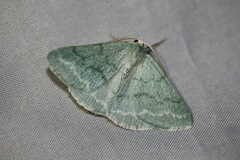
Grass Emerald

Grass Emerald

Pseudoterpna pruinata

Daily sighting probability ~10% · With luck
at Snowdonia National Park

In 3 days ~20% in a week ~40%

5 Verified sightings at Snowdonia National Park From 2019 to 2026
71 In all 3 parks
June Best month
☀️🌙 Day & Night When it's spotted

About the Grass Emerald

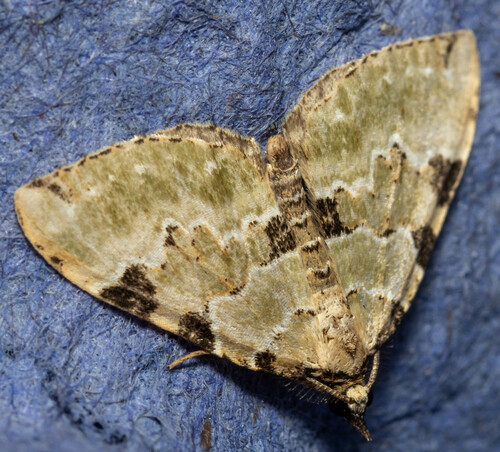
The grass emerald (Pseudoterpna pruinata) is a species of moth. It occurs throughout central and south-eastern Europe (with the exception of the far north) and in Asia Minor and the Caucasus further east to the Urals and Siberia. It is fairly common throughout Great Britain with the exception of northern Scotland. In the southern Alps, it rises up to 1500 metres. The species was first described by Johann Siegfried Hufnagel in 1767.

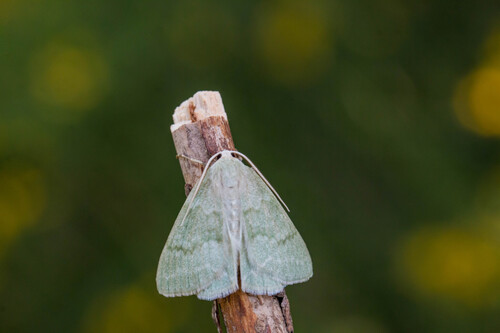
The wingspan is 30–35 mm. It is green, sometimes more, sometimes less bluish, mixed with whitish, the forewing with two, the hindwing with one dark green transverse line, varying in intensity and in exact position; submarginal line thick, whitish. The variation agrestaria Duponchel is nearly unicolorous, the dark lines being entirely effaced. It possibly tends to form a local race in some places (as southern France) but certainly occurs in others together with the type. The variation virellata Krulikovsky, from eastern Russia, perhaps truly a local race, would appear, from its author's description, to be closely similar to the last-named form, but larger and probably darker, less mixed with white. As fasciata ab. nov. [Prout] may be described... Wikipedia →
Global Distribution

Parks Where Found

# Park Country Daily sighting probability
1 Cévennes National Park 🇫🇷 France
~10%
2 Snowdonia National Park 🇬🇧 United Kingdom
~10%
3 Pyrénées National Park 🇫🇷 France
~10%

Cities Where Found

# City Country Daily sighting probability
1 Cologne 🇩🇪 Germany
<5%

Before you go

What are the chances of seeing a Grass Emerald in Snowdonia National Park?

With luck

About 10% of wildlife watchers report a Grass Emerald sighting in Snowdonia National Park on a given day, based on 5 verified sightings from GBIF citizen-science data from 2019 to 2026. It is the 336th most-seen of the 387 insects we can rate there. Over three days the chance rises to about 20%, and over a week to about 40%, if each day is a fresh chance.

When is the best time to see a Grass Emerald in Snowdonia National Park?

June

In that month about 20% of wildlife watchers report a Grass Emerald in Snowdonia National Park on a given day, against under 5% in August to May, the lowest months.

What time of day is best to see a Grass Emerald?

Between 10 pm and 1 am

Across all the parks we cover, that three-hour window holds the most Grass Emerald sightings with a recorded time, and about 7 in 10 of them come between 6 pm and 6 am: it is seen both by day and at night.

Is Snowdonia National Park the best place to see a Grass Emerald?

Among the best

Of the 3 parks where we can rate Grass Emerald sightings, Snowdonia National Park ranks 2nd at about 10%, level with the leaders once rounded. The best odds are in Cévennes National Park (France, about 10%).

Which relatives of the Grass Emerald live in Snowdonia National Park?

Same family: Geometridae

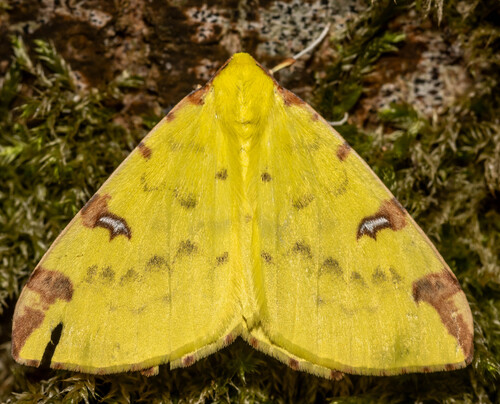
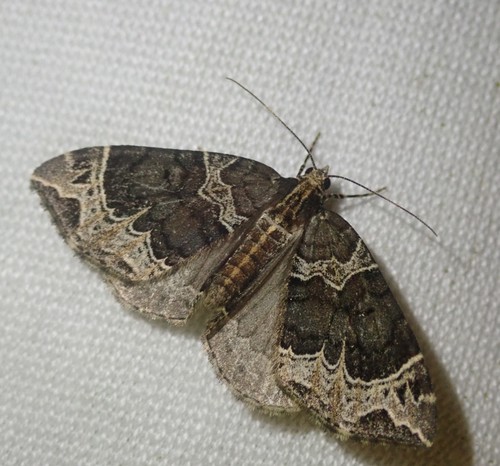
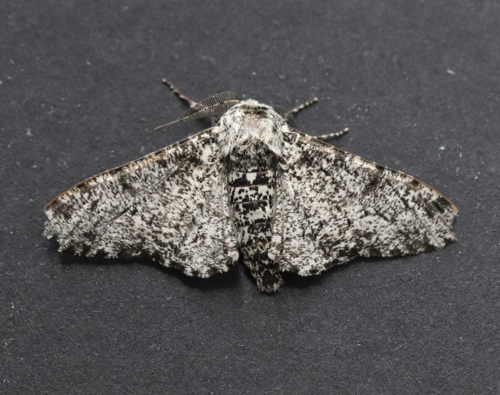
The closest relatives of the Grass Emerald that you can see in Snowdonia National Park (family Geometridae, Geometer Moths) are Brimstone Moth (about 30%), Small Phoenix (about 20%) and Peppered Moth (about 20%), with each one's daily chance of a sighting.

Where does the Grass Emerald sighting chance come from?

GBIF citizen-science records

It is estimated from how often the Grass Emerald is recorded against all the insects logged in Snowdonia National Park (5 verified sightings from 2019 to 2026), calibrated against known sighting rates. Figures are rounded to the nearest 10% because citizen-science data supports honest approximations, not decimals, and months with records from fewer than five people show "—". How it works.

← Back to Snowdonia National Park