Magpie Moth

Magpie Moth

Abraxas grossulariata

Daily sighting probability ~10% · With luck
at Snowdonia National Park

In 3 days ~20% in a week ~40%

5 Verified sightings at Snowdonia National Park From 2019 to 2026
57 In all 5 parks
July Best month
☀️🌙 Day & Night When it's spotted

About the Magpie Moth

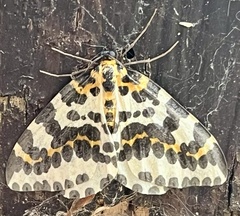
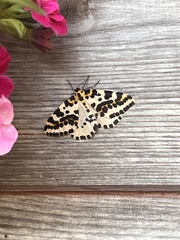
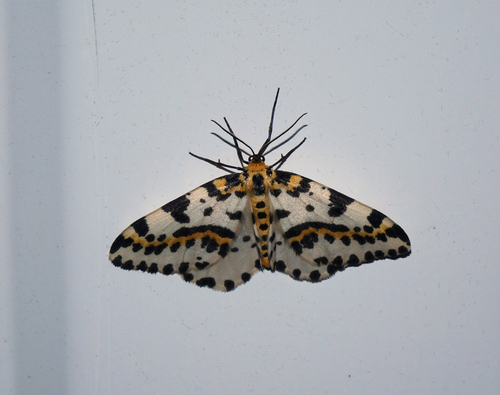
Abraxas grossulariata is a moth of the family Geometridae, native to the Palearctic realm and North America. Its distinctive speckled coloration has given it a common name of magpie moth. The caterpillar is similarly coloured to the adult, and may be found feeding on the leaves of shrubs such as gooseberry and blackcurrant. The species was first described by Carl Linnaeus in his 1758 10th edition of Systema Naturae.

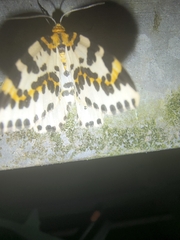
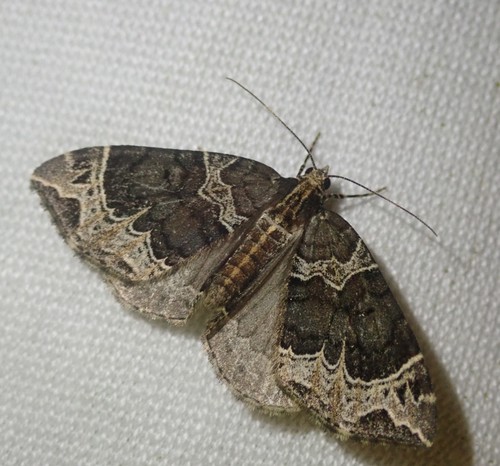
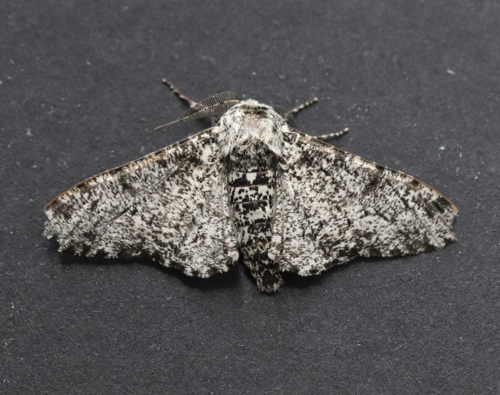
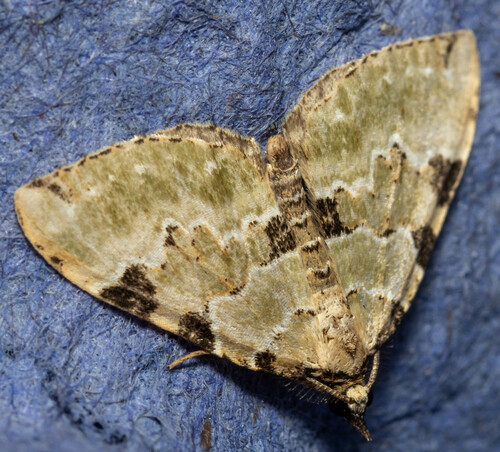
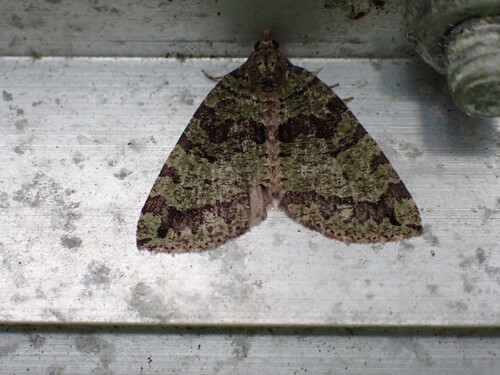
The length of the forewing is 18–25 mm. The strikingly patterned forewings have a white ground colour, with six transverse series of black stains, partly associated with a pale yellow basal cross band and another through the central area of the forewing. The hindwings are paler, and have a few, small dark stains.

It is a highly variable species with many different forms. Research using Abraxas grossulariata led to the discovery of sex-linked characteristics. Abraxas grossulariata grossulariata Abraxas grossulariata karafutonis Matsumura, 1925 (Sakhalin) Wikipedia →
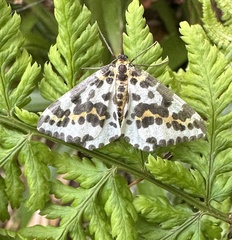
Global Distribution

Parks Where Found

# Park Country Daily sighting probability
1 Biebrza National Park 🇵🇱 Poland
~20%
2 Cairngorms National Park 🇬🇧 United Kingdom
~10%
3 Snowdonia National Park 🇬🇧 United Kingdom
~10%
4 Wadden Sea National Park 🇩🇪 Germany
<5%
5 Pyrénées National Park 🇫🇷 France
<5%

Cities Where Found

# City Country Daily sighting probability
1 Kharkiv 🇺🇦 Ukraine
~10%
2 Liverpool 🇬🇧 United Kingdom
~10%
3 Birmingham 🇬🇧 United Kingdom
~10%
4 Manchester 🇬🇧 United Kingdom
<5%
5 Copenhagen 🇩🇰 Denmark
<5%

Before you go

What are the chances of seeing a Magpie Moth in Snowdonia National Park?

With luck

About 10% of wildlife watchers report a Magpie Moth sighting in Snowdonia National Park on a given day, based on 5 verified sightings from GBIF citizen-science data from 2019 to 2026. It is the 336th most-seen of the 387 insects we can rate there. Over three days the chance rises to about 20%, and over a week to about 40%, if each day is a fresh chance.

When is the best time to see a Magpie Moth in Snowdonia National Park?

July and August

In those months about 10% of wildlife watchers report a Magpie Moth in Snowdonia National Park on a given day, against under 5% in September to June, the lowest months.

What time of day is best to see a Magpie Moth?

Between 7 and 10 am

Across all the parks we cover, that three-hour window holds the most Magpie Moth sightings with a recorded time, and about 6 in 10 of them come between 6 am and 6 pm: it is seen both by day and at night.

Is Snowdonia National Park the best place to see a Magpie Moth?

3rd of 5

Of the 5 parks where we can rate Magpie Moth sightings, Snowdonia National Park ranks 3rd at about 10%. The best odds are in Biebrza National Park (Poland, about 20%) and Cairngorms National Park (United Kingdom, about 10%).

Which relatives of the Magpie Moth live in Snowdonia National Park?

Same family: Geometridae

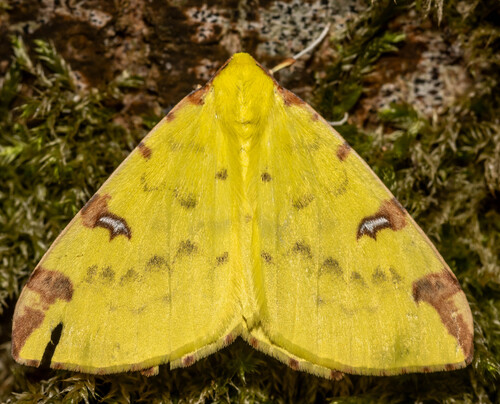
The closest relatives of the Magpie Moth that you can see in Snowdonia National Park (family Geometridae, Geometer Moths) are Brimstone Moth (about 30%), Small Phoenix (about 20%) and Peppered Moth (about 20%), with each one's daily chance of a sighting.

Where does the Magpie Moth sighting chance come from?

GBIF citizen-science records

It is estimated from how often the Magpie Moth is recorded against all the insects logged in Snowdonia National Park (5 verified sightings from 2019 to 2026), calibrated against known sighting rates. Figures are rounded to the nearest 10% because citizen-science data supports honest approximations, not decimals, and months with records from fewer than five people show "—". How it works.

← Back to Snowdonia National Park