September Thorn

September Thorn

Ennomos erosaria

Daily sighting probability ~10% · With luck
at Snowdonia National Park

In 3 days ~30% in a week ~60%

14 Verified sightings at Snowdonia National Park From 2019 to 2026
30 In all 3 parks
August Best month
☀️🌙 Day & Night When it's spotted

About the September Thorn

Ennomos erosaria, the September thorn, is a moth of the family Geometridae. The species can be found in the Palearctic realm in western Europe and from central Scandinavia. Its range extends to the northern Mediterranean and east to the Caucasus and Russia.

It is widespread in mixed and deciduous forests in Europe. The south eastern occurrence reaches Turkey and the Caucasus. The main habitat is dry deciduous forests and parks. In the Southern Alps, the species rises to an altitude of about 1600 metres.

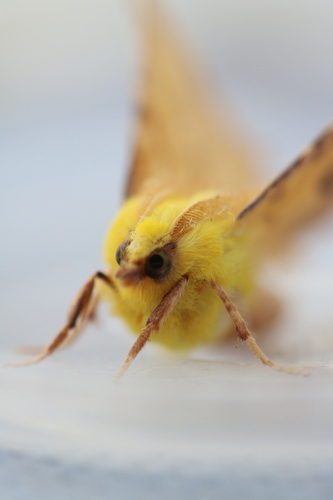
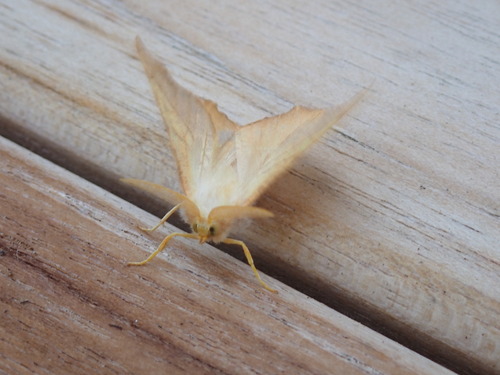
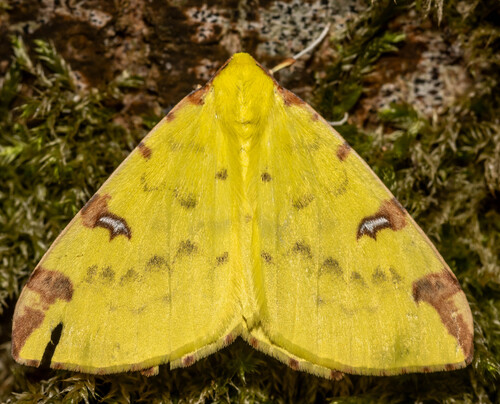
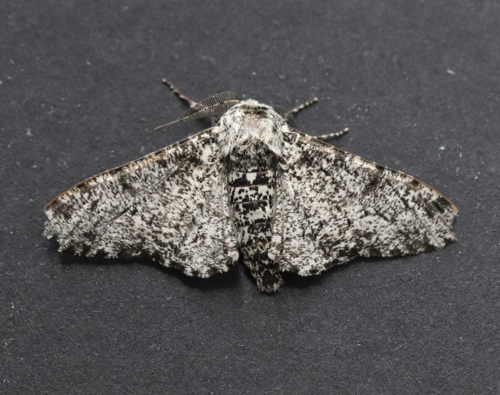
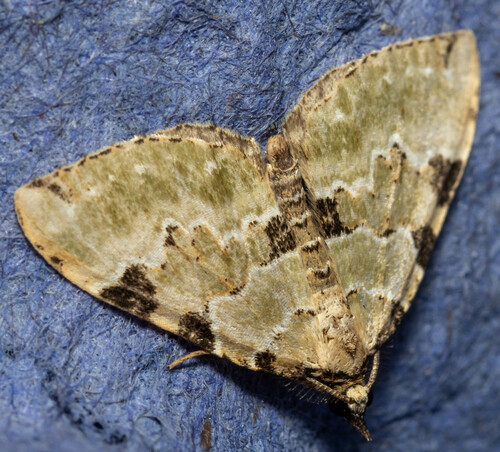
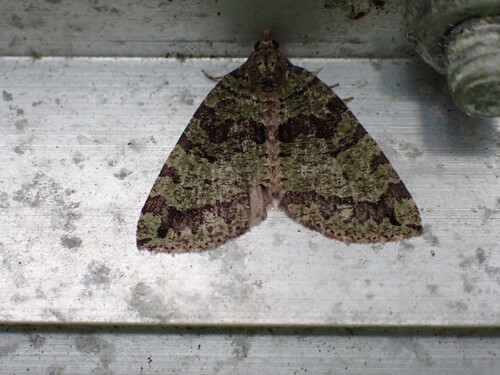
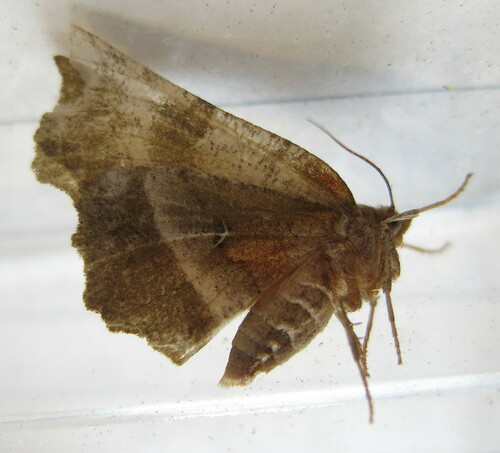
The wingspan is 30–35 mm. The length of the forewings is 17–21 mm. The ground colour is straw yellow to ochre-yellow. The colour is darker on hindwing termen and the hindwing also has a faint discal spot. The fasciae (bands) are brown. The inward arc under projection on distal forewing is prominent. The name typical form is yellowish. ab. tiliaria Hbn. is paler, the forewing straw-colour. — ab. tinicoloria Esp. is without the transverse lines.

Similar species: other Ennomos species. The moths fly in one generation from July to October.[1] They are attracted to light. The larva which is rather elongate, with strong knob-shaped protuberances, altogether bearing a remarkable likeness to an oak twig is brown, now with

a tinge of purple, now of greenish, the ventral surface paler greenish brown. It feeds on oak, birch, and lime. Wikipedia →
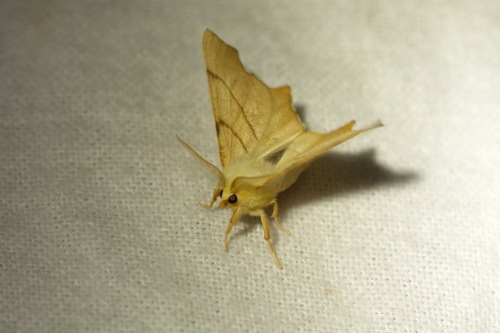
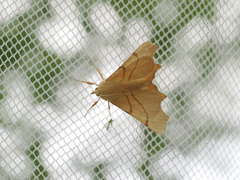
Global Distribution

Parks Where Found

# Park Country Daily sighting probability
1 Snowdonia National Park 🇬🇧 United Kingdom
~10%
2 Bavarian Forest National Park 🇩🇪 Germany
~10%
3 Sierra de Guadarrama National Park 🇪🇸 Spain
<5%

Cities Where Found

# City Country Daily sighting probability
1 Kharkiv 🇺🇦 Ukraine
~10%
2 Essen 🇩🇪 Germany
~10%
3 London 🇬🇧 United Kingdom
~10%
4 Birmingham 🇬🇧 United Kingdom
<5%
5 Kyiv 🇺🇦 Ukraine
<5%
6 Berlin 🇩🇪 Germany
<5%
7 Prague 🇨🇿 Czechia
<5%
8 Vienna 🇦🇹 Austria
<5%
9 Paris 🇫🇷 France
<5%

Before you go

What are the chances of seeing a September Thorn in Snowdonia National Park?

With luck

About 10% of wildlife watchers report a September Thorn sighting in Snowdonia National Park on a given day, based on 14 verified sightings from GBIF citizen-science data from 2019 to 2026. It is the 149th most-seen of the 387 insects we can rate there. Over three days the chance rises to about 30%, and over a week to about 60%, if each day is a fresh chance.

When is the best time to see a September Thorn in Snowdonia National Park?

August

In that month about 30% of wildlife watchers report a September Thorn in Snowdonia National Park on a given day, against under 5% in October to June, the lowest months.

What time of day is best to see a September Thorn?

Between 8 and 11 am

Across all the parks we cover, that three-hour window holds the most September Thorn sightings with a recorded time, and about 6 in 10 of them come between 6 am and 6 pm: it is seen both by day and at night.

Which relatives of the September Thorn live in Snowdonia National Park?

Same genus: Ennomos

The closest relatives of the September Thorn that you can see in Snowdonia National Park (genus Ennomos) are Canary-Shouldered Thorn (about 20%) and Dusky Thorn (about 10%), with each one's daily chance of a sighting.

Where does the September Thorn sighting chance come from?

GBIF citizen-science records

It is estimated from how often the September Thorn is recorded against all the insects logged in Snowdonia National Park (14 verified sightings from 2019 to 2026), calibrated against known sighting rates. Figures are rounded to the nearest 10% because citizen-science data supports honest approximations, not decimals, and months with records from fewer than five people show "—". How it works.

← Back to Snowdonia National Park