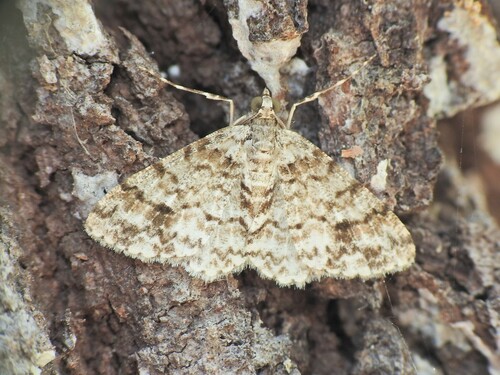
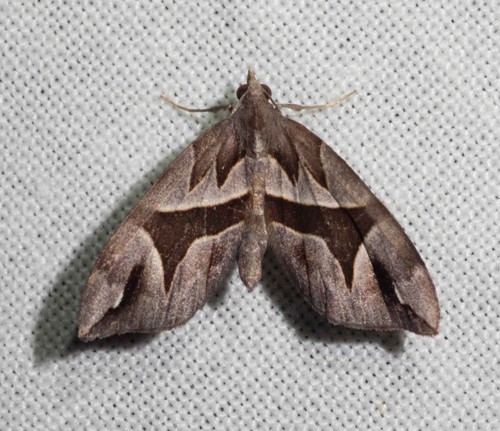
Burmese Engrailed Moth

Burmese Engrailed Moth

Ectropis bhurmitra

Daily sighting probability ~10% · With luck
at Springbrook National Park

In 3 days ~20% in a week ~40%

9 Verified sightings at Springbrook National Park From 2019 to 2026
24 In all 3 parks
November Best month
☀️🌙 Day & Night When it's spotted

About the Burmese Engrailed Moth

Ectropis bhurmitra, the tea twig caterpillar, is a moth of the family Geometridae. The species was first described by Francis Walker in 1860. A widespread Asian species, it is found around Indo-Australian tropics from India, Sri Lanka and Hong Kong, Taiwan, Thailand, New Guinea to Australian Queensland and the Solomon Islands.

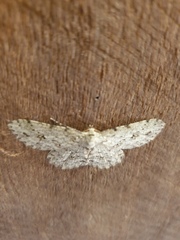
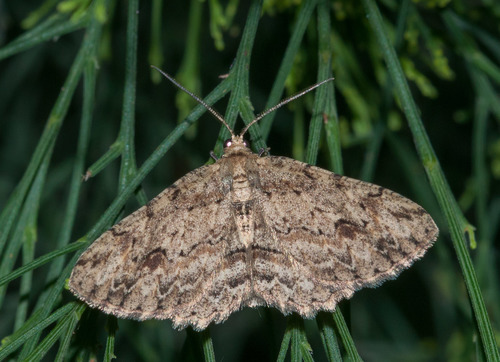
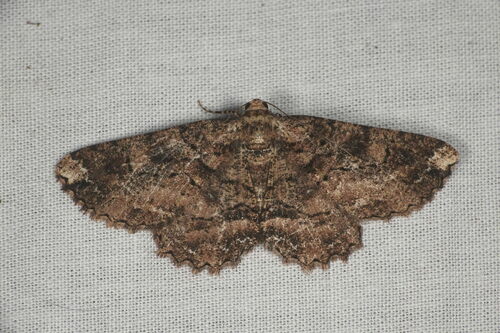
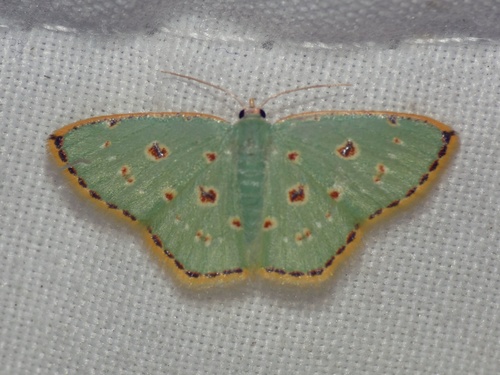
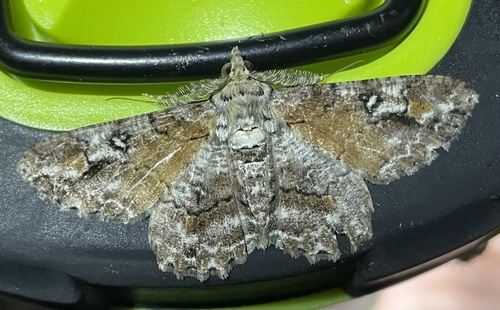
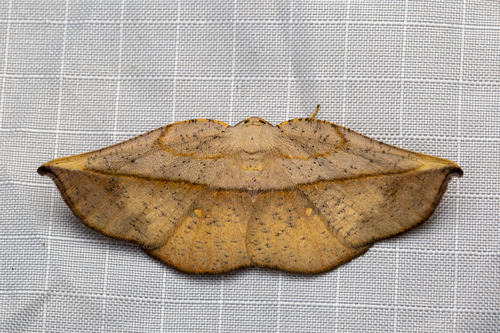
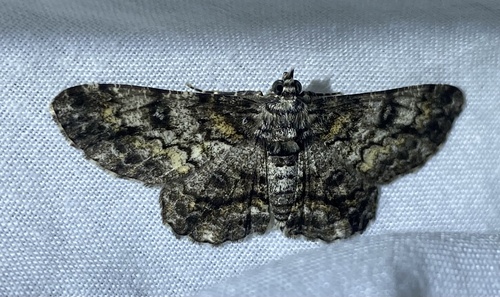
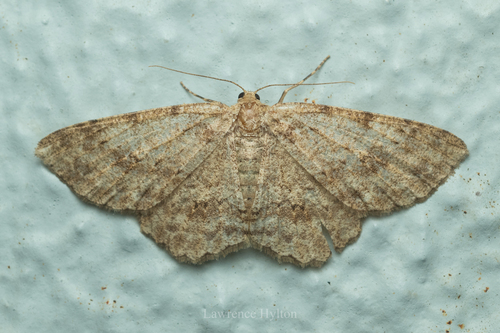
The wingspan of the adult is 3 cm. Its ground colour is fawn with a brown fasciations with complex patterns. A blurry dark blotch is found near the middle of each forewing. The caterpillar has a dull, pale yellow dorsum and fuscous ventral side with pink suffusion. A rusty colour appears towards the posterior end. Setae arise from black dots. Pupation occurs within a silken cell woven between leaves.

It is a polyphagous species. The caterpillar has been recorded from several plant species of many families. Host plants include Bombax ceiba, Terminalia, Artemisia vulgaris, Shorea, Aleurites, Phyllanthus, Albizia, Eucalyptus, Lantana camara, Sambucus, Uncaria gambir, Cassia, Indigofera, Leucaena, Allium, Eugenia, Syzygium, Champereia, Grevillea robusta, Breonia (syn. Anthocephalus), Coffea arabica, Elettaria cardamomum, Camellia sinensis... Wikipedia →
Global Distribution

Parks Where Found

# Park Country Daily sighting probability
1 Springbrook National Park 🇦🇺 Australia
~10%
2 Daintree National Park 🇦🇺 Australia
~10%
3 Taroko National Park 🇹🇼 Taiwan
~10%

Cities Where Found

# City Country Daily sighting probability
1 Hong Kong 🇨🇳 China
~10%
2 Tuen Mun 🇨🇳 China
<5%
3 Taipei 🇹🇼 Taiwan
<5%

Before you go

What are the chances of seeing a Burmese Engrailed Moth in Springbrook National Park?

With luck

About 10% of wildlife watchers report a Burmese Engrailed Moth sighting in Springbrook National Park on a given day, based on 9 verified sightings from GBIF citizen-science data from 2019 to 2026. It is the 203rd most-seen of the 429 insects we can rate there. Over three days the chance rises to about 20%, and over a week to about 40%, if each day is a fresh chance.

When is the best time to see a Burmese Engrailed Moth in Springbrook National Park?

November

In that month about 20% of wildlife watchers report a Burmese Engrailed Moth in Springbrook National Park on a given day, against under 5% in January, March–May, August and October, the lowest months.

What time of day is best to see a Burmese Engrailed Moth?

Between 8 and 11 pm

Across all the parks we cover, that three-hour window holds the most Burmese Engrailed Moth sightings with a recorded time, and about 7 in 10 of them come between 6 pm and 6 am: it is seen both by day and at night.

Is Springbrook National Park the best place to see a Burmese Engrailed Moth?

Yes

Of the 3 parks where we can rate Burmese Engrailed Moth sightings, Springbrook National Park has the highest daily chance: about 10%. Next come Daintree National Park (Australia, about 10%) and Taroko National Park (Taiwan, about 10%).

Where does the Burmese Engrailed Moth sighting chance come from?

GBIF citizen-science records

It is estimated from how often the Burmese Engrailed Moth is recorded against all the insects logged in Springbrook National Park (9 verified sightings from 2019 to 2026), calibrated against known sighting rates. Figures are rounded to the nearest 10% because citizen-science data supports honest approximations, not decimals, and months with records from fewer than five people show "—". How it works.

← Back to Springbrook National Park