About the Long-tailed Jaeger
The long-tailed jaeger or long-tailed skua (Stercorarius longicaudus) is a seabird in the skua family Stercorariidae. The word "jaeger" is derived from the German word Jäger, meaning "hunter". The English word "skua" comes from the Faroese name skúgvur [ˈskɪkvʊər] for the great skua, with the island of Skúvoy known for its colony of that bird. The general Faroese term for skuas is kjógvi [ˈtʃɛkvə]. The genus name Stercorarius is Latin and means "of dung"; the food disgorged by other birds when pursued by skuas was once thought to be excrement. The specific longicaudus is from Latin longus, "long", and cauda, "tail".
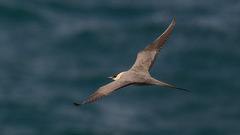
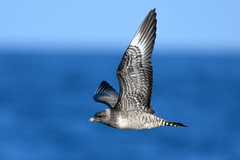
This species is unmistakable as an adult, with grey back, dark primary wing feathers without a white "flash", black cap and very long tail. Adults often hover over their breeding territories. Juveniles are much more problematic, and are difficult to separate from parasitic jaeger over the sea. They are slimmer, longer-winged and more tern-like than that species, but show the same wide range of plumage variation. However, they are usually colder toned than Arctic, with greyer shades, rather than brown.
This is the smallest of the skua family... Wikipedia →