West African Potto

West African Potto

Perodicticus potto

Silhouette: T. Michael Keesey · PhyloPic

LCNTNear ThreatenedVUENCR
Daily sighting probability ~40% · Likely
at Taï National Park

In 3 days ~80% in a week >90%

8 Verified sightings at Taï National Park From 2019 to 2026
8 In 1 park
June Best month
🌙 Nocturnal When it's spotted

About the West African Potto

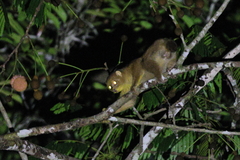
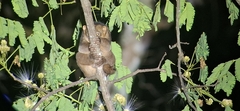
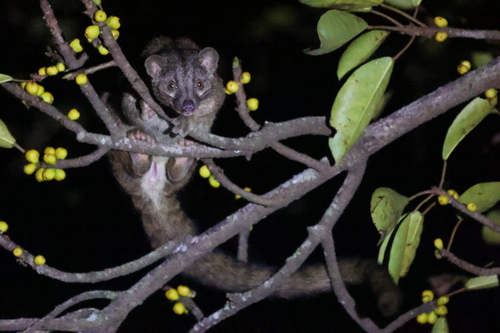
The West African potto (Perodicticus potto) is a species of nocturnal strepsirrhine primate. It is found in tropical West Africa. It is also known as Bosman's potto, after Willem Bosman, who described the species in 1704. It is the type species of the genus Perodicticus.

This species was formerly considered the only species in the genus Perodicticus, but a 2015 study split it into three species, with only the name Perodicticus potto only applying to the West African population. Within the West African potto group (Perodicticus potto), current taxonomy recognizes two main subspecies:

Perodicticus potto potto: The nominate subspecies. It inhabits the rainforests of West Africa, from Guinea and Sierra Leone to Ghana. Perodicticus potto juju (Benin potto): Proposed as a subspecies found east of the Volta River in Ghana. Some experts suggest it could also merit separate species status due to its cranial and dental variations.

Phylogenetic evidence supports the West African potto being the most basal member of the genus Perodicticus, with the other two species being sister species to one another. It is thought to have diverged from the other species during the mid-late Miocene... Wikipedia →

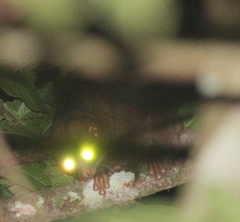
Global Distribution

Parks Where Found

# Park Country Daily sighting probability
1 Taï National Park 🇨🇮 Ivory Coast
~40%

More parks will be added in future updates.

Zoos & Centres Where Found

# Zoo / Centre Country
1 Cincinnati Zoo and Botanical Garden 🇺🇸 United States In captivity
2 Omaha’s Henry Doorly Zoo and Aquarium 🇺🇸 United States In captivity
3 Franklin Park Zoo 🇺🇸 United States In captivity

Before you go

What are the chances of seeing a West African Potto in Taï National Park?

Likely

About 40% of wildlife watchers report a West African Potto sighting in Taï National Park on a given day, based on 8 verified sightings from GBIF citizen-science data from 2019 to 2026. It is the 6th most-seen of the 14 mammals we can rate there. Over three days the chance rises to about 80%, and over a week to over 90%, if each day is a fresh chance.

When is the best time to see a West African Potto in Taï National Park?

June

In that month about 70% of wildlife watchers report a West African Potto in Taï National Park on a given day, against about 10% in March, July and September, the lowest months. That is one of Taï National Park's wettest months, with about 280 mm of rain against 40 mm in December. October to February have too few records to rate.

What time of day is best to see a West African Potto?

Between 7 and 10 pm

Across all the parks we cover, that three-hour window holds the most West African Potto sightings with a recorded time, and about 8 in 10 of them come between 6 pm and 6 am: it is mostly seen at night.

Where else can you see a West African Potto?

Only Taï National Park, in our data

Taï National Park is the only park on Wallace's Line with enough records to rate West African Potto sightings: about 40% of wildlife watchers there report one on a given day.

Which relatives of the West African Potto live in Taï National Park?

Same order: Primates

The closest relatives of the West African Potto that you can see in Taï National Park (order Primates) are Western Red Colobus (about 60%), Smoky Mangabey (about 50%) and Diana Monkey (about 50%), with each one's daily chance of a sighting.

Where does the West African Potto sighting chance come from?

GBIF citizen-science records

It is estimated from how often the West African Potto is recorded against all the mammals logged in Taï National Park (8 verified sightings from 2019 to 2026), calibrated against known sighting rates. Figures are rounded to the nearest 10% because citizen-science data supports honest approximations, not decimals, and months with records from fewer than five people show "—". How it works.

← Back to Taï National Park