Black-capped Tinamou

Black-capped Tinamou

Crypturellus atrocapillus

Silhouette: J. N. Wiegers · PhyloPic

LCLeast ConcernNTVUENCR
Daily sighting probability <5% · Rare
at Tambopata National Reserve

In 3 days <5%

5 Verified sightings at Tambopata National Reserve From 2019 to 2026
654 In all 3 parks
January Best month
☀️ Diurnal When it's spotted

About the Black-capped Tinamou

The black-capped tinamou (Crypturellus atrocapillus) is a type of tinamou commonly found in the moist forest lowlands in subtropical and tropical regions. All tinamou are from the family Tinamidae, and in the larger scheme are also ratites. Unlike other ratites, tinamous can fly, although in general, they are not strong fliers. All ratites evolved from prehistoric flying birds, and tinamous are the closest living relative of these birds.

The black-capped tinamou has two subspecies as follows: C. a. atrocapillus, nominate race, occurs in the lowlands of southeastern Peru. Crypturellus is formed from three Latin or Greek words. kruptos meaning "covered" or "hidden", oura meaning "tail", and ellus meaning "diminutive". Therefore, Crypturellus means small hidden tail.

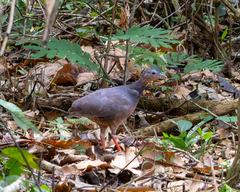
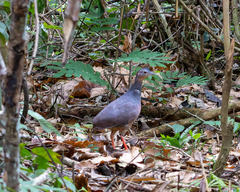
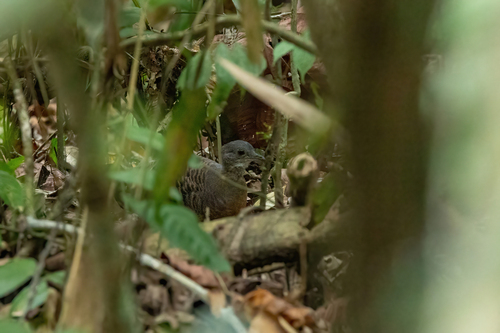
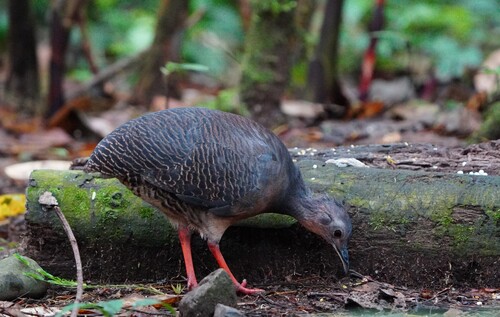
The black-capped tinamou is approximately 28 to 30 cm (11–12 in) in length. Its upper-parts are brown, mottled and barred blackish, throat and neck are rufescent, breast is dark grey, and the remainder of underparts are cinnamon to buff. Its cap is blackish and legs could be pale red or bright red. The females are more... Wikipedia →
Sounds

Call0:07

Bolivia · 2021

© Jacob Wijpkema · XC686807 · CC BY-NC-SA 4.0

Song0:37

Brazil · 2019

© Felipe Arantes · XC475704 · CC BY-NC-SA 4.0

Song0:25

Brazil · 2019

© GABRIEL LEITE · XC474806 · CC BY-NC-SA 4.0

Global Distribution

Parks Where Found

# Park Country Daily sighting probability
1 Manu National Park 🇵🇪 Peru
~10%
2 Amboró National Park 🇧🇴 Bolivia
~10%
3 Tambopata National Reserve 🇵🇪 Peru
<5%

Before you go

What are the chances of seeing a Black-capped Tinamou in Tambopata National Reserve?

Rare

Under 5% of wildlife watchers report a Black-capped Tinamou sighting in Tambopata National Reserve on a given day, based on 5 verified sightings from GBIF citizen-science data from 2019 to 2026. It is the 539th most-seen of the 550 birds we can rate there. Over three days the chance rises to under 5%, if each day is a fresh chance.

When is the best time to see a Black-capped Tinamou in Tambopata National Reserve?

Any time of year

In every month with enough records, under 5% of wildlife watchers report a Black-capped Tinamou in Tambopata National Reserve on a given day, so our monthly data shows no clear season.

What time of day is best to see a Black-capped Tinamou?

Between 10 am and 1 pm

Across all the parks we cover, that three-hour window holds the most Black-capped Tinamou sightings with a recorded time, and about 8 in 10 of them come between 6 am and 6 pm: it is a daytime animal.

Is Tambopata National Reserve the best place to see a Black-capped Tinamou?

3rd of 3

Of the 3 parks where we can rate Black-capped Tinamou sightings, Tambopata National Reserve ranks 3rd at under 5%. The best odds are in Manu National Park (Peru, about 10%) and Amboró National Park (Bolivia, about 10%).

Which relatives of the Black-capped Tinamou live in Tambopata National Reserve?

Same genus: Crypturellus

The closest relatives of the Black-capped Tinamou that you can see in Tambopata National Reserve (genus Crypturellus, Crypturellus Tinamous) are Undulated Tinamou (about 40%), Cinereous Tinamou (about 10%) and Little Tinamou (about 10%), with each one's daily chance of a sighting.

Where does the Black-capped Tinamou sighting chance come from?

GBIF citizen-science records

It is estimated from how often the Black-capped Tinamou is recorded against all the birds logged in Tambopata National Reserve (5 verified sightings from 2019 to 2026), calibrated against known sighting rates. Figures are rounded to the nearest 10% because citizen-science data supports honest approximations, not decimals, and months with records from fewer than five people show "—". How it works.

← Back to Tambopata National Reserve