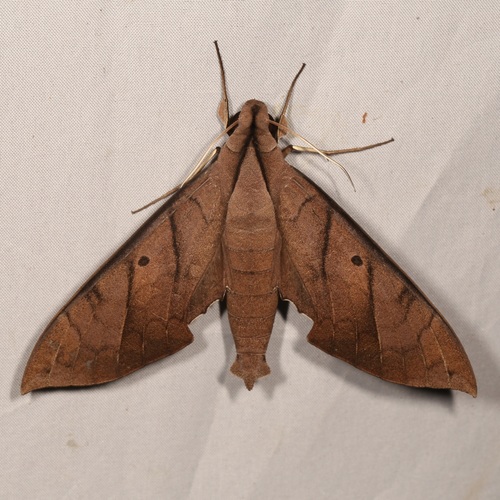
Giant Silk Moth

Giant Silk Moth

Arsenura armida

Daily sighting probability ~10% · With luck
at Tambopata National Reserve

In 3 days ~20% in a week ~40%

6 Verified sightings at Tambopata National Reserve From 2019 to 2026
54 In all 5 parks
December Best month
☀️🌙 Day & Night When it's spotted

About the Giant Silk Moth

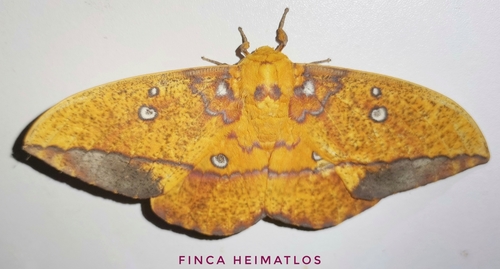
Arsenura armida, the giant silk moth, is a moth of the family Saturniidae. It is found mainly in South and Central America, from Mexico to Bolivia, and Ecuador to south-eastern Brazil. It was first described by Pieter Cramer in 1779.

It is the only known Neotropical arsenurinae to exhibit a combination of strong aposematism, gregariousness, and trail-following behavior in its larval stage. The larvae are brightly colored, with bright black and yellow bands, which signal their unpleasant taste to birds. The larvae are also fatally poisonous to some species of birds. During the day, the larvae rest in large conspicuous masses on the trunks of trees, and descend at night to feed. When returning at dawn, they follow a silk-less pheromone trail to their original central place location. This social behavior is remarkable for the larvae; other members of the genus live more solitary lives.

The larvae feed on Guazuma ulmifolia, Rollinia membranacea and Bombacopsis quinatum. After the larva's fourth instar, it will descend from the larval mass, excavate a small chamber in the soil and pupate. Then, shortly after the rainy season in June, the pupa will eclose (emerge). The adult form of the species are large brown moths which possess a wingspan of 100–120 mm. The adults will mate the same night they emerge, and afterwards the females will lay their eggs in large batches on the underside tree leaves.

To the indigenous people of the Zongolica area of Veracruz, the larvae are also a form of sustenance; they are gathered and eaten after being cooked. Wikipedia →

Global Distribution

Parks Where Found

# Park Country Daily sighting probability
1 Yasuní National Park 🇪🇨 Ecuador
~10%
2 Tapantí-Macizo de la Muerte National Park 🇨🇷 Costa Rica
~10%
3 Tambopata National Reserve 🇵🇪 Peru
~10%
4 Soberanía National Park 🇵🇦 Panama
~10%
5 Monteverde Cloud Forest Reserve 🇨🇷 Costa Rica
~10%

Cities Where Found

# City Country Daily sighting probability
1 Panama City 🇵🇦 Panama
<5%

Before you go

What are the chances of seeing a Giant Silk Moth in Tambopata National Reserve?

With luck

About 10% of wildlife watchers report a Giant Silk Moth sighting in Tambopata National Reserve on a given day, based on 6 verified sightings from GBIF citizen-science data from 2019 to 2026. It is the 111th most-seen of the 141 insects we can rate there. Over three days the chance rises to about 20%, and over a week to about 40%, if each day is a fresh chance.

When is the best time to see a Giant Silk Moth in Tambopata National Reserve?

December

In that month about 30% of wildlife watchers report a Giant Silk Moth in Tambopata National Reserve on a given day, against under 5% in January–July and September–October, the lowest months. That is one of Tambopata National Reserve's wettest months, with about 400 mm of rain against 45 mm in July.

What time of day is best to see a Giant Silk Moth?

Between 7 and 10 pm

Across all the parks we cover, that three-hour window holds the most Giant Silk Moth sightings with a recorded time, and about 7 in 10 of them come between 6 pm and 6 am: it is seen both by day and at night.

Is Tambopata National Reserve the best place to see a Giant Silk Moth?

Among the best

Of the 5 parks where we can rate Giant Silk Moth sightings, Tambopata National Reserve ranks 3rd at about 10%, level with the leaders once rounded. The best odds are in Yasuní National Park (Ecuador, about 10%) and Tapantí-Macizo de la Muerte National Park (Costa Rica, about 10%).

Which relatives of the Giant Silk Moth live in Tambopata National Reserve?

Same family: Saturniidae

The closest relatives of the Giant Silk Moth that you can see in Tambopata National Reserve (family Saturniidae, Emperor and Giant Silk Moths) are Eacles penelope (about 10%), Procitheronia fenestrata (about 10%) and Automeris liberia (about 10%), with each one's daily chance of a sighting.

Where does the Giant Silk Moth sighting chance come from?

GBIF citizen-science records

It is estimated from how often the Giant Silk Moth is recorded against all the insects logged in Tambopata National Reserve (6 verified sightings from 2019 to 2026), calibrated against known sighting rates. Figures are rounded to the nearest 10% because citizen-science data supports honest approximations, not decimals, and months with records from fewer than five people show "—". How it works.

← Back to Tambopata National Reserve