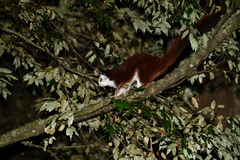
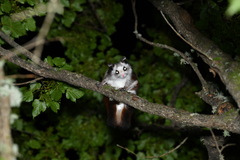
Taiwan Giant Flying Squirrel

Taiwan Giant Flying Squirrel

Petaurista lena

Silhouette: CBG Photography Group, Centre for Biodiversity Genomics (photograph) · PhyloPic

Endemic
Daily sighting probability ~10% · With luck
at Taroko National Park

In 3 days ~30% in a week ~60%

7 Verified sightings at Taroko National Park From 2019 to 2026
7 In 1 park
June Best month
🌙 Nocturnal When it's spotted

About the Taiwan Giant Flying Squirrel

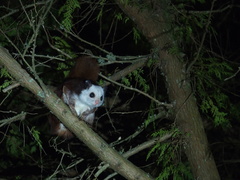
The red and white giant flying squirrel (Petaurista alborufus) is a species of rodent in the family Sciuridae. It is a very large, dark rufous-red, buff and white flying squirrel found in forests at altitudes of 800–3,500 m (2,600–11,500 ft) in mainland China and 1,200–3,750 m (3,940–12,300 ft) in Taiwan, although the population of the latter island is distinctive and likely better regarded as a separate species, the Taiwan giant flying squirrel (P. lena). Additionally, the red and white giant flying squirrel possibly ranges into northeastern South Asia and far northern Mainland Southeast Asia. This squirrel has a wide range and is relatively common, and the International Union for Conservation of Nature lists it as being of "least concern".

They spend their days sleeping in a tree hollow, emerging at night to forage in the trees. Their diet consists primarily of nuts and fruits, but also includes leafy vegetation, insects and their larvae. Like other flying squirrels, this species can move between trees by gliding (not actually flying like a bat), exceptionally as much as 400 m (1,300 ft). This is achieved by the patagium, skin spread out between its limbs. Wikipedia →

Sounds

Recording0:09

Taiwan · 2025

© taiwan_habu · iNaturalist · CC BY-NC 4.0

Recording0:13

Taiwan · 2025

© Amaël Borzée · iNaturalist · CC BY-NC 4.0

Recording0:09

Taiwan · 2023

© 丸善斯基 · iNaturalist · CC BY-NC 4.0

Global Distribution

Parks Where Found

# Park Country Daily sighting probability
1 Taroko National Park 🇹🇼 Taiwan
~10%

More parks will be added in future updates.

Zoos & Centres Where Found

# Zoo / Centre Country
1 Ocean Fantasy Museum 🇹🇼 Taiwan In captivity

Before you go

What are the chances of seeing a Taiwan Giant Flying Squirrel in Taroko National Park?

With luck

About 10% of wildlife watchers report a Taiwan Giant Flying Squirrel sighting in Taroko National Park on a given day, based on 7 verified sightings from GBIF citizen-science data from 2019 to 2026. It is the 8th most-seen of the 12 mammals we can rate there. Over three days the chance rises to about 30%, and over a week to about 60%, if each day is a fresh chance.

When is the best time to see a Taiwan Giant Flying Squirrel in Taroko National Park?

March–April and June–July

In those months about 20% of wildlife watchers report a Taiwan Giant Flying Squirrel in Taroko National Park on a given day, against under 5% in August to February, the lowest months.

What time of day is best to see a Taiwan Giant Flying Squirrel?

Between 7 and 10 pm

Across all the parks we cover, that three-hour window holds the most Taiwan Giant Flying Squirrel sightings with a recorded time, and about 9 in 10 of them come between 6 pm and 6 am: it is mostly seen at night.

Where else can you see a Taiwan Giant Flying Squirrel?

Only Taroko National Park, in our data

Taroko National Park is the only park on Wallace's Line with enough records to rate Taiwan Giant Flying Squirrel sightings: about 10% of wildlife watchers there report one on a given day.

Which relatives of the Taiwan Giant Flying Squirrel live in Taroko National Park?

Same family: Sciuridae

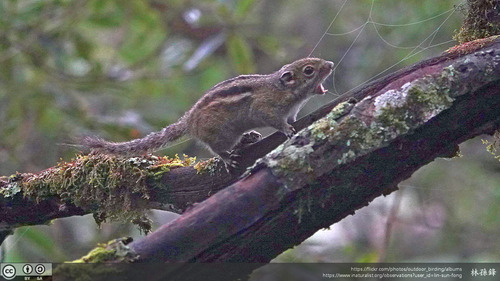
The closest relatives of the Taiwan Giant Flying Squirrel that you can see in Taroko National Park (family Sciuridae, Squirrels) are Maritime Striped Squirrel (about 30%), Pallas's Squirrel (about 10%) and Perny's Long-nosed Squirrel (about 10%), with each one's daily chance of a sighting.

Where does the Taiwan Giant Flying Squirrel sighting chance come from?

GBIF citizen-science records

It is estimated from how often the Taiwan Giant Flying Squirrel is recorded against all the mammals logged in Taroko National Park (7 verified sightings from 2019 to 2026), calibrated against known sighting rates. Figures are rounded to the nearest 10% because citizen-science data supports honest approximations, not decimals, and months with records from fewer than five people show "—". How it works.

← Back to Taroko National Park