Teita Fiscal

Teita Fiscal

Lanius dorsalis

Silhouette: Andy Wilson · PhyloPic

LCLeast ConcernNTVUENCR
Daily sighting probability ~50% · Likely
at Tsavo East National Park

In 3 days ~90% in a week >90%

519 Verified sightings at Tsavo East National Park From 2019 to 2026
2,130 In all 11 parks
July Best month
☀️ Diurnal When it's spotted

About the Teita Fiscal

The Taita fiscal or Teita fiscal (Lanius dorsalis) is a member of the shrike family found in east Africa from southeastern South Sudan, southern Ethiopia, and western Somalia to northeastern Tanzania. Its habitat is dry open thornbush and acacia and other dry open woodland.

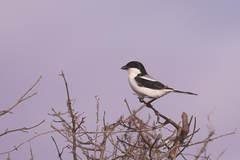
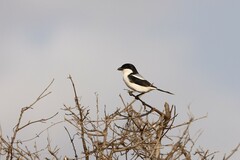
This is a fairly distinctive 21 cm (8.3 in)-long passerine with white underparts and a black crown, hindneck and wings. The back is grey with a characteristic white 'V' and the rump is white. The tail is relatively long and black with white outer feathers. There is a small white patch on the wings. The bill, eyes and legs are black. The adult male and female Taita fiscal have similar plumage except for a rufous lower flank of the female which is usually hidden by the wing.

The juvenile is mainly brown–black above, with barring on the head and buff tips to the shoulder feathers. Its underparts are whitish with darker barring. The adult Taita fiscal is distinguished from other black-headed fiscals by the grey back and the wing pattern, if those are well seen. It gives a jumbled mix of shrike-like whistles and buzzes, including a chwaa-pikerrek-chrrrr-yook pikechik song.

The Taita... Wikipedia →

Sounds

Song1:24

Ethiopia · 2015

© Andrew Spencer · XC210028 · CC BY-NC-SA 4.0

Global Distribution

Parks Where Found

# Park Country Daily sighting probability
1 Tsavo East National Park 🇰🇪 Kenya
~50%
2 Samburu National Reserve 🇰🇪 Kenya
~50%
3 Meru National Park 🇰🇪 Kenya
~30%
4 Amboseli National Park 🇰🇪 Kenya
~30%
5 Tsavo West National Park 🇰🇪 Kenya
~20%
6 Ngorongoro Conservation Area 🇹🇿 Tanzania
~10%
7 Serengeti National Park 🇹🇿 Tanzania
~10%
8 Arusha National Park 🇹🇿 Tanzania
<5%
9 Tarangire National Park 🇹🇿 Tanzania
<5%
10 Nairobi National Park 🇰🇪 Kenya
<5%
11 Masai Mara National Reserve 🇰🇪 Kenya
<5%

Before you go

What are the chances of seeing a Teita Fiscal in Tsavo East National Park?

Likely

About 50% of wildlife watchers report a Teita Fiscal sighting in Tsavo East National Park on a given day, based on 519 verified sightings from GBIF citizen-science data from 2019 to 2026. It is the 18th most-seen of the 345 birds we can rate there. Over three days the chance rises to about 90%, and over a week to over 90%, if each day is a fresh chance.

When is the best time to see a Teita Fiscal in Tsavo East National Park?

April and July

In those months about 70% of wildlife watchers report a Teita Fiscal in Tsavo East National Park on a given day, against about 40% in January, March and November, the lowest months.

What time of day is best to see a Teita Fiscal?

Between 7 and 10 am

Across all the parks we cover, that three-hour window holds the most Teita Fiscal sightings with a recorded time, and about 8 in 10 of them come between 6 am and 6 pm: it is a daytime animal.

Is Tsavo East National Park the best place to see a Teita Fiscal?

Yes

Of the 11 parks where we can rate Teita Fiscal sightings, Tsavo East National Park has the highest daily chance: about 50%. Next come Samburu National Reserve (Kenya, about 50%) and Meru National Park (Kenya, about 30%). All parks ranked.

Which relatives of the Teita Fiscal live in Tsavo East National Park?

Same genus: Lanius

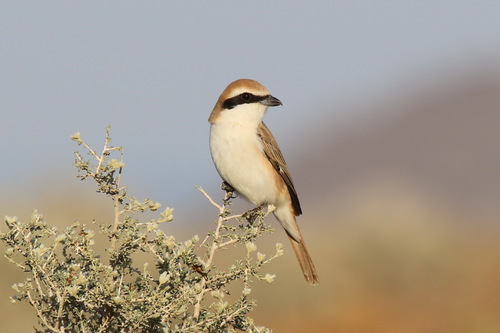
The closest relatives of the Teita Fiscal that you can see in Tsavo East National Park (genus Lanius, Typical Shrikes) are Long-tailed Fiscal (about 30%), Red-backed Shrike (about 10%) and Isabelline Shrike (about 10%), with each one's daily chance of a sighting.

Where does the Teita Fiscal sighting chance come from?

GBIF citizen-science records

It is estimated from how often the Teita Fiscal is recorded against all the birds logged in Tsavo East National Park (519 verified sightings from 2019 to 2026), calibrated against known sighting rates. Figures are rounded to the nearest 10% because citizen-science data supports honest approximations, not decimals, and months with records from fewer than five people show "—". How it works.

← Back to Tsavo East National Park