Spotted Fritillary

Spotted Fritillary

Melitaea didyma

Daily sighting probability ~30% · Possible
at Vanoise National Park

In 3 days ~70% in a week ~90%

59 Verified sightings at Vanoise National Park From 2019 to 2026
593 In all 9 parks
August Best month
☀️ Diurnal When it's spotted

About the Spotted Fritillary

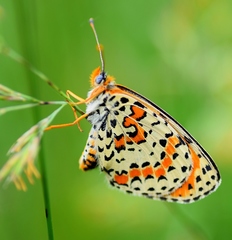
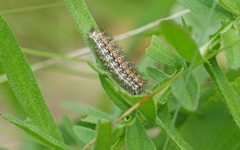
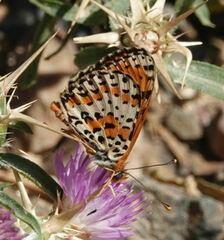
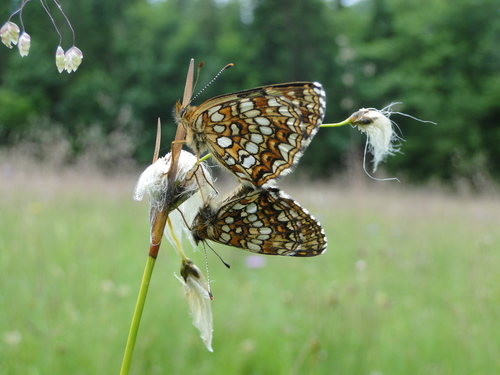
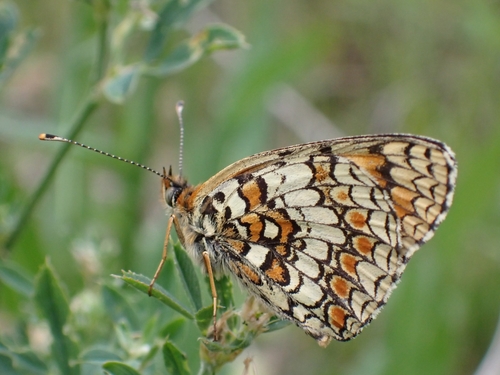
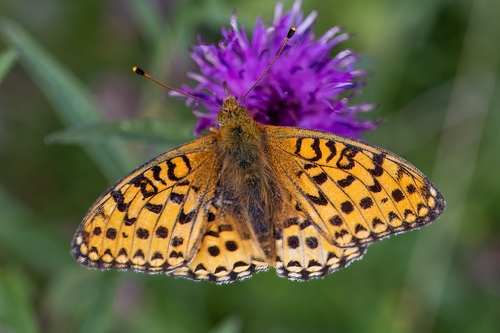
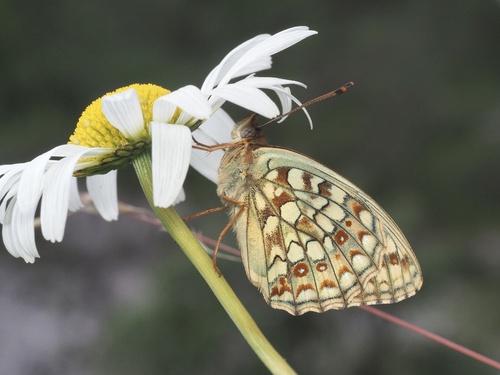
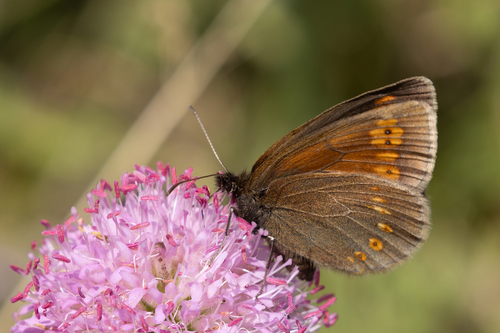
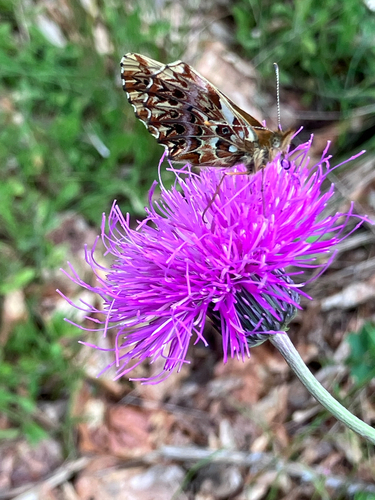
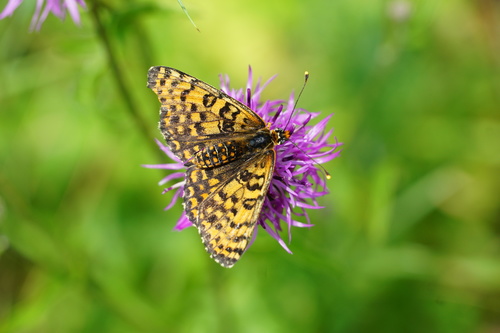
Melitaea didyma, the spotted fritillary or red-band fritillary, is a Palearctic butterfly of the family Nymphalidae. Melitaea didyma is a medium-sized butterfly with a wingspan reaching 35–50 millimetres (1.4–2.0 in). The overside of the wings is a bright orange-brown with dark brown markings arranged in rows, which are quite variable in quantity and size. Sometimes the colour of the females is a duller orange, shaded with grey-green. The underside of the wings is chequered pale yellow and pale orange. M. didyma has seasonal forms and sexual dimorphism.

The male is fiery red, with a narrow dentate black distal border and a moderate number of small black dots and spots, which are dispersed over the basal half of the wing and end with a short band extending beyond the cell from the costa into the disc. On the underside, which is very abundantly marked with small black dots and hooks, a flexuose subbasal band and a curved submarginal one are situated on a delicately greenish, or yellowish, white ground. In the female the forewing and the anal area of the hindwing are much paler, being moreover dusted with blackish, while the costal half of the hindwing has preserved the... Wikipedia →
Global Distribution

Parks Where Found

# Park Country Daily sighting probability
1 Vanoise National Park 🇫🇷 France
~30%
2 Aigüestortes National Park 🇪🇸 Spain
~30%
3 Mercantour National Park 🇫🇷 France
~30%
4 Cévennes National Park 🇫🇷 France
~30%
5 Ecrins National Park 🇫🇷 France
~30%
6 Pyrénées National Park 🇫🇷 France
~20%
7 Triglav National Park 🇸🇮 Slovenia
~10%
8 Sierra Nevada National Park 🇪🇸 Spain
~10%
9 Sierra de Guadarrama National Park 🇪🇸 Spain
~10%

Cities Where Found

# City Country Daily sighting probability
1 Turin 🇮🇹 Italy
~20%
2 Milan 🇮🇹 Italy
~10%
3 Rome 🇮🇹 Italy
~10%
4 Lyon 🇫🇷 France
<5%
5 Vienna 🇦🇹 Austria
<5%

Before you go

What are the chances of seeing a Spotted Fritillary in Vanoise National Park?

Possible

About 30% of wildlife watchers report a Spotted Fritillary sighting in Vanoise National Park on a given day, based on 59 verified sightings from GBIF citizen-science data from 2019 to 2026. It is the 14th most-seen of the 308 insects we can rate there. Over three days the chance rises to about 70%, and over a week to about 90%, if each day is a fresh chance.

When is the best time to see a Spotted Fritillary in Vanoise National Park?

July and August

In those months about 40% of wildlife watchers report a Spotted Fritillary in Vanoise National Park on a given day, against under 5% in September–October and December–May, the lowest months.

What time of day is best to see a Spotted Fritillary?

Between 11 am and 2 pm

Across all the parks we cover, that three-hour window holds the most Spotted Fritillary sightings with a recorded time, and about 9 in 10 of them come between 6 am and 6 pm: it is a daytime animal.

Is Vanoise National Park the best place to see a Spotted Fritillary?

Yes

Of the 9 parks where we can rate Spotted Fritillary sightings, Vanoise National Park has the highest daily chance: about 30%. Next come Aigüestortes National Park (Spain, about 30%) and Mercantour National Park (France, about 30%).

Which relatives of the Spotted Fritillary live in Vanoise National Park?

Same genus: Melitaea

The closest relatives of the Spotted Fritillary that you can see in Vanoise National Park (genus Melitaea) are False Heath Fritillary (about 40%), Knapweed Fritillary (about 20%) and Glanville Fritillary (about 20%), with each one's daily chance of a sighting.

Where does the Spotted Fritillary sighting chance come from?

GBIF citizen-science records

It is estimated from how often the Spotted Fritillary is recorded against all the insects logged in Vanoise National Park (59 verified sightings from 2019 to 2026), calibrated against known sighting rates. Figures are rounded to the nearest 10% because citizen-science data supports honest approximations, not decimals, and months with records from fewer than five people show "—". How it works.

← Back to Vanoise National Park