Two-Spotted Grass Bug

Two-Spotted Grass Bug

Stenotus binotatus

Daily sighting probability ~10% · With luck
at Vanoise National Park

In 3 days ~40% in a week ~70%

14 Verified sightings at Vanoise National Park From 2019 to 2026
63 In all 5 parks
June Best month
☀️ Diurnal When it's spotted

About the Two-Spotted Grass Bug

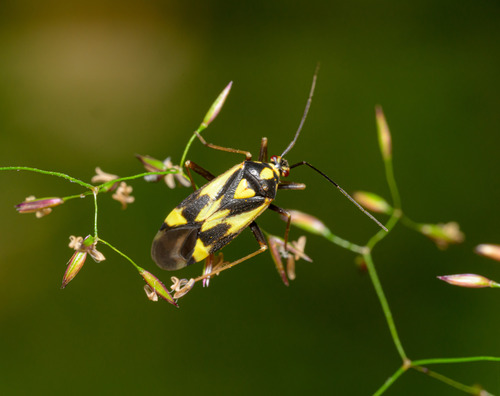
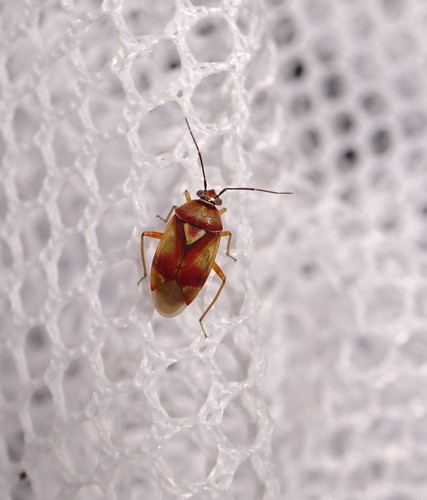
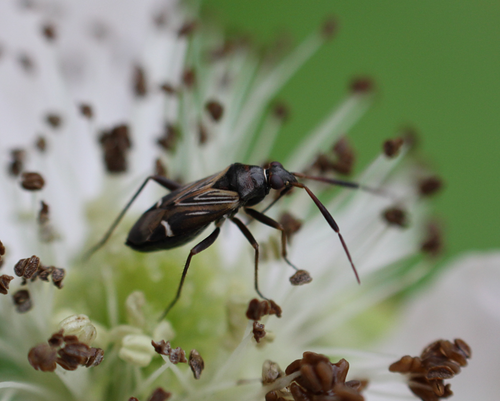
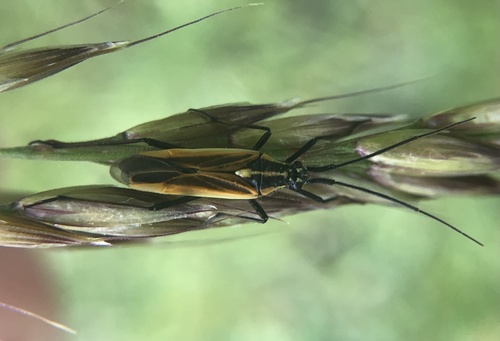
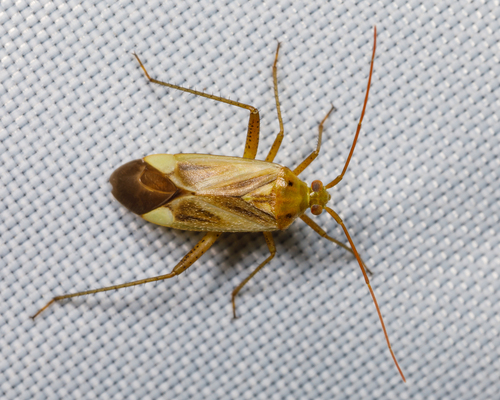
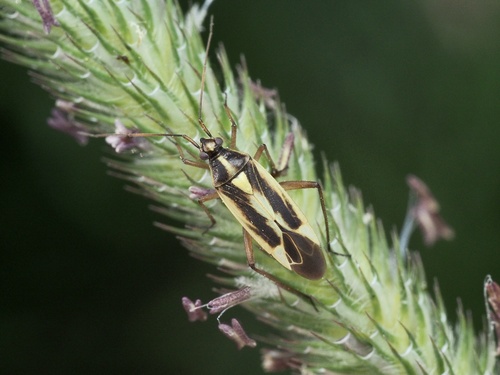
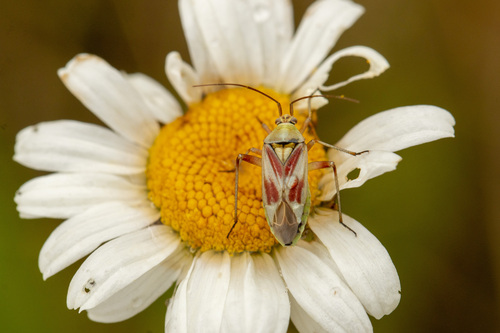
Stenotus binotatus is a species of plant bug, originally from Europe, but now also established across North America and New Zealand. It is 6–7 mm (0.24–0.28 in) long, yellowish, with darker markings on the pronotum and forewings. It feeds on various grasses, and can be a pest of crops such as wheat.

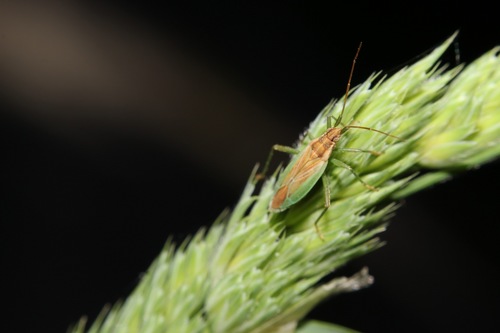
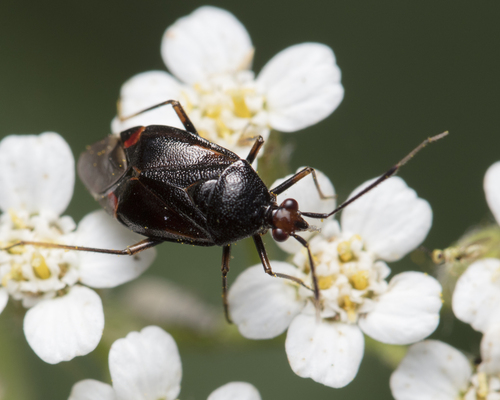
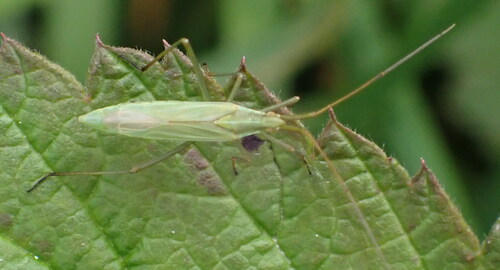
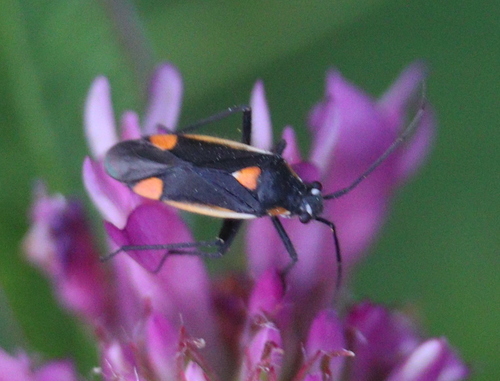
Stenotus binotatus is a fairly large plant bug (6–7 millimetres or 0.24–0.28 inches long), which is somewhat variable in appearance. The insect's sides are roughly parallel, and the colours depend on both the animal's sex and its age, the markings becoming darker and stronger with increasing age. Males are mostly yellow, with darker markings on the pronotum and forewings, which females are greenish-yellow with paler markings.

S. binotatus is native to most of the Palearctic but has been introduced to temperate regions around the world. It is common "throughout the northern and central U.S. and southern Canada", and it has been introduced to New Zealand, where it is now found almost throughout the country.

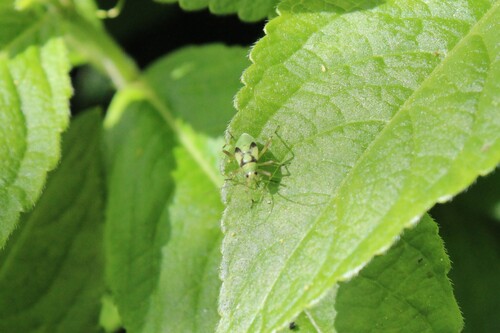
Both the nymphs and adults feed on the inflorescences of grasses, especially timothy-grass (Phleum pratense). In New Zealand, S. binotatus... Wikipedia →
Global Distribution

Parks Where Found

# Park Country Daily sighting probability
1 Vanoise National Park 🇫🇷 France
~10%
2 Fertő-Hanság National Park 🇭🇺 Hungary
~10%
3 Bavarian Forest National Park 🇩🇪 Germany
<5%
4 Pyrénées National Park 🇫🇷 France
<5%
5 Great Smoky Mountains National Park 🇺🇸 United States
<5%

Cities Where Found

# City Country Daily sighting probability
1 Birmingham 🇬🇧 United Kingdom
~10%
2 Hamburg 🇩🇪 Germany
~10%
3 Berlin 🇩🇪 Germany
<5%
4 Lyon 🇫🇷 France
<5%
5 London 🇬🇧 United Kingdom
<5%
6 Liverpool 🇬🇧 United Kingdom
<5%
7 Helsinki 🇫🇮 Finland
<5%
8 Munich 🇩🇪 Germany
<5%
9 Vienna 🇦🇹 Austria
<5%
10 Kyiv 🇺🇦 Ukraine
<5%

Before you go

What are the chances of seeing a Two-Spotted Grass Bug in Vanoise National Park?

With luck

About 10% of wildlife watchers report a Two-Spotted Grass Bug sighting in Vanoise National Park on a given day, based on 14 verified sightings from GBIF citizen-science data from 2019 to 2026. It is the 132nd most-seen of the 308 insects we can rate there. Over three days the chance rises to about 40%, and over a week to about 70%, if each day is a fresh chance.

When is the best time to see a Two-Spotted Grass Bug in Vanoise National Park?

June to August

In those months about 20% of wildlife watchers report a Two-Spotted Grass Bug in Vanoise National Park on a given day, against under 5% in September to May, the lowest months.

What time of day is best to see a Two-Spotted Grass Bug?

Between 10 am and 1 pm

Across all the parks we cover, that three-hour window holds the most Two-Spotted Grass Bug sightings with a recorded time, and nearly all of them come between 6 am and 6 pm: it is a daytime animal.

Is Vanoise National Park the best place to see a Two-Spotted Grass Bug?

Yes

Of the 5 parks where we can rate Two-Spotted Grass Bug sightings, Vanoise National Park has the highest daily chance: about 10%. Next come Fertő-Hanság National Park (Hungary, about 10%) and Bavarian Forest National Park (Germany, under 5%).

Which relatives of the Two-Spotted Grass Bug live in Vanoise National Park?

Same family: Miridae

The closest relatives of the Two-Spotted Grass Bug that you can see in Vanoise National Park (family Miridae, Plant Bugs) are Rosy Plant Bug (about 20%), Grypocoris sexguttatus (about 10%) and Stenodema holsata (about 10%), with each one's daily chance of a sighting.

Where does the Two-Spotted Grass Bug sighting chance come from?

GBIF citizen-science records

It is estimated from how often the Two-Spotted Grass Bug is recorded against all the insects logged in Vanoise National Park (14 verified sightings from 2019 to 2026), calibrated against known sighting rates. Figures are rounded to the nearest 10% because citizen-science data supports honest approximations, not decimals, and months with records from fewer than five people show "—". How it works.

← Back to Vanoise National Park