Sloe Bug

Sloe Bug

Dolycoris baccarum

Daily sighting probability ~30% · Possible
at Vanoise National Park

In 3 days ~70% in a week ~90%

38 Verified sightings at Vanoise National Park From 2019 to 2026
535 In all 16 parks
September Best month
☀️ Diurnal When it's spotted

About the Sloe Bug

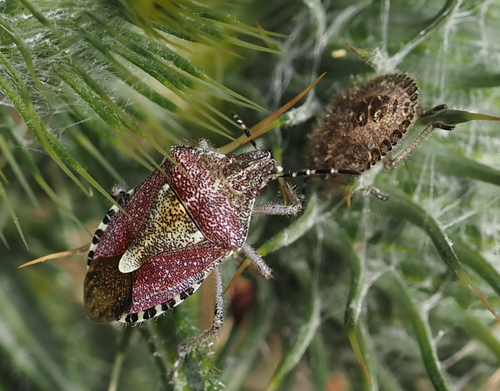
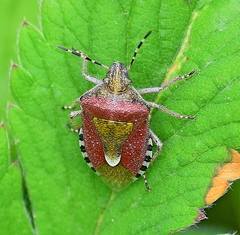
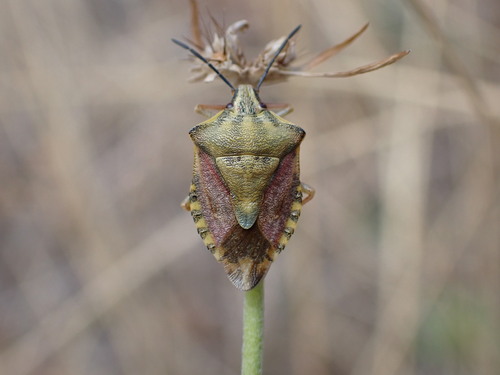
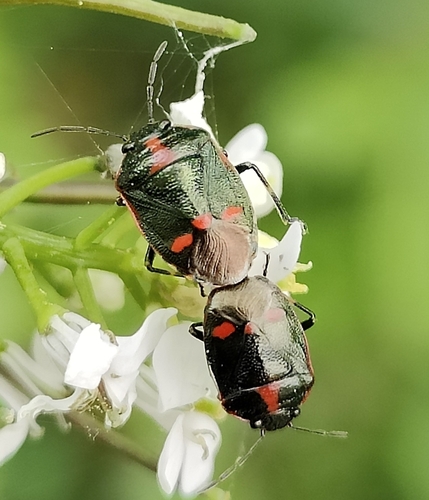
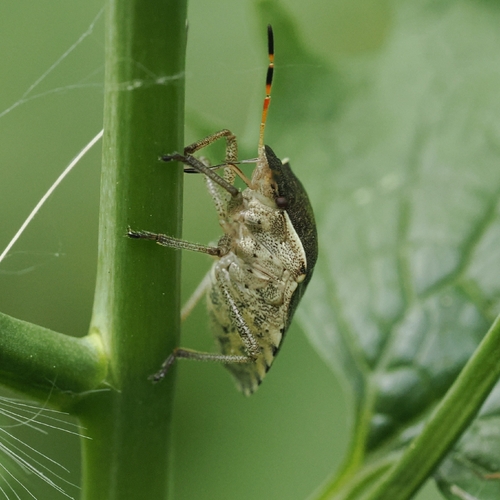
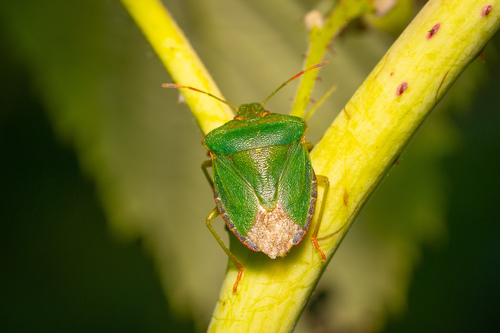
Dolycoris baccarum, the sloe bug or hairy shieldbug, is a species of shield bug in the family Pentatomidae. This species is widespread in most of Europe and Central Asia. These shield bugs mainly inhabit hedgerows and woodland edges, fields, forests, parks and gardens.

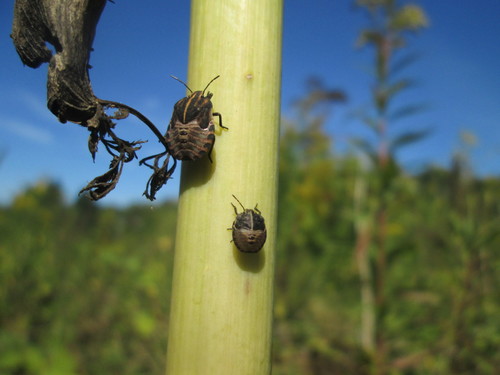
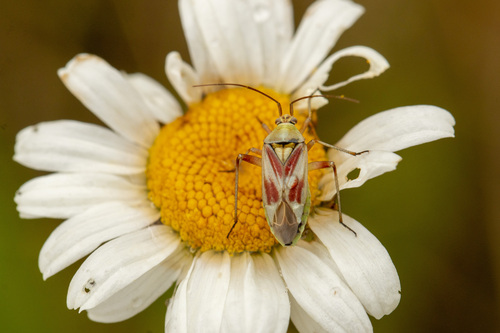
Dolycoris baccarum can reach a length of about 10–12.5 millimetres (0.39–0.49 in). The basic color of pronotum and elytra is quite variable, but usually it is reddish purple, while scutellum is ocher. During the winter the basic color is dull brown. The whole body is quite hairy. The antennae are made by 4-5 black and white sections and the margins of the abdomen (connexivum) are alternately mottled with whitish and black. The male and female are very similar. A related species encountered in Europe is Dolycoris numidicus.

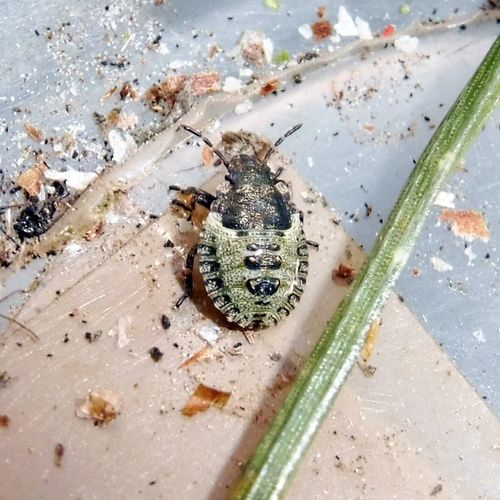
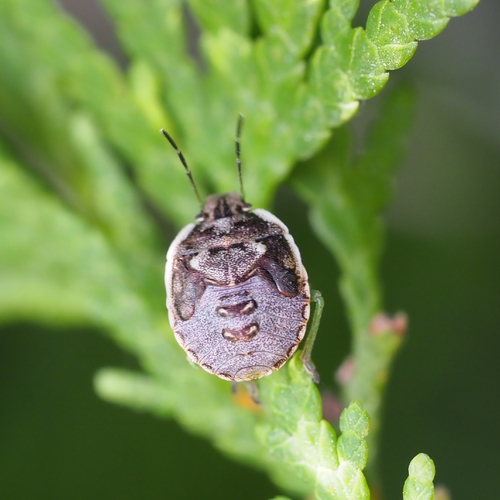
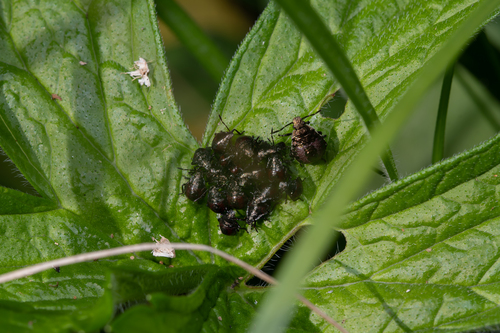
It is univoltine in the northern part of the range and bivoltine in the warmer southern areas. Adults of these shield bugs can be found all year around, as they overwinter. They emerge in the following spring, when they mate and females lay eggs. By the end of summer the new generation of adults appear. Nymphs feed on many plants, especially... Wikipedia →

Global Distribution

Parks Where Found

# Park Country Daily sighting probability
1 Vanoise National Park 🇫🇷 France
~30%
2 Sierra Nevada National Park 🇪🇸 Spain
~30%
3 Mercantour National Park 🇫🇷 France
~30%
4 Kiskunság National Park 🇭🇺 Hungary
~20%
5 Cévennes National Park 🇫🇷 France
~20%
6 Ecrins National Park 🇫🇷 France
~20%
7 Fertő-Hanság National Park 🇭🇺 Hungary
~20%
8 Aigüestortes National Park 🇪🇸 Spain
~20%
9 Bavarian Forest National Park 🇩🇪 Germany
~20%
10 Białowieża National Park 🇵🇱 Poland
~10%
11 Triglav National Park 🇸🇮 Slovenia
~10%
12 Tatra National Park 🇸🇰 Slovakia
~10%
13 Pyrénées National Park 🇫🇷 France
~10%
14 Sierra de Guadarrama National Park 🇪🇸 Spain
~10%
15 Snowdonia National Park 🇬🇧 United Kingdom
~10%
16 Wadden Sea National Park 🇩🇪 Germany
~10%

Cities Where Found

# City Country Daily sighting probability
1 Izmir 🇹🇷 Turkey
~30%
2 Birmingham 🇬🇧 United Kingdom
~20%
3 Helsinki 🇫🇮 Finland
~20%
4 Kharkiv 🇺🇦 Ukraine
~20%
5 Liverpool 🇬🇧 United Kingdom
~20%
6 Manchester 🇬🇧 United Kingdom
~20%
7 London 🇬🇧 United Kingdom
~20%
8 Kyiv 🇺🇦 Ukraine
~20%
9 Lyon 🇫🇷 France
~20%
10 Warsaw 🇵🇱 Poland
~10%

Before you go

What are the chances of seeing a Sloe Bug in Vanoise National Park?

Possible

About 30% of wildlife watchers report a Sloe Bug sighting in Vanoise National Park on a given day, based on 38 verified sightings from GBIF citizen-science data from 2019 to 2026. It is the 23rd most-seen of the 308 insects we can rate there. Over three days the chance rises to about 70%, and over a week to about 90%, if each day is a fresh chance.

When is the best time to see a Sloe Bug in Vanoise National Park?

May and August–September

In those months about 40% of wildlife watchers report a Sloe Bug in Vanoise National Park on a given day, against under 5% in October and December–April, the lowest months.

What time of day is best to see a Sloe Bug?

Between 10 am and 1 pm

Across all the parks we cover, that three-hour window holds the most Sloe Bug sightings with a recorded time, and about 8 in 10 of them come between 6 am and 6 pm: it is a daytime animal.

Is Vanoise National Park the best place to see a Sloe Bug?

Yes

Of the 16 parks where we can rate Sloe Bug sightings, Vanoise National Park has the highest daily chance: about 30%. Next come Sierra Nevada National Park (Spain, about 30%) and Mercantour National Park (France, about 30%).

Where does the Sloe Bug sighting chance come from?

GBIF citizen-science records

It is estimated from how often the Sloe Bug is recorded against all the insects logged in Vanoise National Park (38 verified sightings from 2019 to 2026), calibrated against known sighting rates. Figures are rounded to the nearest 10% because citizen-science data supports honest approximations, not decimals, and months with records from fewer than five people show "—". How it works.

← Back to Vanoise National Park