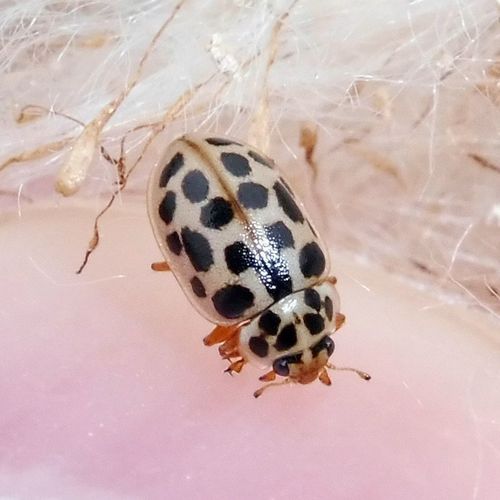
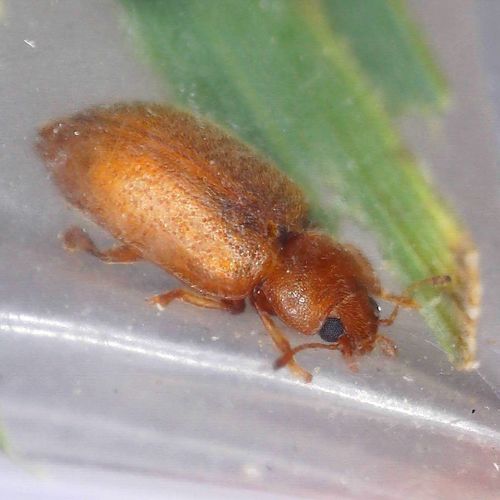
16-Spot Ladybird

16-Spot Ladybird

Tytthaspis sedecimpunctata

Daily sighting probability ~10% · With luck
at Wadden Sea National Park

In 3 days ~20% in a week ~40%

23 Verified sightings at Wadden Sea National Park From 2019 to 2026
76 In all 4 parks
April Best month
☀️ Diurnal When it's spotted

About the 16-Spot Ladybird

Tytthaspis sedecimpunctata is a species of beetle in the family Coccinellidae. Its common English name is the sixteen-spot ladybird. It is found in the Palearctic - Europe, North Africa, European Russia, the Caucasus, Belarus, Ukraine, Moldova, Transcaucasia, Northern Kazakhstan, Western Asia and Northwest China.

It is an inhabitant of the grass layer occurring on dunes, inland dunes, sandy shores and bodden, in Eurasian steppe or on wastelands and dry meadows and occasionally in marshy meadows. It is recorded as feeding on aphids but also on Pucciniales and powdery mildew, on the pollen on Gramineae, Compositae, and Convolvulaceae, and also on mites and thrips (Thysanoptera)

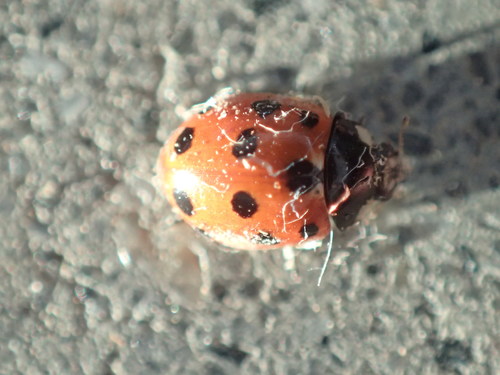
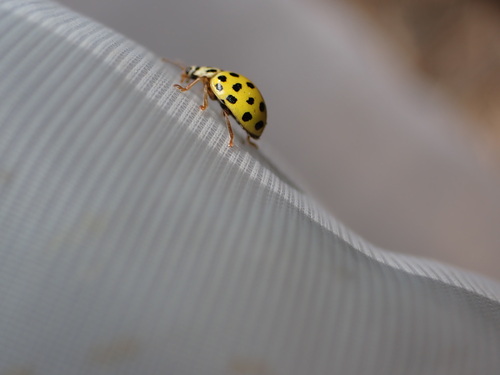
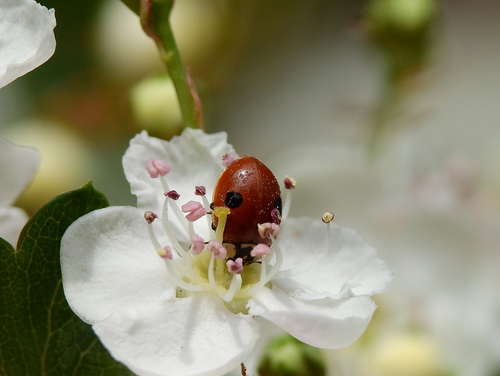
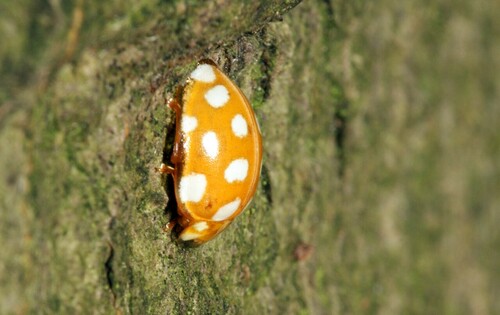
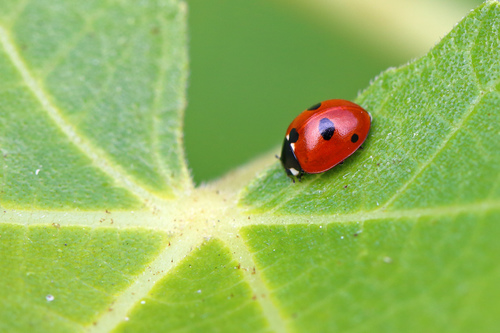
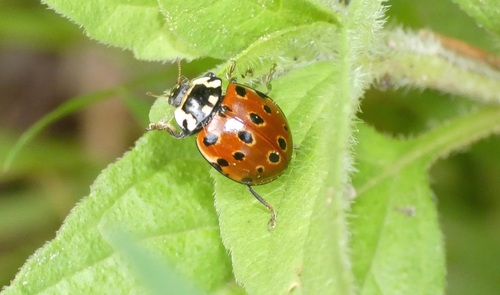
The 16-spot frequently forms very large aggregations on tree trunks, fence posts, logs and so on during winter. It is a small ladybird of around 2-3mm. It is usually a cream or beige colour, although darker forms do occur. It has a distinctive dark line on the middle of its elytra, and its spots are often fused, with three fused spots often forming a line on either side of the ladybird. Wikipedia →
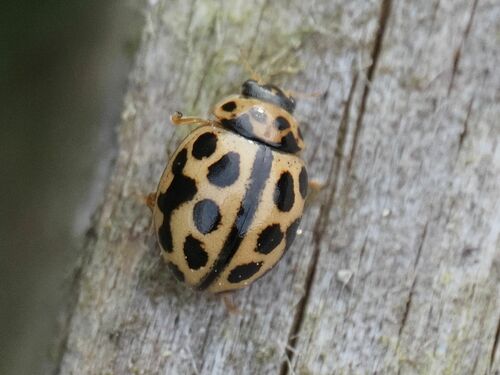
Global Distribution

Parks Where Found

# Park Country Daily sighting probability
1 Cévennes National Park 🇫🇷 France
~10%
2 Wadden Sea National Park 🇩🇪 Germany
~10%
3 Bavarian Forest National Park 🇩🇪 Germany
~10%
4 Pyrénées National Park 🇫🇷 France
<5%

Cities Where Found

# City Country Daily sighting probability
1 London 🇬🇧 United Kingdom
~10%
2 Birmingham 🇬🇧 United Kingdom
~10%
3 Lyon 🇫🇷 France
~10%
4 Essen 🇩🇪 Germany
~10%
5 Rotterdam [The Hague] 🇳🇱 Netherlands
~10%
6 Berlin 🇩🇪 Germany
~10%
7 Warsaw 🇵🇱 Poland
~10%
8 Stockholm 🇸🇪 Sweden
~10%
9 Leeds 🇬🇧 United Kingdom
~10%
10 Prague 🇨🇿 Czechia
~10%

Before you go

What are the chances of seeing a 16-Spot Ladybird in Wadden Sea National Park?

With luck

About 10% of wildlife watchers report a 16-Spot Ladybird sighting in Wadden Sea National Park on a given day, based on 23 verified sightings from GBIF citizen-science data from 2019 to 2026. It is the 234th most-seen of the 818 insects we can rate there. Over three days the chance rises to about 20%, and over a week to about 40%, if each day is a fresh chance.

When is the best time to see a 16-Spot Ladybird in Wadden Sea National Park?

March–August and November

In those months about 10% of wildlife watchers report a 16-Spot Ladybird in Wadden Sea National Park on a given day, against under 5% in September–October and December–February, the lowest months.

What time of day is best to see a 16-Spot Ladybird?

Between 11 am and 2 pm

Across all the parks we cover, that three-hour window holds the most 16-Spot Ladybird sightings with a recorded time, and about 9 in 10 of them come between 6 am and 6 pm: it is a daytime animal.

Is Wadden Sea National Park the best place to see a 16-Spot Ladybird?

Among the best

Of the 4 parks where we can rate 16-Spot Ladybird sightings, Wadden Sea National Park ranks 2nd at about 10%, level with the leaders once rounded. The best odds are in Cévennes National Park (France, about 10%).

Where does the 16-Spot Ladybird sighting chance come from?

GBIF citizen-science records

It is estimated from how often the 16-Spot Ladybird is recorded against all the insects logged in Wadden Sea National Park (23 verified sightings from 2019 to 2026), calibrated against known sighting rates. Figures are rounded to the nearest 10% because citizen-science data supports honest approximations, not decimals, and months with records from fewer than five people show "—". How it works.

← Back to Wadden Sea National Park