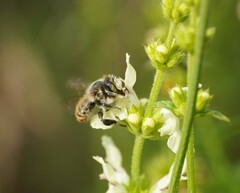
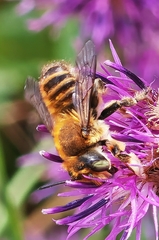
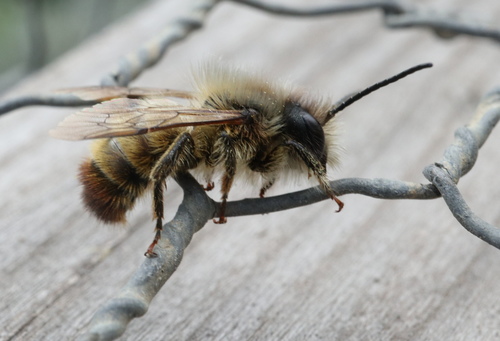
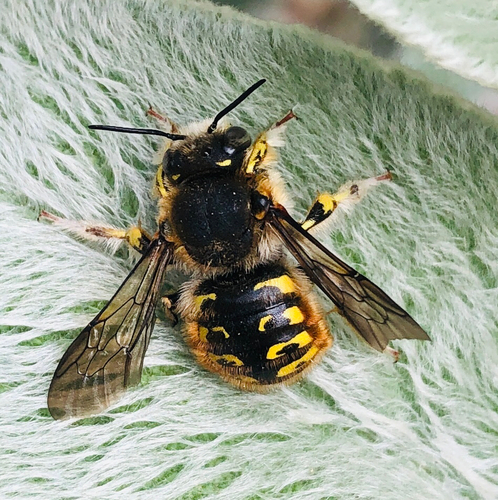
Coast Leafcutter Bee
Daily sighting probability <5% · Rare
at Wadden Sea National Park

In 3 days ~10% in a week ~20%

7 Verified sightings at Wadden Sea National Park From 2019 to 2026
7 In 1 park
August Best month
☀️ Diurnal When it's spotted

About the Coast Leafcutter Bee

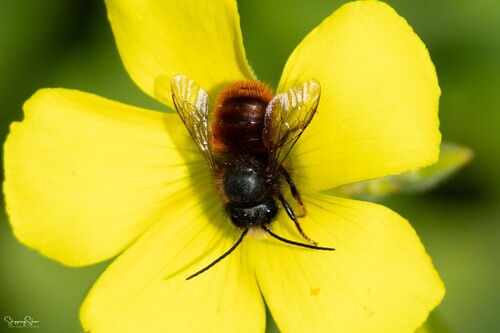
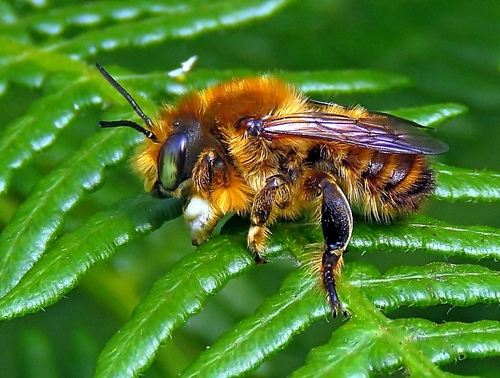
Megachile maritima, common name coast leaf-cutter, is a species of leaf-cutter bees in the family Megachilidae. It was described by William Kirby in 1802. This species is present in most of Europe (Austria, Belgium, United Kingdom, Czech Republic, Denmark, Finland, France, Germany, Hungary, Italy, Lithuania, European Russia, Poland, Slovakia, Slovenia, Spain and Switzerland), in the East Palaearctic realm and in the Oriental realm.

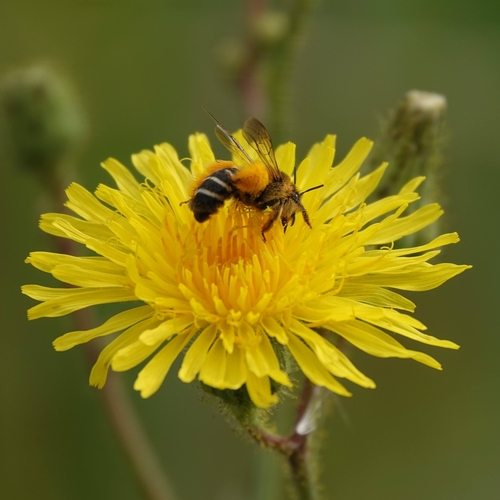
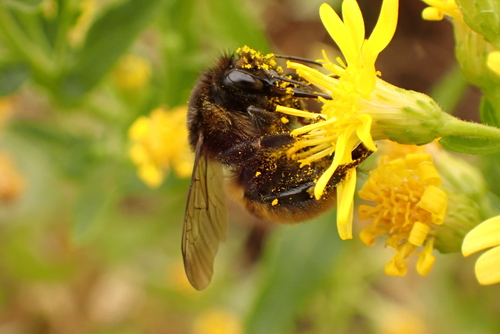
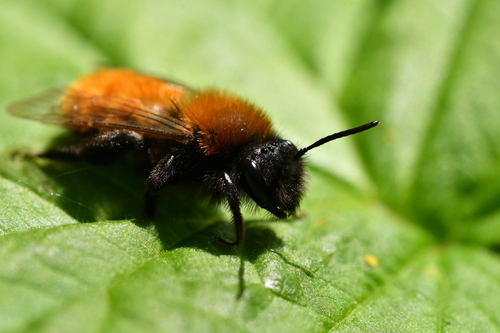
These leaf-cutter bees can be found on lowland heaths and on chalk grassland, but they mainly occur on the coast (hence the species name), on coastal dunes with light, sandy soil and on soft-rock cliffs. Megachile maritima can reach a body length of about 9–10.5 mm (0.35–0.41 in), with a wing length of about 10 mm (0.39 in). Head and thorax of these robust, very large leaf-cutters bees are generally black, thickly and minutely punctured and rather hairy. Mandible are very large, with four terminal teeth. Antennae are filiform. The oblong-quadrate abdomen is covered with reddish hairs in fresh individuals, but in older specimen it turns to silvery black. Wings are transparent, darkened at the apex. Hind... Wikipedia →
Global Distribution

Parks Where Found

# Park Country Daily sighting probability
1 Wadden Sea National Park 🇩🇪 Germany
<5%

More parks will be added in future updates.

Cities Where Found

# City Country Daily sighting probability
1 Warsaw 🇵🇱 Poland
~10%
2 Berlin 🇩🇪 Germany
<5%

Before you go

What are the chances of seeing a Coast Leafcutter Bee in Wadden Sea National Park?

Rare

Under 5% of wildlife watchers report a Coast Leafcutter Bee sighting in Wadden Sea National Park on a given day, based on 7 verified sightings from GBIF citizen-science data from 2019 to 2026. It is the 630th most-seen of the 818 insects we can rate there. Over three days the chance rises to about 10%, and over a week to about 20%, if each day is a fresh chance.

When is the best time to see a Coast Leafcutter Bee in Wadden Sea National Park?

August

In that month about 10% of wildlife watchers report a Coast Leafcutter Bee in Wadden Sea National Park on a given day, against under 5% in September to July, the lowest months.

What time of day is best to see a Coast Leafcutter Bee?

Between 10 am and 1 pm

Across all the parks we cover, that three-hour window holds the most Coast Leafcutter Bee sightings with a recorded time, and nearly all of them come between 6 am and 6 pm: it is a daytime animal.

Where else can you see a Coast Leafcutter Bee?

Only Wadden Sea National Park, in our data

Wadden Sea National Park is the only park on Wallace's Line with enough records to rate Coast Leafcutter Bee sightings: under 5% of wildlife watchers there report one on a given day.

Where does the Coast Leafcutter Bee sighting chance come from?

GBIF citizen-science records

It is estimated from how often the Coast Leafcutter Bee is recorded against all the insects logged in Wadden Sea National Park (7 verified sightings from 2019 to 2026), calibrated against known sighting rates. Figures are rounded to the nearest 10% because citizen-science data supports honest approximations, not decimals, and months with records from fewer than five people show "—". How it works.

← Back to Wadden Sea National Park