Double Square-Spot

Double Square-Spot

Xestia triangulum

Daily sighting probability <5% · Rare
at Wadden Sea National Park

In 3 days ~10% in a week ~30%

12 Verified sightings at Wadden Sea National Park From 2019 to 2026
59 In all 4 parks
July Best month
☀️🌙 Day & Night When it's spotted

About the Double Square-Spot

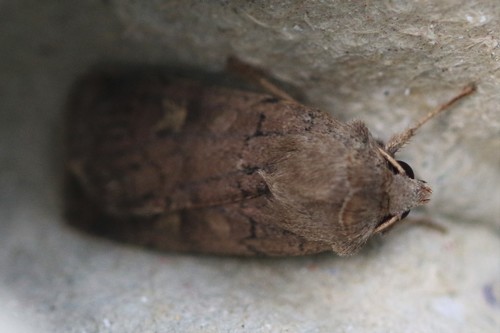
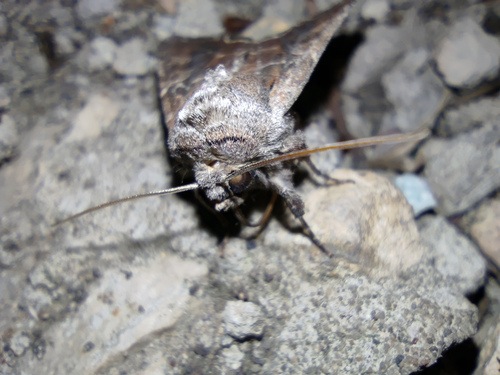
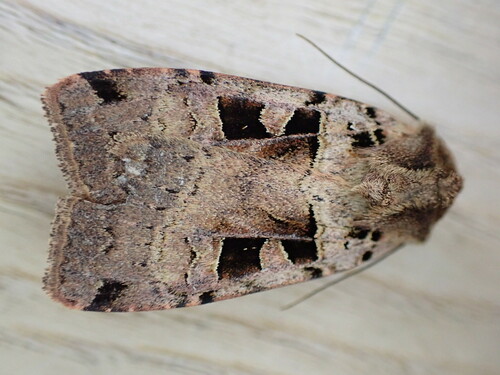
The double square-spot (Xestia triangulum) is a moth of the family Noctuidae. It is distributed through most of Europe except the Mediterranean islands and northernmost Fennoscandia. In the East, the species ranges East across the Palearctic to Siberia and in the South-East to the Black Sea and in Iran. It rises to a height of about 2,000 metres (6,600 ft) in the Alps.

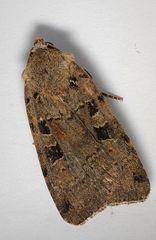
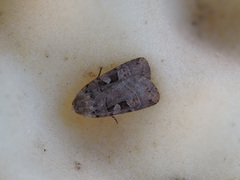
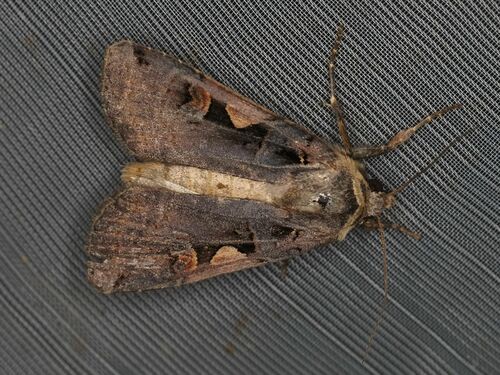
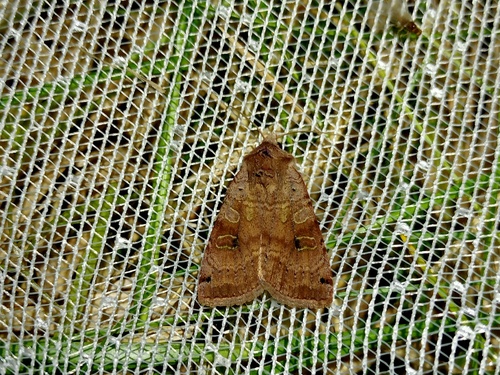
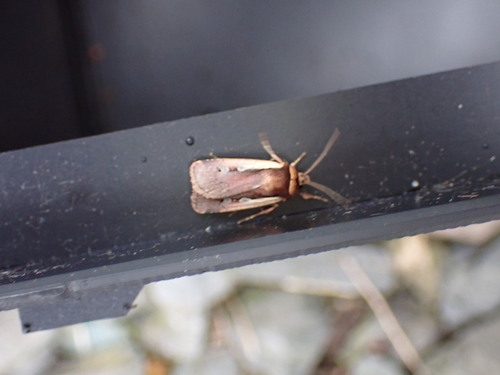
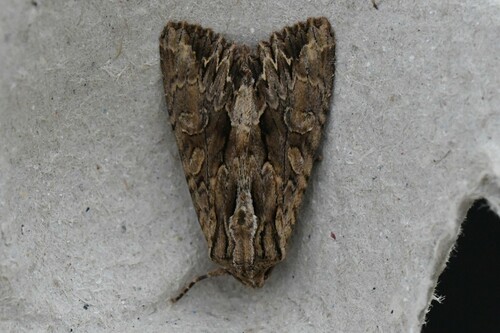
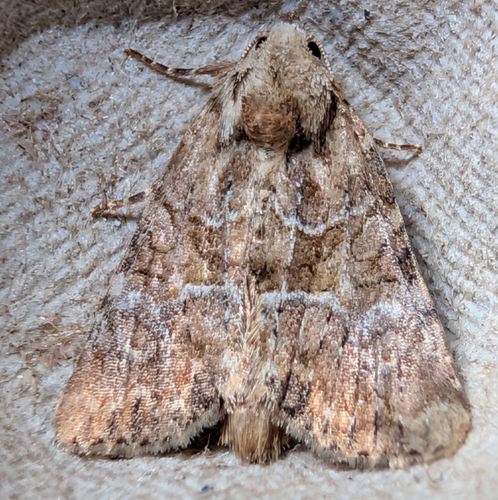
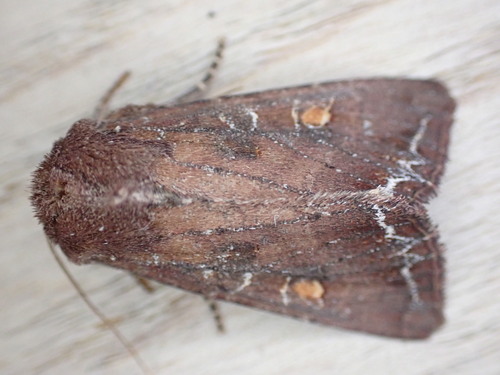
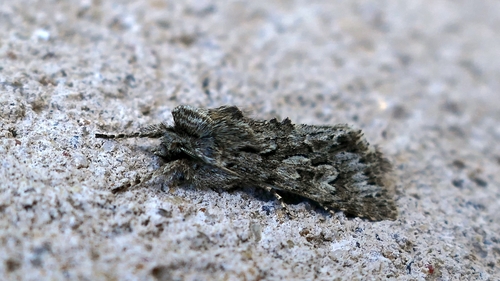
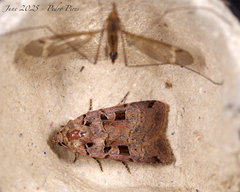
This species has pale brown forewings marked with two distinctive black marks. Despite the common name, only one of these is square, the other being roughly triangular. The hindwings are similar in colour to the forewings. It is very similar to Xestia ditrapezium.

Differences: Xestia ditrapezium Front wing on average narrower (or longer). Ground colour of the forewings usually darker (red to violet-brown) and colour of the rear wing a shade lighter. Hindwings are significantly lighter than the forewings. Collar without contrasts, almost monochrome.

Xestia triangulum Forewings average wider (or shorter). Ground colour of the forewings of usually lighter (ochre to tawny or grayish brown) colour of the hindwings usually slightly darker grey. Hindwings about as light as the front wings. Lower part of the neck collar grey, separated by a light line from the dark upper.

Technical description and variation: The wingspan is 36–46 mm (1.4–1.8 in). Forewing grey brown, with a rufous tinge: a small blotch at base, a preapical costal spot, and the cell prominently black brown; hindwing fuscous.

The moth flies at night in June and July in the British Isles. It is attracted to light and sugar and to flowers such as wood sage. The larva is ochreous brown, black speckled; the lines pale; a row of oblique dark subdorsal bars. It is polyphagous, feeding on a wide variety of plants including birch, blackthorn, bramble, dock, hawthorn, raspberry and sallow. The species overwinters as a larva.

Inhabits preferably forest edges, slopes covered with shrubs, heaths and gardens and parkland. Wikipedia →
Global Distribution

Parks Where Found

# Park Country Daily sighting probability
1 Snowdonia National Park 🇬🇧 United Kingdom
~10%
2 Bavarian Forest National Park 🇩🇪 Germany
~10%
3 Cairngorms National Park 🇬🇧 United Kingdom
~10%
4 Wadden Sea National Park 🇩🇪 Germany
<5%

Cities Where Found

# City Country Daily sighting probability
1 Liverpool 🇬🇧 United Kingdom
~20%
2 Manchester 🇬🇧 United Kingdom
~10%
3 Helsinki 🇫🇮 Finland
~10%
4 London 🇬🇧 United Kingdom
<5%
5 Kyiv 🇺🇦 Ukraine
<5%
6 Birmingham 🇬🇧 United Kingdom
<5%
7 Berlin 🇩🇪 Germany
<5%
8 Moscow 🇷🇺 Russia
<5%

Before you go

What are the chances of seeing a Double Square-Spot in Wadden Sea National Park?

Rare

Under 5% of wildlife watchers report a Double Square-Spot sighting in Wadden Sea National Park on a given day, based on 12 verified sightings from GBIF citizen-science data from 2019 to 2026. It is the 422nd most-seen of the 818 insects we can rate there. Over three days the chance rises to about 10%, and over a week to about 30%, if each day is a fresh chance.

When is the best time to see a Double Square-Spot in Wadden Sea National Park?

July

In that month about 10% of wildlife watchers report a Double Square-Spot in Wadden Sea National Park on a given day, against under 5% in August to June, the lowest months.

What time of day is best to see a Double Square-Spot?

Between 7 and 10 am

Across all the parks we cover, that three-hour window holds the most Double Square-Spot sightings with a recorded time, and about 6 in 10 of them come between 6 am and 6 pm: it is seen both by day and at night.

Which relatives of the Double Square-Spot live in Wadden Sea National Park?

Same genus: Xestia

The closest relatives of the Double Square-Spot that you can see in Wadden Sea National Park (genus Xestia) are Setaceous Hebrew Character (about 10%), Square-Spot Rustic (about 10%) and Dotted Clay (about 10%), with each one's daily chance of a sighting.

Where does the Double Square-Spot sighting chance come from?

GBIF citizen-science records

It is estimated from how often the Double Square-Spot is recorded against all the insects logged in Wadden Sea National Park (12 verified sightings from 2019 to 2026), calibrated against known sighting rates. Figures are rounded to the nearest 10% because citizen-science data supports honest approximations, not decimals, and months with records from fewer than five people show "—". How it works.

← Back to Wadden Sea National Park