About the Garden Bumble Bee
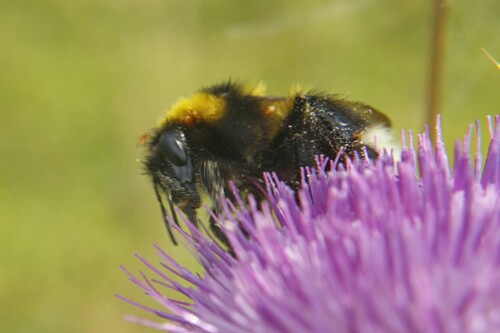
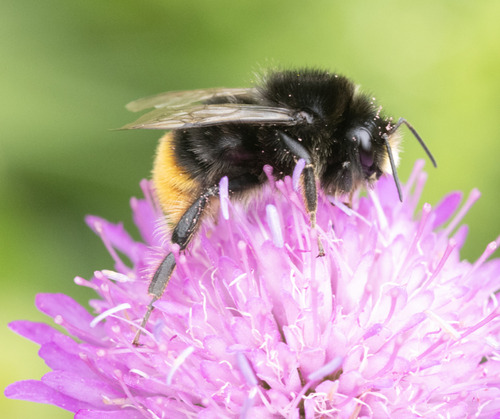
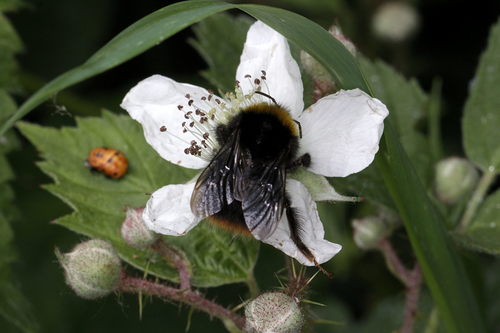
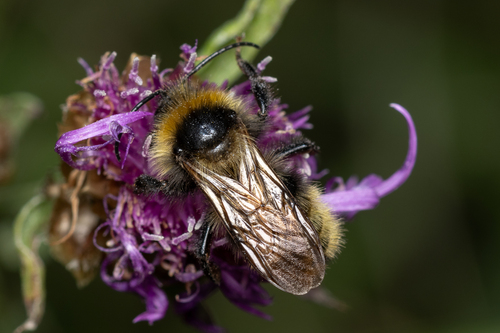
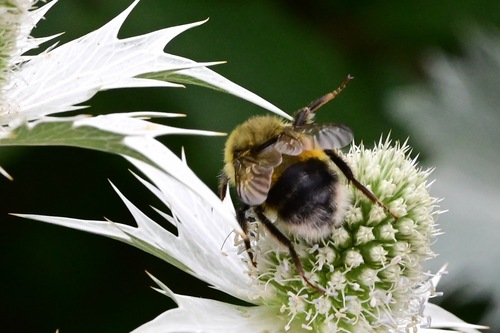
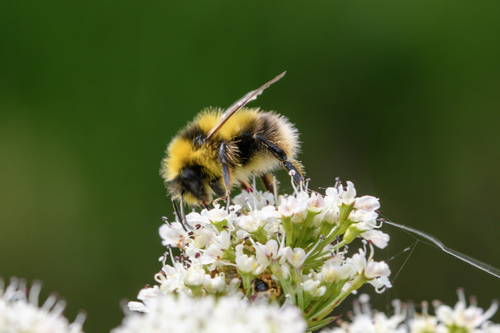
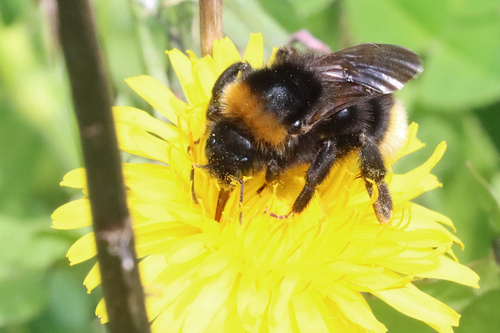
Bombus hortorum, the garden bumblebee or small garden bumblebee, is a species of bumblebee found in most of Europe north to 70°N, as well as parts of Asia and New Zealand. It is distinguished from most other bumblebees by its long tongue used for feeding on pollen in deep-flowered plants. Accordingly, this bumblebee mainly visits flowers with deep corollae, such as deadnettles, ground ivy, vetches, clovers, comfrey, foxglove, and thistles. They have a good visual memory, which aids them in navigating the territory close to their habitat and seeking out food sources.
Bombus hortorum belongs to the Bombus, or bumblebee, genus. It is one of the six most common bumblebees throughout Europe. Of the six commonest species, only two are long-tongued: B. hortorum and B. pascuorum. Its close relative Bombus ruderatus also has a long tongue, but is much less common. Bombus hortorum and Bombus ruderatus are nearly identical in appearance, but DNA sequence data distinguishes them as clearly-separate species.
This bumblebee has an oblong head and a very long tongue, about 15 mm (0.59 in), and in some cases even 20 mm (0.79 in). The tongue is so long... Wikipedia →