Grey-Backed Mining Bee
Daily sighting probability <5% · Rare
at Wadden Sea National Park

In 3 days ~10% in a week ~30%

11 Verified sightings at Wadden Sea National Park From 2019 to 2026
11 In 1 park
April Best month
☀️ Diurnal When it's spotted

About the Grey-Backed Mining Bee

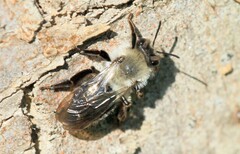
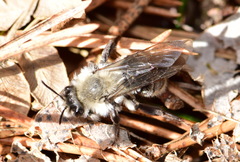
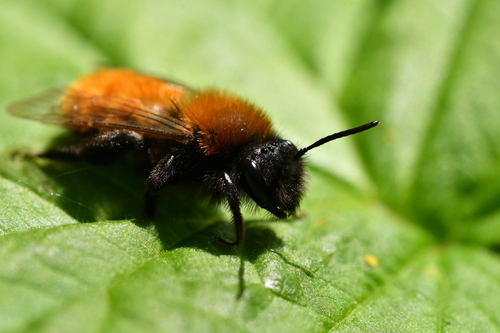
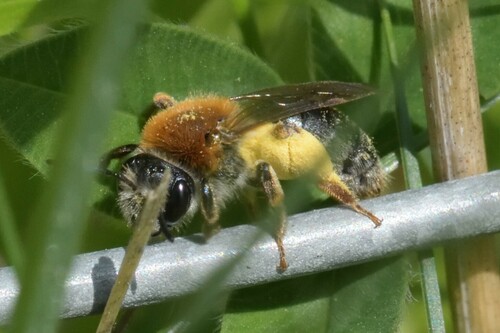
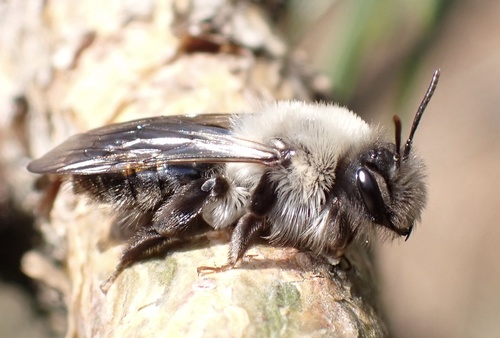
Andrena vaga, the grey-backed mining bee, is a species of solitary bee which is found in most of Europe but which is very rare in Great Britain, where it may be recolonizing in the south-east after previously being extirpated. It specialises in feeding on the pollen of willows.

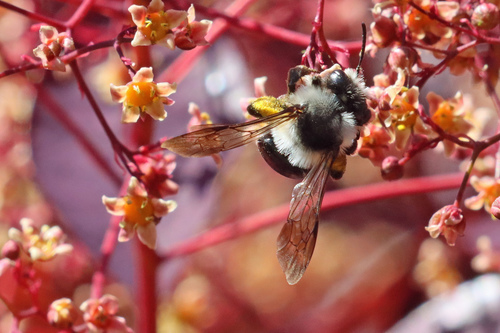
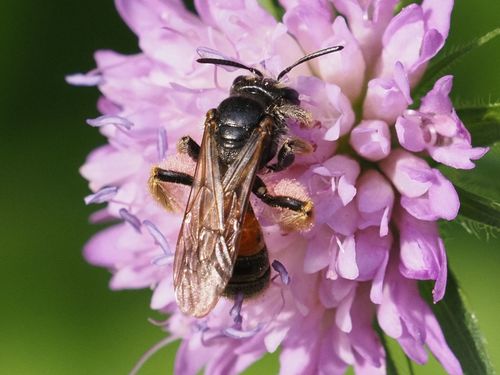
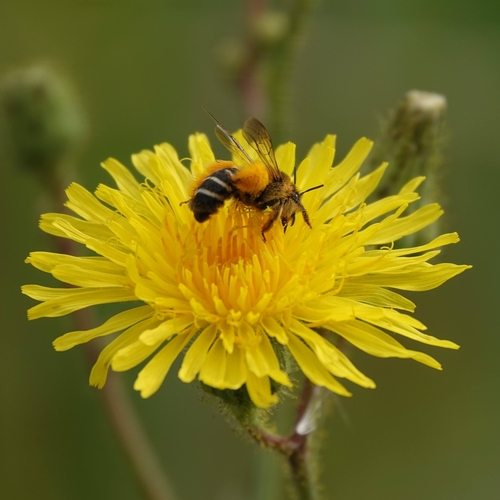
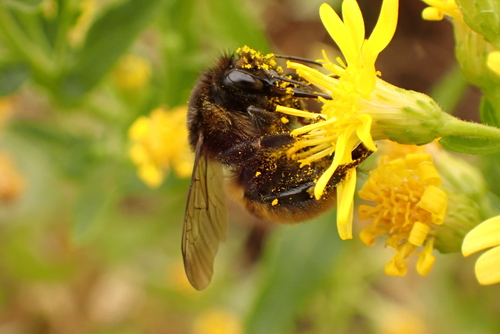
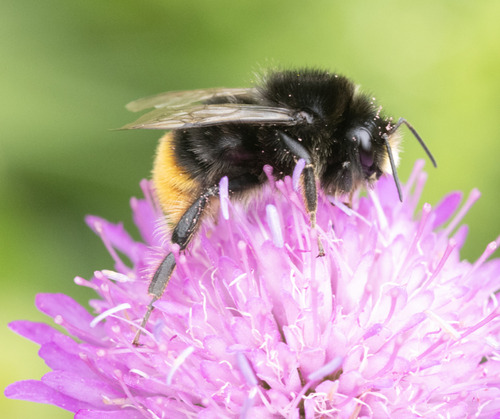
A. vaga is a large mining bee, 13-15mm in length, which has the entire thorax clothed in grey hairs, sometimes showing a slight buff tinge, the scopae and hind femorae have white hairs. It also has patches of white hairs on the abdomen sides. On closer examination the surface of the cuticle can be seen to be shiny metallic black. The face is covered with brownish hairs It resembles the ashy mining bee (Andrena cineraria). Males have the entire upper surface of the thorax covered in grey hair and pale hair on the hind tibia. When it can be seen, sternite 8 will show a downwards curve at its tip. The males have the sides and top of the face coloured white, with the bottom having long white hairs, it has long mandibles and rounded cheeks.

A. vaga is found in Europe as far north as 66°N, although it is found only in southern Scandinavia, east to Iran, Kyrgyzstan and Kazakhstan... Wikipedia →
Global Distribution

Parks Where Found

# Park Country Daily sighting probability
1 Wadden Sea National Park 🇩🇪 Germany
<5%

More parks will be added in future updates.

Cities Where Found

# City Country Daily sighting probability
1 Warsaw 🇵🇱 Poland
~10%
2 Cologne 🇩🇪 Germany
~10%
3 Berlin 🇩🇪 Germany
~10%
4 Novosibirsk 🇷🇺 Russia
~10%
5 Helsinki 🇫🇮 Finland
~10%
6 Brussels 🇧🇪 Belgium
<5%
7 Essen 🇩🇪 Germany
<5%
8 Nizhny Novgorod 🇷🇺 Russia
<5%
9 Munich 🇩🇪 Germany
<5%
10 Kyiv 🇺🇦 Ukraine
<5%

Before you go

What are the chances of seeing a Grey-Backed Mining Bee in Wadden Sea National Park?

Rare

Under 5% of wildlife watchers report a Grey-Backed Mining Bee sighting in Wadden Sea National Park on a given day, based on 11 verified sightings from GBIF citizen-science data from 2019 to 2026. It is the 422nd most-seen of the 818 insects we can rate there. Over three days the chance rises to about 10%, and over a week to about 30%, if each day is a fresh chance.

When is the best time to see a Grey-Backed Mining Bee in Wadden Sea National Park?

March and April

In those months about 10% of wildlife watchers report a Grey-Backed Mining Bee in Wadden Sea National Park on a given day, against under 5% in May to February, the lowest months. Those are among Wadden Sea National Park's driest months, with about 50 mm of rain a month against 140 mm in November.

What time of day is best to see a Grey-Backed Mining Bee?

Between 2 and 5 pm

Across all the parks we cover, that three-hour window holds the most Grey-Backed Mining Bee sightings with a recorded time, and nearly all of them come between 6 am and 6 pm: it is a daytime animal.

Where else can you see a Grey-Backed Mining Bee?

Only Wadden Sea National Park, in our data

Wadden Sea National Park is the only park on Wallace's Line with enough records to rate Grey-Backed Mining Bee sightings: under 5% of wildlife watchers there report one on a given day.

Where does the Grey-Backed Mining Bee sighting chance come from?

GBIF citizen-science records

It is estimated from how often the Grey-Backed Mining Bee is recorded against all the insects logged in Wadden Sea National Park (11 verified sightings from 2019 to 2026), calibrated against known sighting rates. Figures are rounded to the nearest 10% because citizen-science data supports honest approximations, not decimals, and months with records from fewer than five people show "—". How it works.

← Back to Wadden Sea National Park