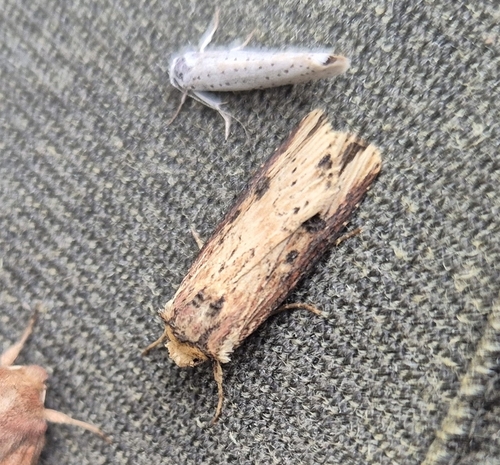
Shoulder-Striped Wainscot

Shoulder-Striped Wainscot

Leucania comma

Daily sighting probability <5% · Rare
at Wadden Sea National Park

In 3 days ~10% in a week ~20%

8 Verified sightings at Wadden Sea National Park From 2019 to 2026
39 In all 3 parks
June Best month
🌙 Nocturnal When it's spotted

About the Shoulder-Striped Wainscot

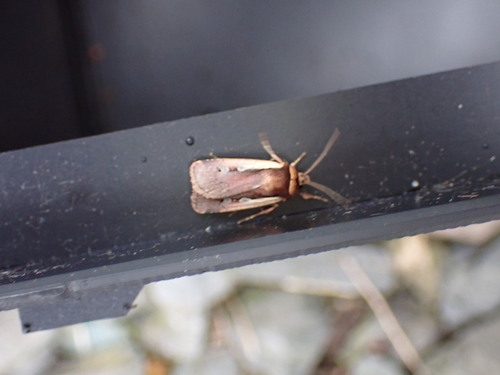
The shoulder-striped wainscot (Leucania comma) is a moth of the family Noctuidae. The species was first described by Carl Linnaeus in 1761. Some authors place it in the genus Mythimna. It is found throughout Europe and in Russia to the west of the Urals.

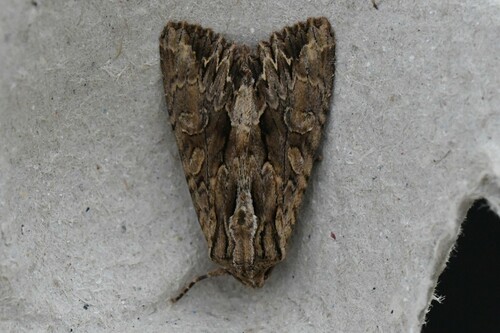
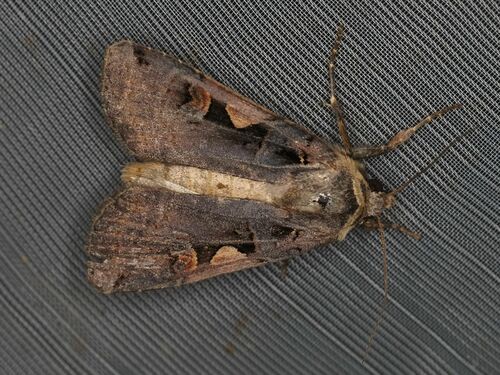
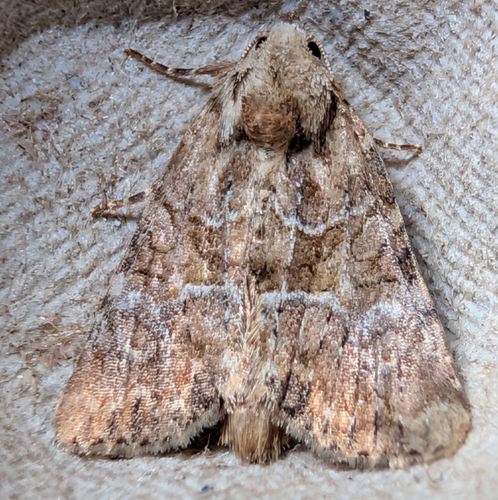
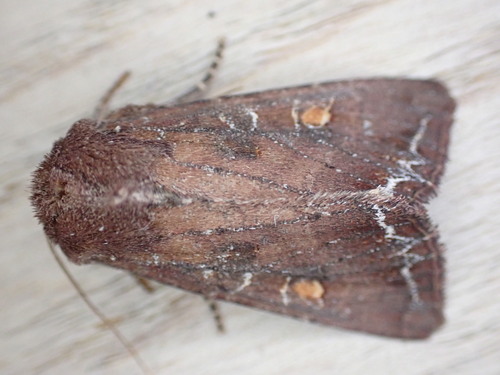
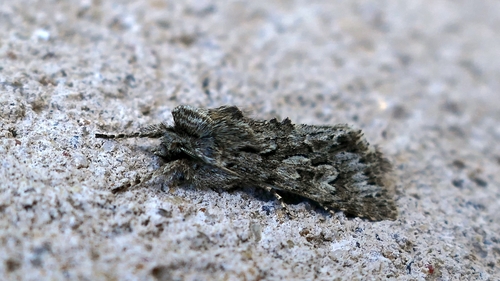
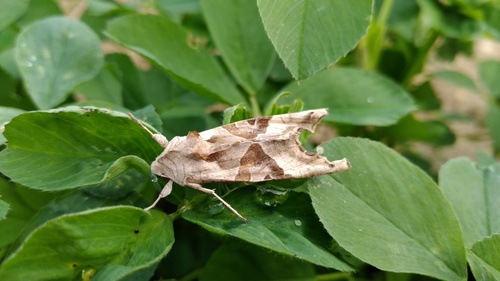
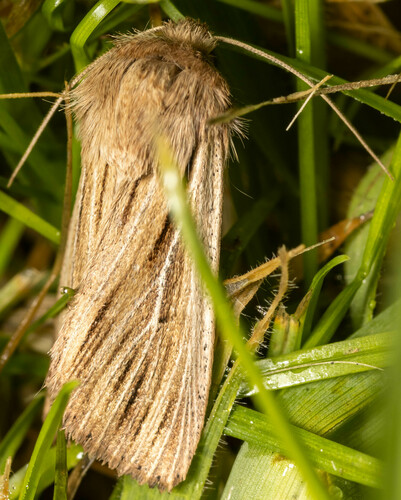
The forewings of this species share the pale buffish ground colour and prominent venation of other "wainscots" but has much stronger dark markings than most of its relatives, including a thick black basal streak which gives it its common name. The hindwings are dingy grey or brown with lighter fringes.

The wingspan is 35–42 mm. Forewing drab grey, suffused, except along costa and inner margin, and in an oblique fascia-form submarginal area, with blackish, the veins and folds remaining pale; a whitish lunule on discocellular: the pale submarginal fascia externally throw's off pale teeth along the veins to termen, the wedge shaped intervals being filled in with black; a long black streak from base below cell; median vein white, with only a small white spot at end of cell and a minute black point above it; veins whitish with black terminal streaks in the intervals. Hindwing dark greyish, fuscous... Wikipedia →

Global Distribution

Parks Where Found

# Park Country Daily sighting probability
1 Mercantour National Park 🇫🇷 France
~20%
2 Pyrénées National Park 🇫🇷 France
<5%
3 Wadden Sea National Park 🇩🇪 Germany
<5%

Cities Where Found

# City Country Daily sighting probability
1 Liverpool 🇬🇧 United Kingdom
~10%
2 Birmingham 🇬🇧 United Kingdom
~10%
3 London 🇬🇧 United Kingdom
<5%

Before you go

What are the chances of seeing a Shoulder-Striped Wainscot in Wadden Sea National Park?

Rare

Under 5% of wildlife watchers report a Shoulder-Striped Wainscot sighting in Wadden Sea National Park on a given day, based on 8 verified sightings from GBIF citizen-science data from 2019 to 2026. It is the 536th most-seen of the 818 insects we can rate there. Over three days the chance rises to about 10%, and over a week to about 20%, if each day is a fresh chance.

When is the best time to see a Shoulder-Striped Wainscot in Wadden Sea National Park?

June

In that month about 10% of wildlife watchers report a Shoulder-Striped Wainscot in Wadden Sea National Park on a given day, against under 5% in July to May, the lowest months.

What time of day is best to see a Shoulder-Striped Wainscot?

Between 10 pm and 1 am

Across all the parks we cover, that three-hour window holds the most Shoulder-Striped Wainscot sightings with a recorded time, and about 7 in 10 of them come between 6 pm and 6 am: it is mostly seen at night.

Is Wadden Sea National Park the best place to see a Shoulder-Striped Wainscot?

3rd of 3

Of the 3 parks where we can rate Shoulder-Striped Wainscot sightings, Wadden Sea National Park ranks 3rd at under 5%. The best odds are in Mercantour National Park (France, about 20%) and Pyrénées National Park (France, under 5%).

Which relatives of the Shoulder-Striped Wainscot live in Wadden Sea National Park?

Same family: Noctuidae

The closest relatives of the Shoulder-Striped Wainscot that you can see in Wadden Sea National Park (family Noctuidae, Cutworm Moths and Allies) are Large Yellow Underwing (about 20%), Silver Υ (about 20%) and Flame Shoulder Moth (about 10%), with each one's daily chance of a sighting.

Where does the Shoulder-Striped Wainscot sighting chance come from?

GBIF citizen-science records

It is estimated from how often the Shoulder-Striped Wainscot is recorded against all the insects logged in Wadden Sea National Park (8 verified sightings from 2019 to 2026), calibrated against known sighting rates. Figures are rounded to the nearest 10% because citizen-science data supports honest approximations, not decimals, and months with records from fewer than five people show "—". How it works.

← Back to Wadden Sea National Park