Cape Girdled Lizard

Cape Girdled Lizard

Cordylus cordylus

Silhouette: Beth Reinke · PhyloPic

LCLeast ConcernNTVUENCR Endemic
Daily sighting probability ~20% · Possible
at West Coast National Park

In 3 days ~50% in a week ~80%

16 Verified sightings at West Coast National Park From 2019 to 2026
138 In all 5 parks
September Best month
🌙 Nocturnal When it's spotted

About the Cape Girdled Lizard

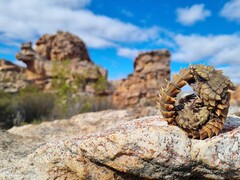
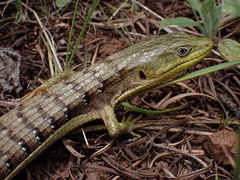
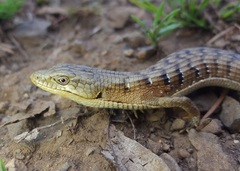
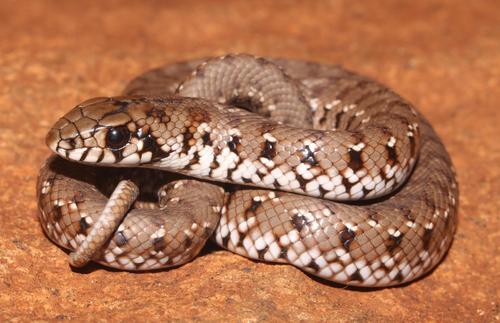
Cordylus cordylus, the Cape girdled lizard, is a medium-sized lizard indigenous to the southern Cape region of South Africa, where it inhabits crags, rocky outcrops and mountain summits. They evade predators by wedging themselves firmly in rock cracks.

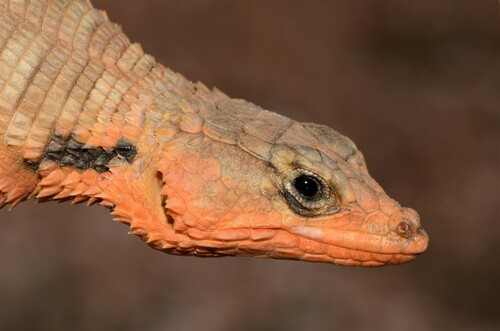
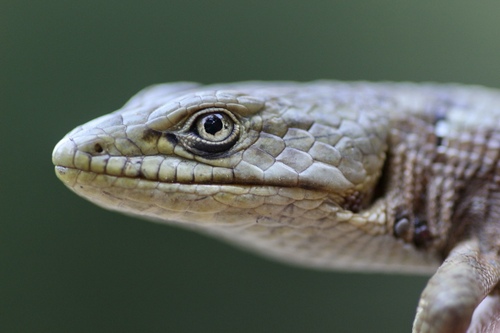
The Cape girdled lizard has a golden-brown body with spiny, keeled body scales, especially on its tail. It is indigenous to the Western and Eastern Cape provinces of South Africa, from Saldanha and Cape Town eastwards as far as Lesotho.

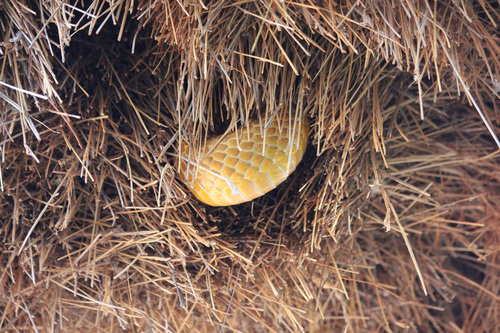
They feed on insects, which are caught by rushing and pouncing. They live in large colonies (with social hierarchies) on crags, rocky outcrops and mountain summits. They can often be seen sunbathing on top of prominent rocks. The lizards hide in rocky cracks, but come out in the morning and evening to forage. If threatened, they retreat to their holes and cracks in the rocks, wedge themselves in and lock their bodies there by inflating their lungs. Jammed into the cracks like this, with their thorny tail wrapped protectively over their faces, they are incredibly difficult to prise out.

In the autumn, the females give birth to one... Wikipedia →
Global Distribution

Parks Where Found

# Park Country Daily sighting probability
1 De Hoop Nature Reserve 🇿🇦 South Africa
~60%
2 West Coast National Park 🇿🇦 South Africa
~20%
3 Addo Elephant National Park 🇿🇦 South Africa
~10%
4 Garden Route National Park 🇿🇦 South Africa
~10%
5 Table Mountain National Park 🇿🇦 South Africa
<5%

Cities Where Found

# City Country Daily sighting probability
1 Cape Town 🇿🇦 South Africa
~10%

Zoos & Centres Where Found

# Zoo / Centre Country
1 Prague Zoo 🇨🇿 Czechia In captivity
2 Zoo Pilsen 🇨🇿 Czechia In captivity
3 Tierpark Hagenbeck 🇩🇪 Germany In captivity
4 Schönbrunn Zoo 🇦🇹 Austria In captivity
5 Leningrad Zoo 🇷🇺 Russia In captivity
6 Adventure Aquarium 🇺🇸 United States In captivity
7 Rákosův pavilon 🇨🇿 Czechia In captivity
8 Velemlokárium 🇨🇿 Czechia In captivity

Before you go

What are the chances of seeing a Cape Girdled Lizard in West Coast National Park?

Possible

About 20% of wildlife watchers report a Cape Girdled Lizard sighting in West Coast National Park on a given day, based on 16 verified sightings from GBIF citizen-science data from 2019 to 2026. It is the 11th most-seen of the 23 reptiles we can rate there. Over three days the chance rises to about 50%, and over a week to about 80%, if each day is a fresh chance.

When is the best time to see a Cape Girdled Lizard in West Coast National Park?

September

In that month about 40% of wildlife watchers report a Cape Girdled Lizard in West Coast National Park on a given day, against under 5% in April–June and October–February, the lowest months.

What time of day is best to see a Cape Girdled Lizard?

Between 2 and 5 am

Across all the parks we cover, that three-hour window holds the most Cape Girdled Lizard sightings with a recorded time, and about 8 in 10 of them come between 6 pm and 6 am: it is mostly seen at night.

Is West Coast National Park the best place to see a Cape Girdled Lizard?

2nd of 5

Of the 5 parks where we can rate Cape Girdled Lizard sightings, West Coast National Park ranks 2nd at about 20%. The best odds are in De Hoop Nature Reserve (South Africa, about 60%).

Which relatives of the Cape Girdled Lizard live in West Coast National Park?

Same genus: Cordylus

The closest relatives of the Cape Girdled Lizard that you can see in West Coast National Park (genus Cordylus) are Black Girdled Lizard (about 20%) and Large-scaled Girdled Lizard (about 10%), with each one's daily chance of a sighting.

Where does the Cape Girdled Lizard sighting chance come from?

GBIF citizen-science records

It is estimated from how often the Cape Girdled Lizard is recorded against all the reptiles logged in West Coast National Park (16 verified sightings from 2019 to 2026), calibrated against known sighting rates. Figures are rounded to the nearest 10% because citizen-science data supports honest approximations, not decimals, and months with records from fewer than five people show "—". How it works.

← Back to West Coast National Park