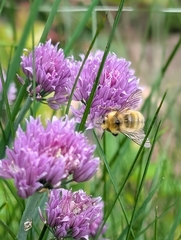
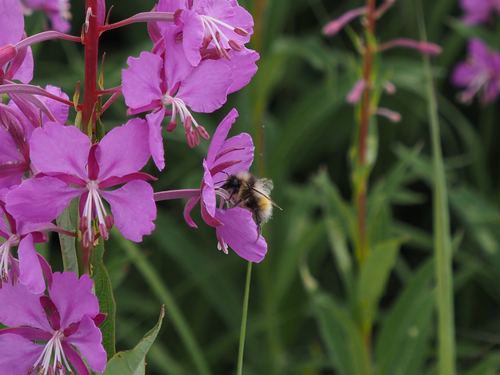
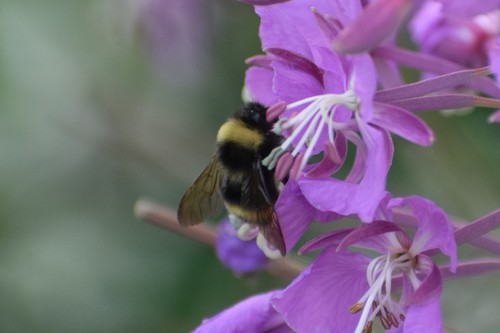
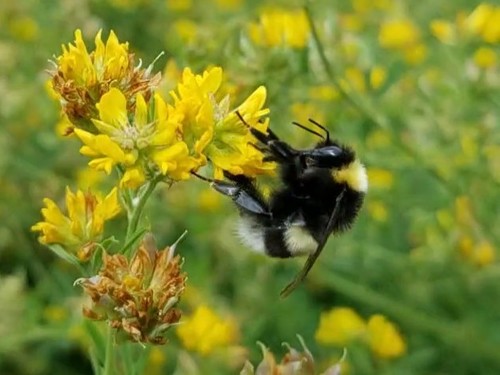
Yellow-Fronted Bumble Bee

Yellow-Fronted Bumble Bee

Bombus flavifrons

Daily sighting probability ~40% · Likely
at Wrangell-St. Elias National Park

In 3 days ~80% in a week >90%

19 Verified sightings at Wrangell-St. Elias National Park From 2019 to 2026
516 In all 12 parks
July Best month
☀️ Diurnal When it's spotted

About the Yellow-Fronted Bumble Bee

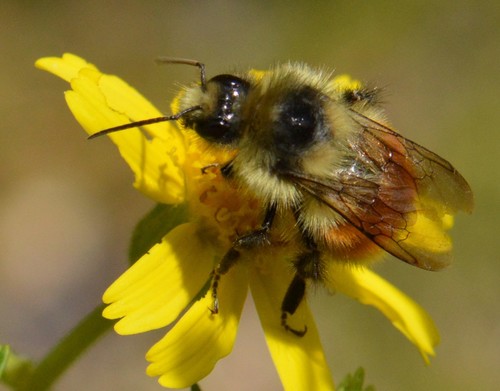
Bombus flavifrons, the yellow-fronted bumble bee or yellowhead bumblebee, is a species of bumblebee. It is native to North America, where it is distributed across much of Canada, Alaska, and the western contiguous United States.

This is a robust bumblebee; the queen has a body length between 13 and 16 mm (0.51 and 0.63 in) and a wingspan of 27 to 34 mm (1.1 to 1.3 in), the male is 11 to 12 mm (0.43 to 0.47 in) in length with a wingspan of 25 to 26 mm (0.98 to 1.02 in), and the workers are 9 to 12 mm (0.35 to 0.47 in) in length and 19 to 27 mm (0.75 to 1.06 in) in wingspan.

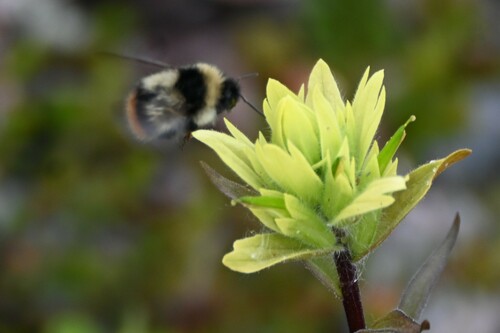
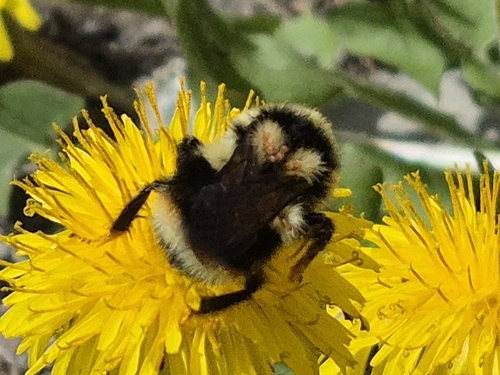
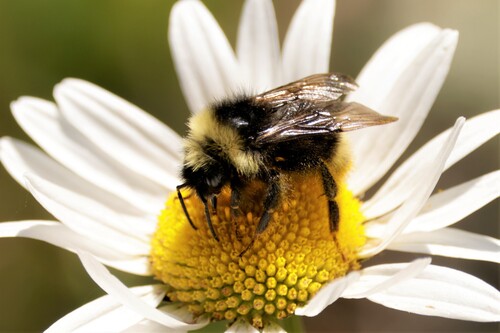
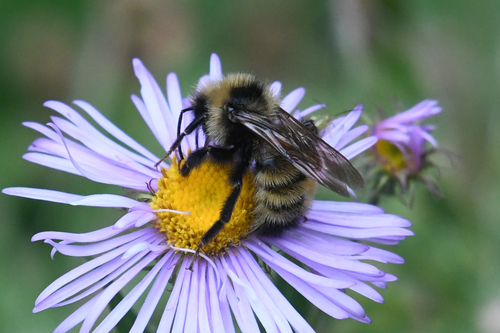
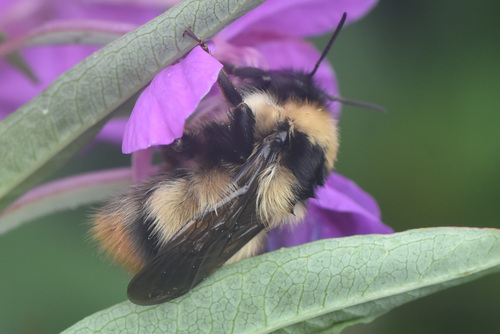
The yellow-fronted bumble bee has a dense, untidy fur. The head is yellow with black hairs intermixed on the posterior part, the thorax has a mixed black and yellow colouration, often (always with the queen) with a black, central field. The first two terga (abdominal segments) are yellow, on the females often with a black, central field on terga 1 to 2. Terga 3 and 4 are red, and the tail black, sometimes with yellow fields.

Subspecies Wikipedia →
Global Distribution

Parks Where Found

# Park Country Daily sighting probability
1 Wrangell-St. Elias National Park 🇺🇸 United States
~40%
2 Kluane National Park 🇨🇦 Canada
~40%
3 Great Bear Rainforest 🇨🇦 Canada
~30%
4 Pacific Rim National Park Reserve 🇨🇦 Canada
~20%
5 Glacier National Park 🇺🇸 United States
~20%
6 Denali National Park 🇺🇸 United States
~10%
7 Olympic National Park 🇺🇸 United States
~10%
8 Grand Teton National Park 🇺🇸 United States
~10%
9 Rocky Mountain National Park 🇺🇸 United States
~10%
10 Sequoia and Kings Canyon National Parks 🇺🇸 United States
~10%
11 Banff National Park 🇨🇦 Canada
~10%
12 Yellowstone National Park 🇺🇸 United States
~10%

Cities Where Found

# City Country Daily sighting probability
1 Anchorage 🇺🇸 United States
~20%
2 Vancouver 🇨🇦 Canada
~20%
3 Seattle 🇺🇸 United States
~10%
4 Portland 🇺🇸 United States
~10%
5 Edmonton 🇨🇦 Canada
<5%
6 Calgary 🇨🇦 Canada
<5%

Before you go

What are the chances of seeing a Yellow-Fronted Bumble Bee in Wrangell-St. Elias National Park?

Likely

About 40% of wildlife watchers report a Yellow-Fronted Bumble Bee sighting in Wrangell-St. Elias National Park on a given day, based on 19 verified sightings from GBIF citizen-science data from 2019 to 2026. It is the 4th most-seen of the 27 insects we can rate there. Over three days the chance rises to about 80%, and over a week to over 90%, if each day is a fresh chance.

When is the best time to see a Yellow-Fronted Bumble Bee in Wrangell-St. Elias National Park?

July

In that month about 50% of wildlife watchers report a Yellow-Fronted Bumble Bee in Wrangell-St. Elias National Park on a given day, against about 10% in May and September, the lowest months. October to March have too few records to rate.

What time of day is best to see a Yellow-Fronted Bumble Bee?

Between noon and 3 pm

Across all the parks we cover, that three-hour window holds the most Yellow-Fronted Bumble Bee sightings with a recorded time, and about 9 in 10 of them come between 6 am and 6 pm: it is a daytime animal.

Is Wrangell-St. Elias National Park the best place to see a Yellow-Fronted Bumble Bee?

Yes

Of the 12 parks where we can rate Yellow-Fronted Bumble Bee sightings, Wrangell-St. Elias National Park has the highest daily chance: about 40%. Next come Kluane National Park (Canada, about 40%) and Great Bear Rainforest (Canada, about 30%). All parks ranked.

Which relatives of the Yellow-Fronted Bumble Bee live in Wrangell-St. Elias National Park?

Same genus: Bombus

The closest relatives of the Yellow-Fronted Bumble Bee that you can see in Wrangell-St. Elias National Park (genus Bombus, Bumble Bees) are Forest Bumble Bee (about 50%), McKay's Western Bumble Bee (about 40%) and Cryptic Bumble Bee (about 40%), with each one's daily chance of a sighting.

Where does the Yellow-Fronted Bumble Bee sighting chance come from?

GBIF citizen-science records

It is estimated from how often the Yellow-Fronted Bumble Bee is recorded against all the insects logged in Wrangell-St. Elias National Park (19 verified sightings from 2019 to 2026), calibrated against known sighting rates. Figures are rounded to the nearest 10% because citizen-science data supports honest approximations, not decimals, and months with records from fewer than five people show "—". How it works.

← Back to Wrangell-St. Elias National Park