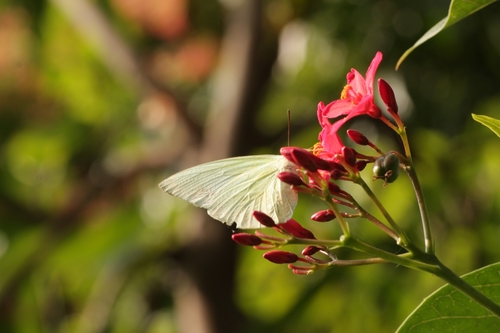
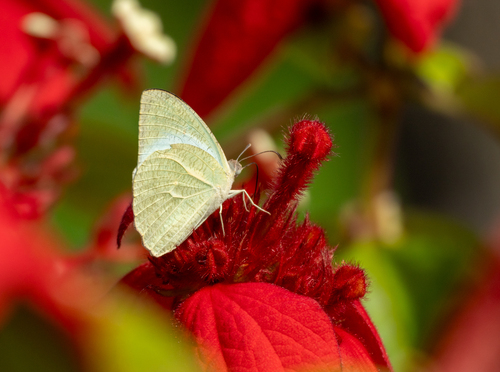
Crimson Rose Swallowtail

Crimson Rose Swallowtail

Pachliopta hector

Daily sighting probability ~20% · Possible
at Yala National Park

In 3 days ~50% in a week ~80%

12 Verified sightings at Yala National Park From 2019 to 2026
49 In all 4 parks
March Best month
☀️ Diurnal When it's spotted

About the Crimson Rose Swallowtail

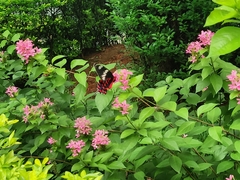
Pachliopta hector, the crimson rose, is a large swallowtail butterfly belonging to the genus Pachliopta (roses) of the red-bodied swallowtails. It is found in Pakistan, India, Sri Lanka, Maldives and possibly the coast of western Myanmar.

In India, it is found in the Western Ghats, southern India (Tamil Nadu, Kerala), eastern India (West Bengal and Odisha). It is a straggler in the Andaman Islands. The IUCN classified the species as Least Concern in 2019.It is common all along the Western Ghats up to Maharashtra but rare in Gujarat. This species is protected by law in India.

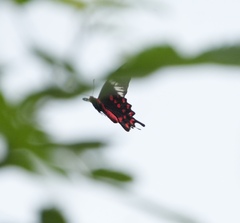
The male's upper side is black. The forewing consist of a broad white interrupted band from the subcostal nervure opposite the origin of veins 10 and 11, extended obliquely to the tornus, and a second short pre-apical similar band; both bands composed of detached irregularly indented broad streaks in the interspaces. Distal posteriorly strongly curved series of seven crimson spots, followed by a subterminal series of crimson lunules on the hindwing. Cilia black alternated with white. The underside of the forewing is dull brownish black and the hindwing is black. There is... Wikipedia →

Global Distribution

Parks Where Found

# Park Country Daily sighting probability
1 Wilpattu National Park 🇱🇰 Sri Lanka
~40%
2 Udawalawe National Park 🇱🇰 Sri Lanka
~30%
3 Yala National Park 🇱🇰 Sri Lanka
~20%
4 Minneriya National Park 🇱🇰 Sri Lanka
~20%

Cities Where Found

# City Country Daily sighting probability
1 Madurai 🇮🇳 India
~30%
2 Coimbatore 🇮🇳 India
~20%
3 Chennai 🇮🇳 India
~20%
4 Salem 🇮🇳 India
~20%
5 Mysuru 🇮🇳 India
~20%
6 Thiruvananthapuram 🇮🇳 India
~20%
7 Bengaluru 🇮🇳 India
~20%
8 Hyderabad 🇮🇳 India
~10%
9 Ponnani 🇮🇳 India
~10%
10 Colombo [Sri Jayawardenepura Kotte] 🇱🇰 Sri Lanka
~10%

Before you go

What are the chances of seeing a Crimson Rose Swallowtail in Yala National Park?

Possible

About 20% of wildlife watchers report a Crimson Rose Swallowtail sighting in Yala National Park on a given day, based on 12 verified sightings from GBIF citizen-science data from 2019 to 2026. It is the 4th most-seen of the 12 insects we can rate there. Over three days the chance rises to about 50%, and over a week to about 80%, if each day is a fresh chance.

When is the best time to see a Crimson Rose Swallowtail in Yala National Park?

February–March, July and November–December

In those months about 30% of wildlife watchers report a Crimson Rose Swallowtail in Yala National Park on a given day, against under 5% in April–June and August–October, the lowest months.

What time of day is best to see a Crimson Rose Swallowtail?

Between 2 and 5 pm

Across all the parks we cover, that three-hour window holds the most Crimson Rose Swallowtail sightings with a recorded time, and about 8 in 10 of them come between 6 am and 6 pm: it is a daytime animal.

Is Yala National Park the best place to see a Crimson Rose Swallowtail?

3rd of 4

Of the 4 parks where we can rate Crimson Rose Swallowtail sightings, Yala National Park ranks 3rd at about 20%. The best odds are in Wilpattu National Park (Sri Lanka, about 40%) and Udawalawe National Park (Sri Lanka, about 30%). All parks ranked.

Which relatives of the Crimson Rose Swallowtail live in Yala National Park?

Same order: Lepidoptera

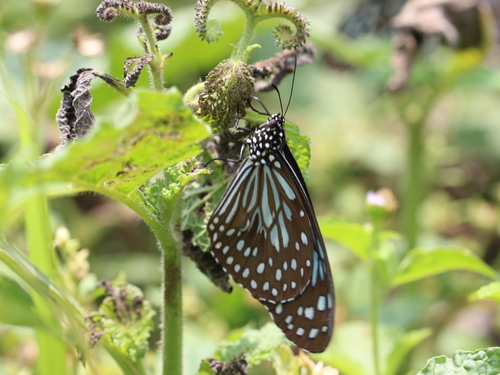
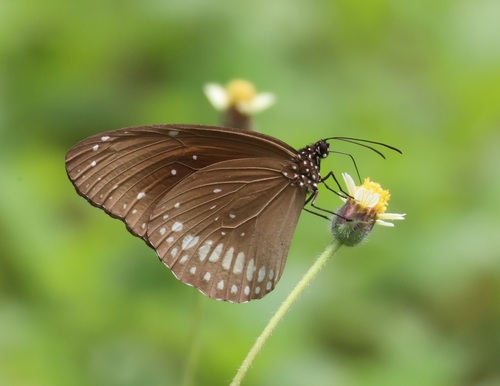
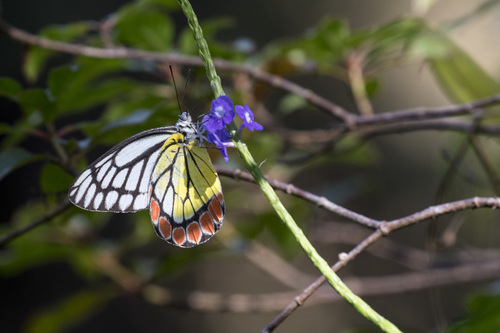
The closest relatives of the Crimson Rose Swallowtail that you can see in Yala National Park (order Lepidoptera, Butterflies and Moths) are Dark Blue Tiger (about 30%), Common Crow (about 30%) and Plain Tiger Butterfly (about 20%), with each one's daily chance of a sighting.

Where does the Crimson Rose Swallowtail sighting chance come from?

GBIF citizen-science records

It is estimated from how often the Crimson Rose Swallowtail is recorded against all the insects logged in Yala National Park (12 verified sightings from 2019 to 2026), calibrated against known sighting rates. Figures are rounded to the nearest 10% because citizen-science data supports honest approximations, not decimals, and months with records from fewer than five people show "—". How it works.

← Back to Yala National Park