Carolina Grasshopper

Carolina Grasshopper

Dissosteira carolina

Daily sighting probability <5% · Rare
at Yellowstone National Park

In 3 days ~10% in a week ~30%

12 Verified sightings at Yellowstone National Park From 2019 to 2026
158 In all 9 parks
August Best month
☀️ Diurnal When it's spotted

About the Carolina Grasshopper

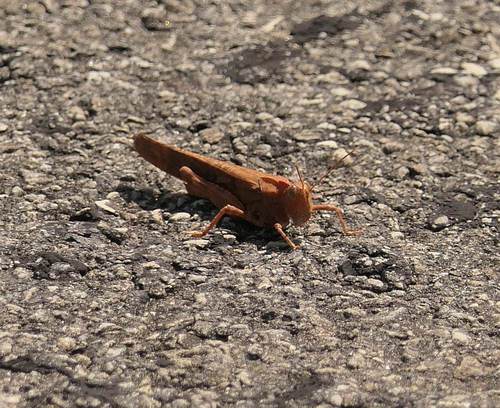
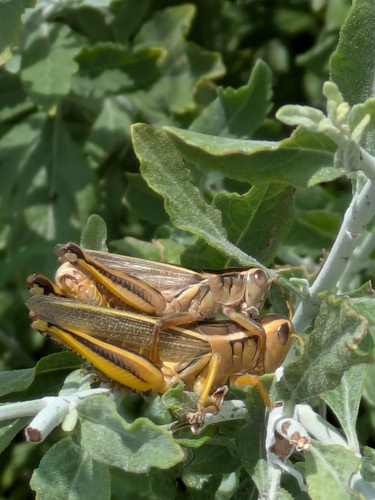
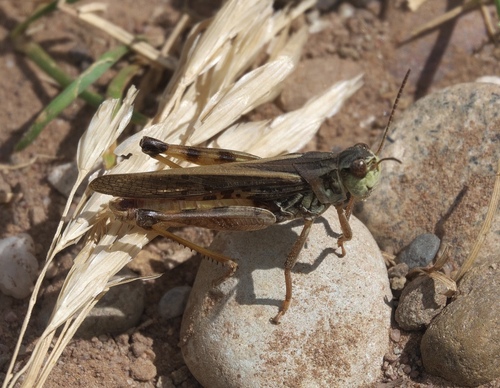
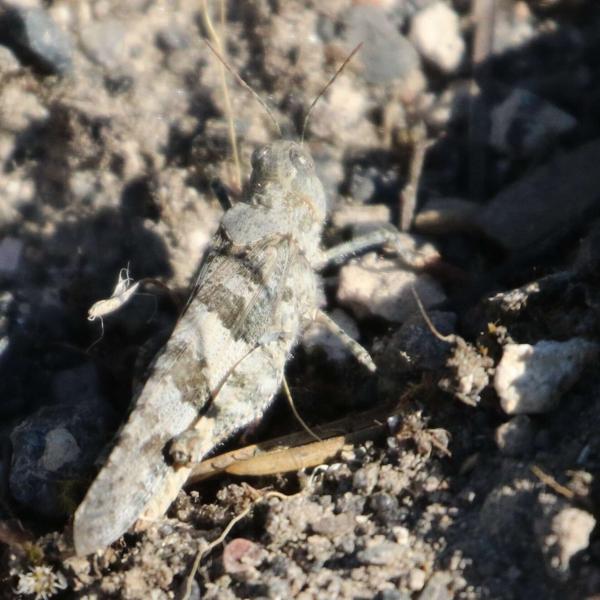
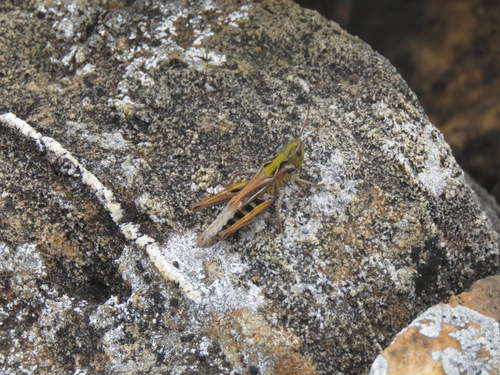
Dissosteira carolina, the Carolina grasshopper, Carolina locust, black-winged grasshopper, road-duster or quaker, is a band-winged species of grasshopper which ranges widely in North America inhabiting weedy grasslands. The Carolina Locust is a short-horned grasshopper (Family Acrididae) found in most of the United States and other parts of North America (Fig 1). These grasshoppers can be anywhere between 32 and 58 mm, with females being larger than males. Their color can range from grey to brown with contrasting black and yellow-white hind wings.

Carolina Locusts are often found on or around dirt roads or paths, where they can easily blend in to gravel and soil. They prefer dry, sunny, open areas for basking, courting displays, and egg laying. Their courtship displays include flying and hovering above the open ground. These males can also call, but their sound is soft and quiet. Their flight is commonly confused for the flight of butterflies.

This species is not known to be a major pest, but some outbreaks have caused some damage in the early 20th century. Individuals of Dissosteira carolina reach over 32–58 mm in length. They tend to be conspicuous due to their... Wikipedia →

Global Distribution

Parks Where Found

# Park Country Daily sighting probability
1 Acadia National Park 🇺🇸 United States
~20%
2 Elk Island National Park 🇨🇦 Canada
~10%
3 Point Pelee National Park 🇨🇦 Canada
~10%
4 Pacific Rim National Park Reserve 🇨🇦 Canada
~10%
5 Riding Mountain National Park 🇨🇦 Canada
~10%
6 Redwood National Park 🇺🇸 United States
~10%
7 Grand Teton National Park 🇺🇸 United States
~10%
8 Shenandoah National Park 🇺🇸 United States
~10%
9 Yellowstone National Park 🇺🇸 United States
<5%

Cities Where Found

# City Country Daily sighting probability
1 Edmonton 🇨🇦 Canada
~10%
2 Montreal 🇨🇦 Canada
~10%
3 Denver 🇺🇸 United States
~10%
4 Boston 🇺🇸 United States
~10%
5 Toronto 🇨🇦 Canada
~10%
6 Calgary 🇨🇦 Canada
~10%
7 Vancouver 🇨🇦 Canada
~10%
8 Minneapolis [Saint Paul] 🇺🇸 United States
~10%
9 Seattle 🇺🇸 United States
~10%
10 Chicago 🇺🇸 United States
~10%

Before you go

What are the chances of seeing a Carolina Grasshopper in Yellowstone National Park?

Rare

Under 5% of wildlife watchers report a Carolina Grasshopper sighting in Yellowstone National Park on a given day, based on 12 verified sightings from GBIF citizen-science data from 2019 to 2026. It is the 102nd most-seen of the 160 insects we can rate there. Over three days the chance rises to about 10%, and over a week to about 30%, if each day is a fresh chance.

When is the best time to see a Carolina Grasshopper in Yellowstone National Park?

August and September

In those months about 10% of wildlife watchers report a Carolina Grasshopper in Yellowstone National Park on a given day, against under 5% in October to July, the lowest months.

What time of day is best to see a Carolina Grasshopper?

Between 10 am and 1 pm

Across all the parks we cover, that three-hour window holds the most Carolina Grasshopper sightings with a recorded time, and about 9 in 10 of them come between 6 am and 6 pm: it is a daytime animal.

Is Yellowstone National Park the best place to see a Carolina Grasshopper?

9th of 9

Of the 9 parks where we can rate Carolina Grasshopper sightings, Yellowstone National Park ranks 9th at under 5%. The best odds are in Acadia National Park (United States, about 20%), Elk Island National Park (Canada, about 10%) and Point Pelee National Park (Canada, about 10%).

Where does the Carolina Grasshopper sighting chance come from?

GBIF citizen-science records

It is estimated from how often the Carolina Grasshopper is recorded against all the insects logged in Yellowstone National Park (12 verified sightings from 2019 to 2026), calibrated against known sighting rates. Figures are rounded to the nearest 10% because citizen-science data supports honest approximations, not decimals, and months with records from fewer than five people show "—". How it works.

← Back to Yellowstone National Park