Flame Skimmer

Flame Skimmer

Libellula saturata

Daily sighting probability ~30% · Possible
at Yellowstone National Park

In 3 days ~60% in a week ~90%

163 Verified sightings at Yellowstone National Park From 2019 to 2026
523 In all 12 parks
August Best month
☀️ Diurnal When it's spotted

About the Flame Skimmer

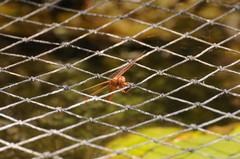
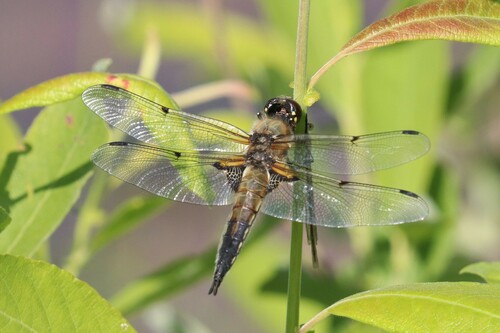
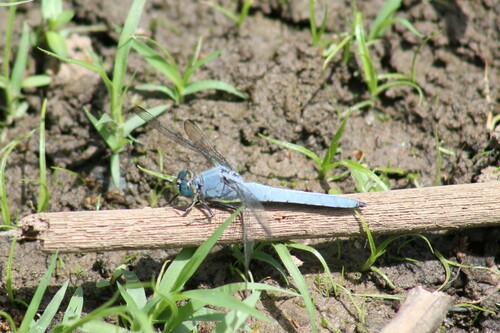
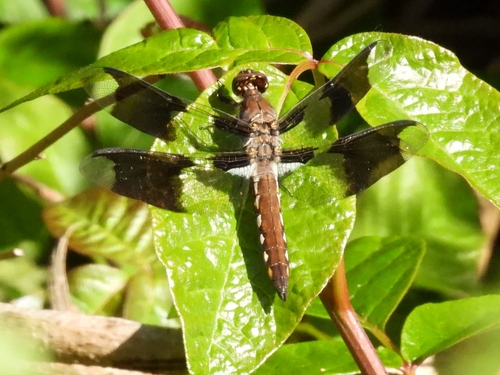
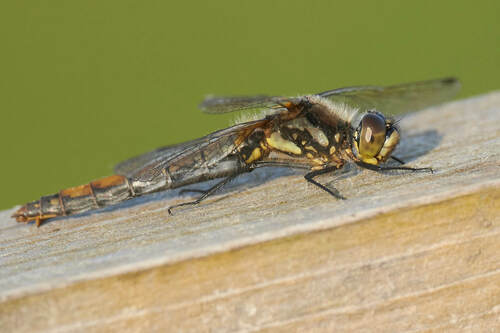
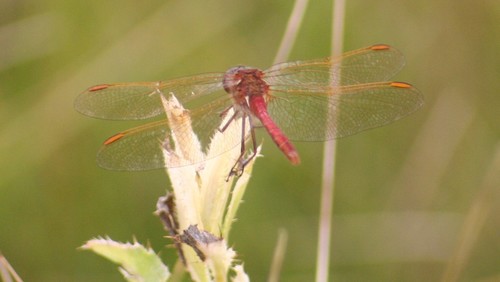
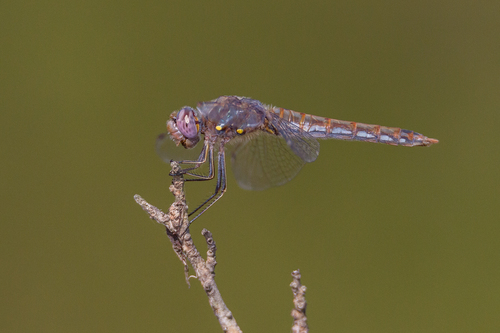
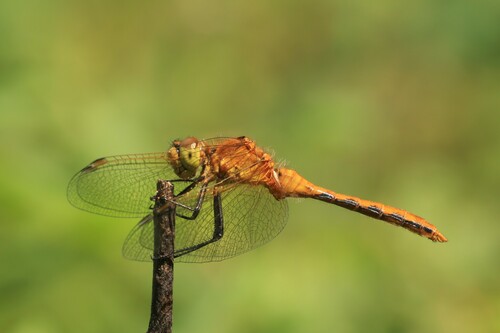
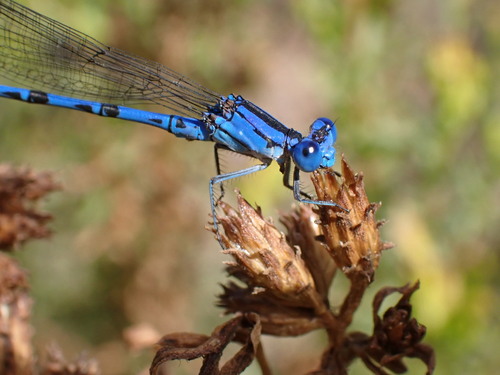
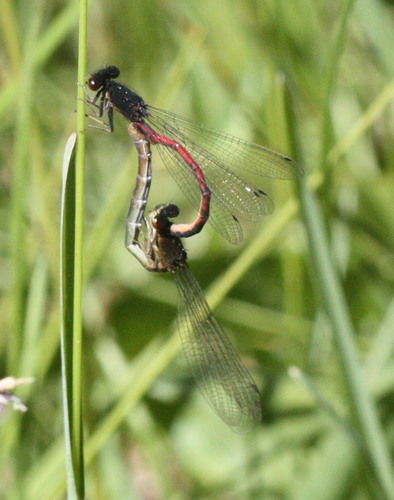
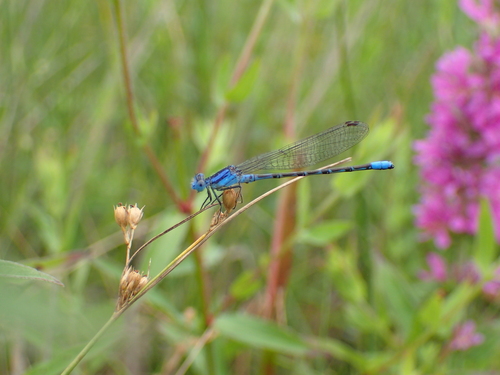
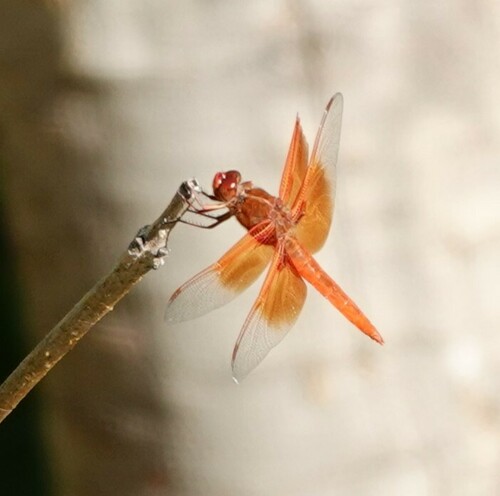
The flame skimmer or firecracker skimmer (Libellula saturata) is a common dragonfly of the family Libellulidae, native to western North America. Male flame skimmers are known for their entirely red or dark orange body, this includes eyes, legs, and even wing veins. Females are usually a medium or darker brown with some thin, yellow markings. This particular type of skimmer varies in size but is generally measured somewhere between 2 and 3 inches (5.1 and 7.6 cm) long. The naiads are known for being rather large and chubby-looking due to their rounded abdomen. They are covered with hair but, unlike most young dragonflies, they lack hooks or spines.

Due to its choice habitat of warm ponds, streams, or hot springs, flame skimmers are found mainly in the southwestern part of the United States. They also make their homes in public gardens or backyards. An immature flame skimmer (nymph) feeds mainly on aquatic insects. Its diet consists of mosquito larvae, aquatic fly larvae, mayfly larvae, freshwater shrimp, small fish, and tadpoles. The nymphs, which live in the mud at the bottom of warm streams or ponds, catch their prey by waiting... Wikipedia →
Global Distribution

Parks Where Found

# Park Country Daily sighting probability
1 Death Valley National Park 🇺🇸 United States
~30%
2 Yellowstone National Park 🇺🇸 United States
~30%
3 Saguaro National Park 🇺🇸 United States
~20%
4 Zion National Park 🇺🇸 United States
~20%
5 Big Bend National Park 🇺🇸 United States
~20%
6 Guadalupe Mountains National Park 🇺🇸 United States
~20%
7 Grand Canyon National Park 🇺🇸 United States
~10%
8 Channel Islands National Park 🇺🇸 United States
~10%
9 Yosemite National Park 🇺🇸 United States
~10%
10 Joshua Tree National Park 🇺🇸 United States
~10%
11 Sequoia and Kings Canyon National Parks 🇺🇸 United States
~10%
12 Cumbres de Monterrey National Park 🇲🇽 Mexico
~10%

Cities Where Found

# City Country Daily sighting probability
1 Sacramento 🇺🇸 United States
~20%
2 Las Vegas 🇺🇸 United States
~20%
3 Portland 🇺🇸 United States
~10%
4 Los Angeles 🇺🇸 United States
~10%
5 Mesa 🇺🇸 United States
~10%
6 Phoenix 🇺🇸 United States
~10%
7 San Francisco 🇺🇸 United States
~10%
8 Salt Lake City 🇺🇸 United States
~10%
9 San Diego 🇺🇸 United States
~10%
10 Monterrey 🇲🇽 México
~10%

Before you go

What are the chances of seeing a Flame Skimmer in Yellowstone National Park?

Possible

About 30% of wildlife watchers report a Flame Skimmer sighting in Yellowstone National Park on a given day, based on 163 verified sightings from GBIF citizen-science data from 2019 to 2026. It is the most-seen of the 160 insects we can rate there. Over three days the chance rises to about 60%, and over a week to about 90%, if each day is a fresh chance.

When is the best time to see a Flame Skimmer in Yellowstone National Park?

July and August

In those months about 40% of wildlife watchers report a Flame Skimmer in Yellowstone National Park on a given day, against under 5% in November to May, the lowest months.

What time of day is best to see a Flame Skimmer?

Between 10 am and 1 pm

Across all the parks we cover, that three-hour window holds the most Flame Skimmer sightings with a recorded time, and about 9 in 10 of them come between 6 am and 6 pm: it is a daytime animal.

Is Yellowstone National Park the best place to see a Flame Skimmer?

Among the best

Of the 12 parks where we can rate Flame Skimmer sightings, Yellowstone National Park ranks 2nd at about 30%, level with the leaders once rounded. The best odds are in Death Valley National Park (United States, about 30%).

Where does the Flame Skimmer sighting chance come from?

GBIF citizen-science records

It is estimated from how often the Flame Skimmer is recorded against all the insects logged in Yellowstone National Park (163 verified sightings from 2019 to 2026), calibrated against known sighting rates. Figures are rounded to the nearest 10% because citizen-science data supports honest approximations, not decimals, and months with records from fewer than five people show "—". How it works.

← Back to Yellowstone National Park