Ebony Jewelwing

Ebony Jewelwing

Calopteryx maculata

Daily sighting probability ~10% · With luck
at Acadia National Park

In 3 days ~40% in a week ~70%

59 Verified sightings at Acadia National Park From 2019 to 2026
439 In all 5 parks
July Best month
☀️ Diurnal When it's spotted

About the Ebony Jewelwing

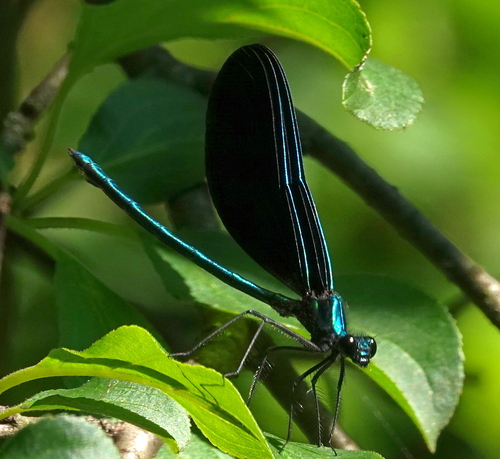
The ebony jewelwing (Calopteryx maculata) is a species of broad-winged damselfly. One of about 150 species of Calopterygidae, it is found in the eastern U.S. and southeastern Canada, ranging west to the Great Plains. Other common names include black-winged damselfly.

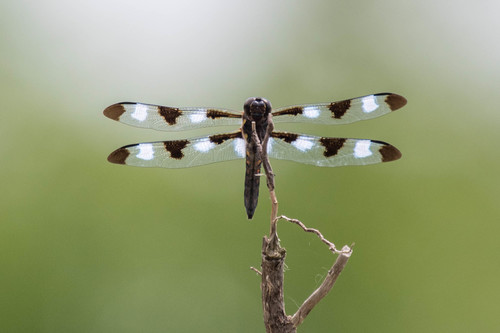
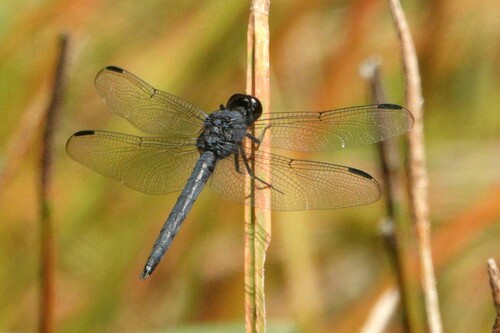
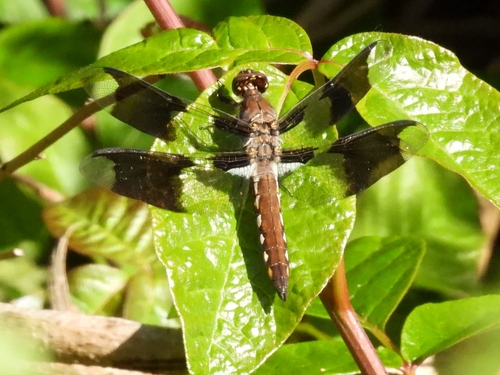
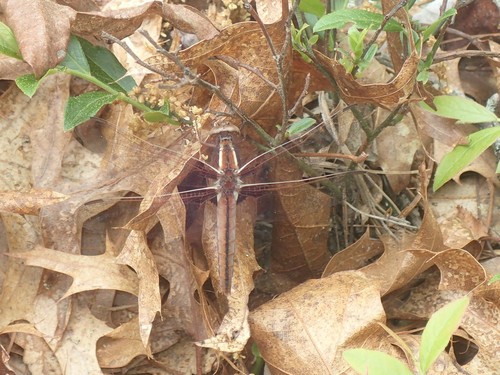
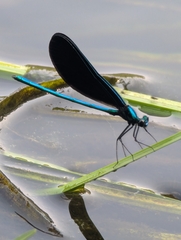
It is between 39–57 mm (1.5–2.2 in). The male has a metallic blue-green body and black wings. The female is duller brown with smoky wings that have white spots near the tips (pseudopterostigmas). The naiad is pale brown with darker markings. There are some spots in the wings.

It lives near wooded streams and rivers, but it can move far from water. Ebony jewelwings mate in the summer. The male holds the female behind her head with his tail or abdomen. The female lays eggs in the soft stems of aquatic plants. The naiad eats small aquatic insects. When the naiad is fully grown, it crawls out of the water and molts.

This damselfly species can be seen almost year-round in some regions. Prey of this species includes the tiger mosquito, giant willow aphid, fungus gnats, crane flies, large diving beetles, eastern dobsonfly, water fleas, green darner... Wikipedia →
Global Distribution

Parks Where Found

# Park Country Daily sighting probability
1 Congaree National Park 🇺🇸 United States
~30%
2 Great Smoky Mountains National Park 🇺🇸 United States
~30%
3 Acadia National Park 🇺🇸 United States
~10%
4 Shenandoah National Park 🇺🇸 United States
~10%
5 Cape Breton Highlands National Park 🇨🇦 Canada
~10%

Cities Where Found

# City Country Daily sighting probability
1 Toronto 🇨🇦 Canada
~10%
2 Washington 🇺🇸 United States
~10%
3 Detroit 🇺🇸 United States
~10%
4 Baltimore 🇺🇸 United States
~10%
5 Minneapolis [Saint Paul] 🇺🇸 United States
~10%
6 Chicago 🇺🇸 United States
<5%
7 Denver 🇺🇸 United States
<5%
8 Philadelphia 🇺🇸 United States
<5%
9 New York City 🇺🇸 United States
<5%
10 Boston 🇺🇸 United States
<5%

Before you go

What are the chances of seeing an Ebony Jewelwing in Acadia National Park?

With luck

About 10% of wildlife watchers report an Ebony Jewelwing sighting in Acadia National Park on a given day, based on 59 verified sightings from GBIF citizen-science data from 2019 to 2026. It is the 42nd most-seen of the 405 insects we can rate there. Over three days the chance rises to about 40%, and over a week to about 70%, if each day is a fresh chance.

When is the best time to see an Ebony Jewelwing in Acadia National Park?

June and July

In those months about 20% of wildlife watchers report an Ebony Jewelwing in Acadia National Park on a given day, against under 5% in September to May, the lowest months.

What time of day is best to see an Ebony Jewelwing?

Between noon and 3 pm

Across all the parks we cover, that three-hour window holds the most Ebony Jewelwing sightings with a recorded time, and nearly all of them come between 6 am and 6 pm: it is a daytime animal.

Is Acadia National Park the best place to see an Ebony Jewelwing?

3rd of 5

Of the 5 parks where we can rate Ebony Jewelwing sightings, Acadia National Park ranks 3rd at about 10%. The best odds are in Congaree National Park (United States, about 30%) and Great Smoky Mountains National Park (United States, about 30%).

Which relatives of the Ebony Jewelwing live in Acadia National Park?

Same order: Odonata

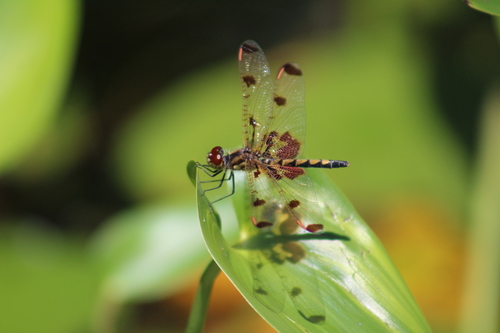
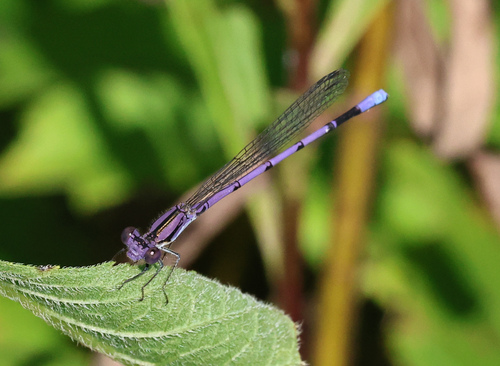
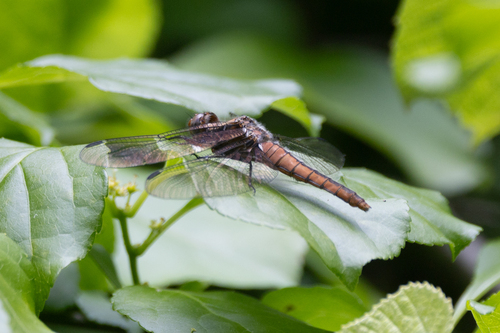
The closest relatives of the Ebony Jewelwing that you can see in Acadia National Park (order Odonata, Dragonflies and Damselflies) are Calico Pennant (about 20%), Autumn Meadowhawk (about 20%) and Variable Dancer (about 10%), with each one's daily chance of a sighting.

Where does the Ebony Jewelwing sighting chance come from?

GBIF citizen-science records

It is estimated from how often the Ebony Jewelwing is recorded against all the insects logged in Acadia National Park (59 verified sightings from 2019 to 2026), calibrated against known sighting rates. Figures are rounded to the nearest 10% because citizen-science data supports honest approximations, not decimals, and months with records from fewer than five people show "—". How it works.

← Back to Acadia National Park