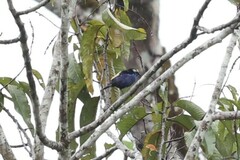
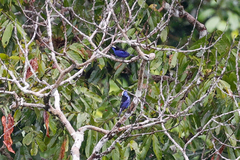
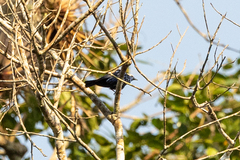

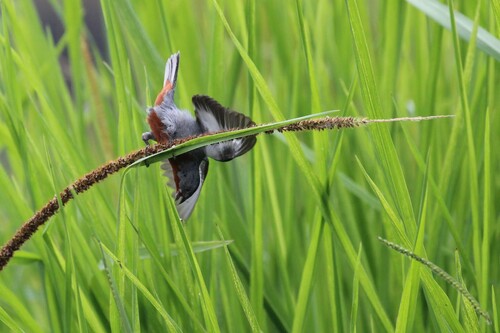
Opal-crowned Tanager

Opal-crowned Tanager

Tangara callophrys

Silhouette: Sheatherius · PhyloPic

LCLeast ConcernNTVUENCR
Daily sighting probability <5% · Rare
at Amacayacu National Natural Park

In 3 days <5% in a week ~10%

9 Verified sightings at Amacayacu National Natural Park From 2019 to 2026
919 In all 5 parks
September Best month
☀️ Diurnal When it's spotted

About the Opal-crowned Tanager

The opal-crowned tanager (Tangara callophrys) is a species of bird in the family Thraupidae, the tanagers. It is one of 49 species in the genus Tangara. It is found in the eastern Andes drainages to the western Amazon Basin in southern Colombia, eastern Ecuador and Peru and a region of northwestern Bolivia; for Brazil in southwestern-western Amazonas state and Acre.

Its natural habitat is subtropical or tropical moist lowland forests. The opal-crowned tanager is found in one contiguous range centered on Amazonian eastern Peru-Ecuador, southeastern Colombia, and the very west of Amazonas state, Brazil; all of Acre state is included in the south with southern Peru, and a border region of extreme northwestern Bolivia.

A small disjunct population exists 100 km west in southern Colombia. Opal-crowned Tanager photo gallery Archived 2016-03-03 at the Wayback Machine VIREO Photo-High Res Archived 2007-08-16 at the Wayback Machine; Article greenbackedheron—"Sacha Lodge", Ecuador

Photo-High Res; Article Archived 2008-07-23 at the Wayback Machine wingsbirds.com—"Peru: The Northeast" Wikipedia →

Sounds

Call0:36

Brazil · 2018

© GABRIEL LEITE · XC431891 · CC BY-NC-SA 4.0

Call0:22

Peru · 2015

© Ross Gallardy · XC296563 · CC BY-NC-SA 4.0

Call0:13

Ecuador · 1999

© Mitch Lysinger · XC261194 · CC BY-NC-SA 4.0

Global Distribution

Parks Where Found

# Park Country Daily sighting probability
1 Yasuní National Park 🇪🇨 Ecuador
~20%
2 Manu National Park 🇵🇪 Peru
<5%
3 Cuyabeno Wildlife Reserve 🇪🇨 Ecuador
<5%
4 Tambopata National Reserve 🇵🇪 Peru
<5%
5 Amacayacu National Natural Park 🇨🇴 Colombia
<5%

Before you go

What are the chances of seeing an Opal-crowned Tanager in Amacayacu National Natural Park?

Rare

Under 5% of wildlife watchers report an Opal-crowned Tanager sighting in Amacayacu National Natural Park on a given day, based on 9 verified sightings from GBIF citizen-science data from 2019 to 2026. It is the 376th most-seen of the 436 birds we can rate there. Over three days the chance rises to under 5%, and over a week to about 10%, if each day is a fresh chance.

When is the best time to see an Opal-crowned Tanager in Amacayacu National Natural Park?

September

In that month about 10% of wildlife watchers report an Opal-crowned Tanager in Amacayacu National Natural Park on a given day, against under 5% in October to August, the lowest months. That is one of Amacayacu National Natural Park's driest months, with about 160 mm of rain against 390 mm in March.

What time of day is best to see an Opal-crowned Tanager?

Between 7 and 10 am

Across all the parks we cover, that three-hour window holds the most Opal-crowned Tanager sightings with a recorded time, and about 8 in 10 of them come between 6 am and 6 pm: it is a daytime animal.

Is Amacayacu National Natural Park the best place to see an Opal-crowned Tanager?

5th of 5

Of the 5 parks where we can rate Opal-crowned Tanager sightings, Amacayacu National Natural Park ranks 5th at under 5%. The best odds are in Yasuní National Park (Ecuador, about 20%), Manu National Park (Peru, under 5%) and Cuyabeno Wildlife Reserve (Ecuador, under 5%).

Which relatives of the Opal-crowned Tanager live in Amacayacu National Natural Park?

Same genus: Tangara

The closest relatives of the Opal-crowned Tanager that you can see in Amacayacu National Natural Park (genus Tangara, Tangara Tanagers) are Turquoise Tanager (about 20%), Paradise Tanager (about 10%) and Green-and-gold Tanager (about 10%), with each one's daily chance of a sighting.

Where does the Opal-crowned Tanager sighting chance come from?

GBIF citizen-science records

It is estimated from how often the Opal-crowned Tanager is recorded against all the birds logged in Amacayacu National Natural Park (9 verified sightings from 2019 to 2026), calibrated against known sighting rates. Figures are rounded to the nearest 10% because citizen-science data supports honest approximations, not decimals, and months with records from fewer than five people show "—". How it works.

← Back to Amacayacu National Natural Park