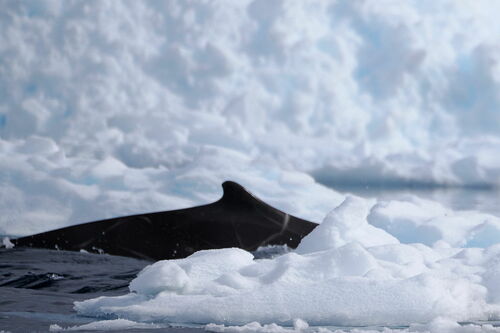
Antarctic Fur Seal

Antarctic Fur Seal

Arctocephalus gazella

Silhouette: Alexandre Vong · PhyloPic

LCLeast ConcernNTVUENCR
Daily sighting probability ~70% · Very likely
at Antarctic Peninsula & South Shetland Islands

In 3 days >90%

521 Verified sightings at Antarctic Peninsula & South Shetland Islands From 2019 to 2026
1,118 In all 2 parks
March Best month
☀️ Diurnal When it's spotted

About the Antarctic Fur Seal

The Antarctic fur seal (Arctocephalus gazella) is one of eight seals in the genus Arctocephalus, and one of nine fur seals in the subfamily Arctocephalinae. Despite what its name suggests, the Antarctic fur seal is mostly distributed in Subantarctic islands and its scientific name is thought to have come from the German vessel SMS Gazelle, which was the first to collect specimens of this species from the Kerguelen Islands.

The Antarctic fur seal is a member of the genus Arctocephalus. Recently, a proposal was made to reassign this species to the resurrected genus Arctophoca. Antarctic fur seals may be confused with southern otariids that share their range, like Subantarctic (A. tropicalis), New Zealand (A. forsteri), and South American fur seals (A. australis), and the Juan Fernandez fur seal (A. phillippii), as well as the South American (Otaria flavescens) and New Zealand sea lions (Phocarctos hookeri).

Genetic studies on population structure suggest that there are two genetically distinct regions: a western region including the islands of the Scotia Arc, Bouvet Island, and Marion Islands, and an eastern region, including Kerguelen and Macquarie Islands. Seals from...

Wikipedia →

Sounds

Recording0:23

Antarctica · 2016

© Laura Mae · iNaturalist · CC BY 4.0

Global Distribution

Parks Where Found

# Park Country Daily sighting probability
1 South Georgia and the South Sandwich Islands 🇬🇸 South Georgia and the South Sandwich Islands
~90%
2 Antarctic Peninsula & South Shetland Islands 🇦🇶 Antarctica
~70%

Before you go

What are the chances of seeing an Antarctic Fur Seal in Antarctic Peninsula & South Shetland Islands?

Very likely

About 70% of wildlife watchers report an Antarctic Fur Seal sighting in Antarctic Peninsula & South Shetland Islands on a given day, based on 521 verified sightings from GBIF citizen-science data from 2019 to 2026. It is the 5th most-seen of the 11 mammals we can rate there. Over three days the chance rises to over 90%, if each day is a fresh chance.

When is the best time to see an Antarctic Fur Seal in Antarctic Peninsula & South Shetland Islands?

March

In that month about 90% of wildlife watchers report an Antarctic Fur Seal in Antarctic Peninsula & South Shetland Islands on a given day, against about 10% in December, the lowest month. July to September have too few records to rate.

What time of day is best to see an Antarctic Fur Seal?

Between 3 and 6 pm

Across all the parks we cover, that three-hour window holds the most Antarctic Fur Seal sightings with a recorded time, and about 9 in 10 of them come between 6 am and 6 pm: it is a daytime animal.

Is Antarctic Peninsula & South Shetland Islands the best place to see an Antarctic Fur Seal?

2nd of 2

Of the 2 parks where we can rate Antarctic Fur Seal sightings, Antarctic Peninsula & South Shetland Islands ranks 2nd at about 70%. The best odds are in South Georgia and the South Sandwich Islands (South Georgia and the South Sandwich Islands, about 90%).

Which relatives of the Antarctic Fur Seal live in Antarctic Peninsula & South Shetland Islands?

Same order: Carnivora

The closest relatives of the Antarctic Fur Seal that you can see in Antarctic Peninsula & South Shetland Islands (order Carnivora, Carnivorans) are Weddell Seal (about 80%), Crabeater Seal (about 80%) and Leopard Seal (about 70%), with each one's daily chance of a sighting.

Where does the Antarctic Fur Seal sighting chance come from?

GBIF citizen-science records

It is estimated from how often the Antarctic Fur Seal is recorded against all the mammals logged in Antarctic Peninsula & South Shetland Islands (521 verified sightings from 2019 to 2026), calibrated against known sighting rates. Figures are rounded to the nearest 10% because citizen-science data supports honest approximations, not decimals, and months with records from fewer than five people show "—". How it works.

← Back to Antarctic Peninsula & South Shetland Islands