Antarctic Minke Whale

Antarctic Minke Whale

Balaenoptera bonaerensis

Silhouette: Chris huh · PhyloPic

LCNTNear ThreatenedVUENCR
Daily sighting probability ~30% · Possible
at Antarctic Peninsula & South Shetland Islands

In 3 days ~70% in a week ~90%

81 Verified sightings at Antarctic Peninsula & South Shetland Islands From 2019 to 2026
81 In 1 park
February Best month
☀️ Diurnal When it's spotted

About the Antarctic Minke Whale

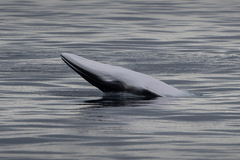
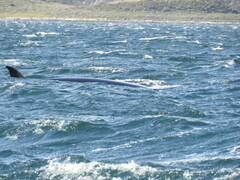
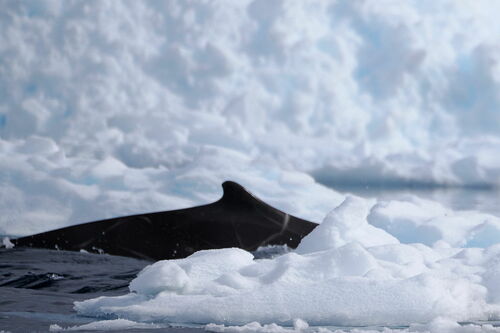
The Antarctic minke whale or southern minke whale (Balaenoptera bonaerensis) is a species of minke whale within the suborder of baleen whales. It is the second smallest rorqual after the common minke whale and the third smallest baleen whale. Although first scientifically described in the mid-19th century, it was not recognized as a distinct species until the 1990s. Once ignored by the whaling industry due to its small size and low oil yield, the Antarctic minke was able to avoid the fate of other baleen whales and maintained a large population into the 21st century, numbering in the hundreds of thousands. Surviving to become the most abundant baleen whale in the world, it is now one of the mainstays of the industry alongside its cosmopolitan counterpart the common minke. It is primarily restricted to the Southern Hemisphere (although vagrants have been reported in the North Atlantic) and feeds mainly on euphausiids.

In February 1867, a fisherman found an estimated 9.75 m (32.0 ft) male rorqual floating in the Río de la Plata near Belgrano, about ten miles from Buenos Aires, Argentina. After bringing it ashore he brought it to the attention of the German...

Wikipedia →

Global Distribution

Parks Where Found

# Park Country Daily sighting probability
1 Antarctic Peninsula & South Shetland Islands 🇦🇶 Antarctica
~30%

More parks will be added in future updates.

Before you go

What are the chances of seeing an Antarctic Minke Whale in Antarctic Peninsula & South Shetland Islands?

Possible

About 30% of wildlife watchers report an Antarctic Minke Whale sighting in Antarctic Peninsula & South Shetland Islands on a given day, based on 81 verified sightings from GBIF citizen-science data from 2019 to 2026. It is the 8th most-seen of the 11 mammals we can rate there. Over three days the chance rises to about 70%, and over a week to about 90%, if each day is a fresh chance.

When is the best time to see an Antarctic Minke Whale in Antarctic Peninsula & South Shetland Islands?

February

In that month about 40% of wildlife watchers report an Antarctic Minke Whale in Antarctic Peninsula & South Shetland Islands on a given day, against about 10% in May and October, the lowest months. July to September have too few records to rate.

What time of day is best to see an Antarctic Minke Whale?

Between 8 and 11 am

Across all the parks we cover, that three-hour window holds the most Antarctic Minke Whale sightings with a recorded time, and about 7 in 10 of them come between 6 am and 6 pm: it is a daytime animal.

Where else can you see an Antarctic Minke Whale?

Only Antarctic Peninsula & South Shetland Islands, in our data

Antarctic Peninsula & South Shetland Islands is the only park on Wallace's Line with enough records to rate Antarctic Minke Whale sightings: about 30% of wildlife watchers there report one on a given day.

Which relatives of the Antarctic Minke Whale live in Antarctic Peninsula & South Shetland Islands?

Same genus: Balaenoptera

The closest relatives of the Antarctic Minke Whale that you can see in Antarctic Peninsula & South Shetland Islands (genus Balaenoptera) are Fin Whale (about 30%) and Blue Whale (about 10%), with each one's daily chance of a sighting.

Where does the Antarctic Minke Whale sighting chance come from?

GBIF citizen-science records

It is estimated from how often the Antarctic Minke Whale is recorded against all the mammals logged in Antarctic Peninsula & South Shetland Islands (81 verified sightings from 2019 to 2026), calibrated against known sighting rates. Figures are rounded to the nearest 10% because citizen-science data supports honest approximations, not decimals, and months with records from fewer than five people show "—". How it works.

← Back to Antarctic Peninsula & South Shetland Islands