Weddell Seal

Weddell Seal

Leptonychotes weddellii

LCLeast ConcernNTVUENCR
Daily sighting probability ~80% · Very likely
at Antarctic Peninsula & South Shetland Islands

In 3 days >90%

853 Verified sightings at Antarctic Peninsula & South Shetland Islands From 2019 to 2026
864 In all 2 parks
January Best month
☀️ Diurnal When it's spotted

About the Weddell Seal

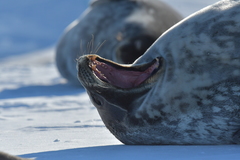
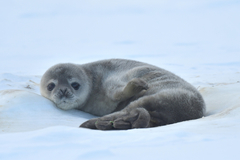
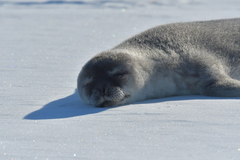
The Weddell seal (Leptonychotes weddellii) is a relatively large and abundant true seal with a circumpolar distribution surrounding Antarctica. The Weddell seal was discovered and named in the 1820s during expeditions led by British sealing captain James Weddell to the area of the Southern Ocean now known as the Weddell Sea. The life history of this species is well documented since it occupies fast ice environments close to the Antarctic continent and often adjacent to Antarctic bases. It is the only species in the genus Leptonychotes.

Weddell seals measure about 2.5–3.5 m (8 ft 2 in – 11 ft 6 in) long and weigh 400–600 kg (880–1,320 lb). They are amongst the largest seals, with a rather bulky body and short fore flippers relative to their body length. Males weigh less than females, usually about 500 kg (1,100 lb) or less. Male and female Weddell seals are generally about the same length, though females can be slightly larger. However, the male seal tends to have a thicker neck and a broader head and muzzle than the female. A molecular genetic-based technique has been established to confirm the sex of individuals in the laboratory. The Weddell seal face has been...


Wikipedia →

Global Distribution

Parks Where Found

# Park Country Daily sighting probability
1 Antarctic Peninsula & South Shetland Islands 🇦🇶 Antarctica
~80%
2 South Georgia and the South Sandwich Islands 🇬🇸 South Georgia and the South Sandwich Islands
~20%

Before you go

What are the chances of seeing a Weddell Seal in Antarctic Peninsula & South Shetland Islands?

Very likely

About 80% of wildlife watchers report a Weddell Seal sighting in Antarctic Peninsula & South Shetland Islands on a given day, based on 853 verified sightings from GBIF citizen-science data from 2019 to 2026. It is the 2nd most-seen of the 11 mammals we can rate there. Over three days the chance rises to over 90%, if each day is a fresh chance.

When is the best time to see a Weddell Seal in Antarctic Peninsula & South Shetland Islands?

January

In that month about 90% of wildlife watchers report a Weddell Seal in Antarctic Peninsula & South Shetland Islands on a given day, against about 30% in May, the lowest month. July to September have too few records to rate.

What time of day is best to see a Weddell Seal?

Between 2 and 5 pm

Across all the parks we cover, that three-hour window holds the most Weddell Seal sightings with a recorded time, and about 8 in 10 of them come between 6 am and 6 pm: it is a daytime animal.

Is Antarctic Peninsula & South Shetland Islands the best place to see a Weddell Seal?

Yes

Of the 2 parks where we can rate Weddell Seal sightings, Antarctic Peninsula & South Shetland Islands has the highest daily chance: about 80%. Next come South Georgia and the South Sandwich Islands (South Georgia and the South Sandwich Islands, about 20%).

Which relatives of the Weddell Seal live in Antarctic Peninsula & South Shetland Islands?

Same family: Phocidae

The closest relatives of the Weddell Seal that you can see in Antarctic Peninsula & South Shetland Islands (family Phocidae, Earless Seals) are Crabeater Seal (about 80%), Leopard Seal (about 70%) and Southern Elephant Seal (about 50%), with each one's daily chance of a sighting.

Where does the Weddell Seal sighting chance come from?

GBIF citizen-science records

It is estimated from how often the Weddell Seal is recorded against all the mammals logged in Antarctic Peninsula & South Shetland Islands (853 verified sightings from 2019 to 2026), calibrated against known sighting rates. Figures are rounded to the nearest 10% because citizen-science data supports honest approximations, not decimals, and months with records from fewer than five people show "—". How it works.

← Back to Antarctic Peninsula & South Shetland Islands