Common Quaker

Common Quaker

Orthosia cerasi

Daily sighting probability ~10% · With luck
at Bavarian Forest National Park

In 3 days ~20% in a week ~50%

22 Verified sightings at Bavarian Forest National Park From 2019 to 2026
253 In all 7 parks
March Best month
☀️🌙 Day & Night When it's spotted

About the Common Quaker

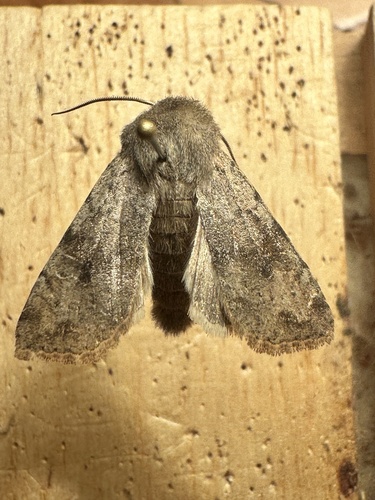
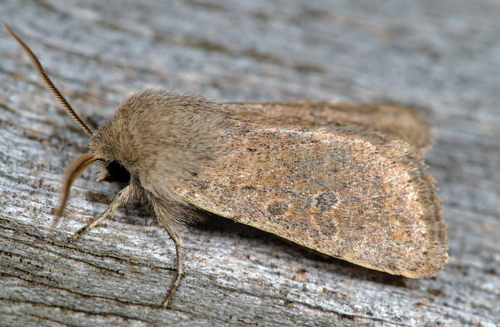
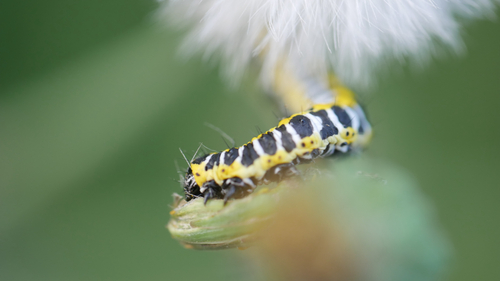
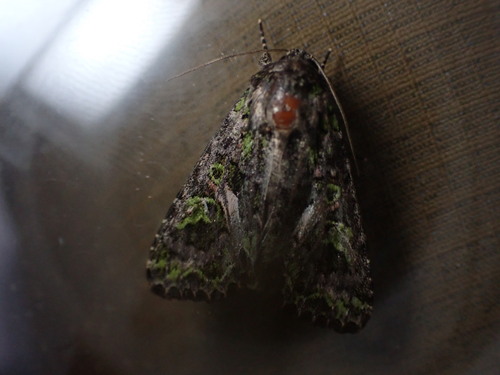
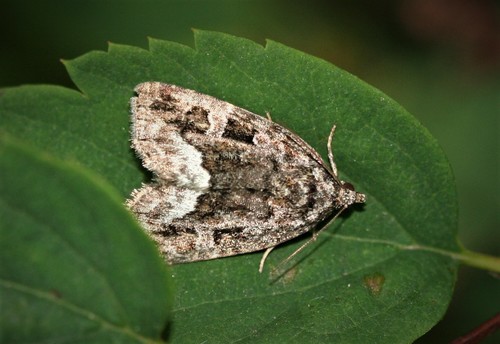
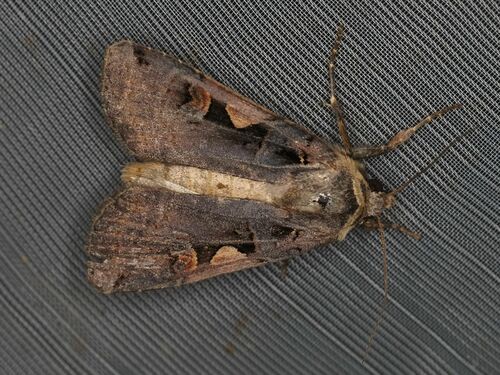
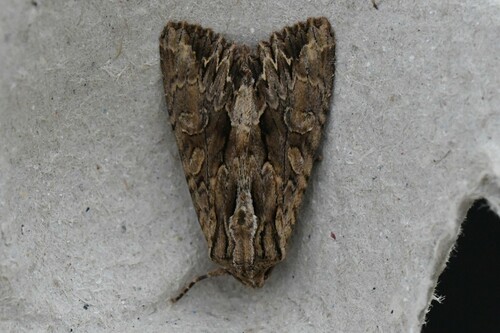
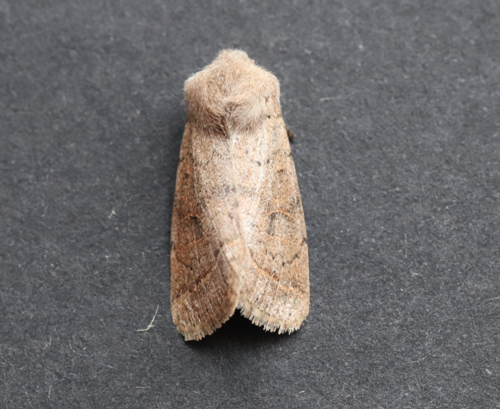
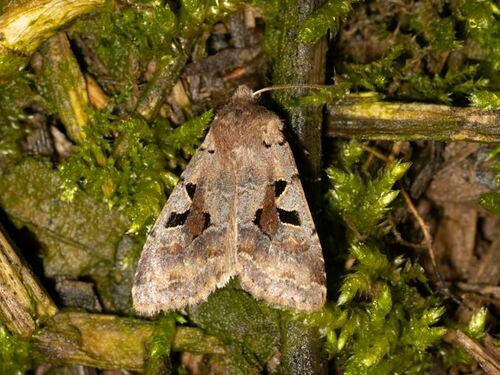
The common Quaker (Orthosia cerasi) is a moth of the family Noctuidae first described by Johan Christian Fabricius in 1775. Some authors prefer the synonym Orthosia stabilis (Denis & Schiffermüller, 1775). It is distributed throughout Europe and is also found in Turkey, Palestine (region), Transcaucasia, Russia and eastern Siberia.

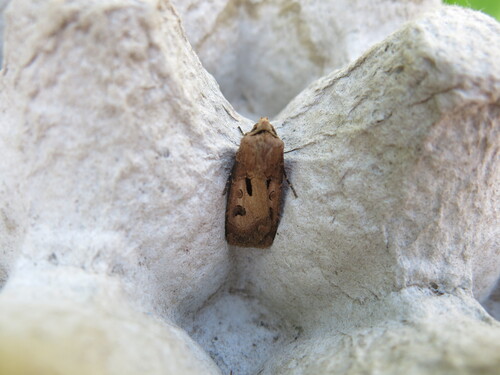
This is a variable species, the ground colour of the forewings ranging from greyish to orangey brown, sometimes with a broad dark band. The most distinctive features are two large stigmata, each edged by a narrow pale line, with a similarly coloured subterminal line. The hindwings are drab grey or brown.

The wingspan is 34–40 mm. Forewing reddish grey, more or less dusted with dark: inner and outer lines blackish, indistinct; orbicular and reniform stigmata ringed with ochreous; submarginal line ochreous preceded by a fuscous or rufous shade; claviform mostly unmarked; veins towards termen pale: hindwing grey, the fringe paler. The species varies according to the amount of red present; — ab. pallida Tutt is pale grey, sometimes with an ochreous flush; — obliqua Vill. is darker grey with markings clearer; — suffusa... Wikipedia →
Global Distribution

Parks Where Found

# Park Country Daily sighting probability
1 Snowdonia National Park 🇬🇧 United Kingdom
~20%
2 Cairngorms National Park 🇬🇧 United Kingdom
~10%
3 Bavarian Forest National Park 🇩🇪 Germany
~10%
4 Sierra de Guadarrama National Park 🇪🇸 Spain
~10%
5 Wadden Sea National Park 🇩🇪 Germany
~10%
6 Cévennes National Park 🇫🇷 France
~10%
7 Pyrénées National Park 🇫🇷 France
~10%

Cities Where Found

# City Country Daily sighting probability
1 Liverpool 🇬🇧 United Kingdom
~20%
2 Birmingham 🇬🇧 United Kingdom
~10%
3 London 🇬🇧 United Kingdom
~10%
4 Porto 🇵🇹 Portugal
~10%
5 Manchester 🇬🇧 United Kingdom
~10%
6 Essen 🇩🇪 Germany
~10%
7 Budapest 🇭🇺 Hungary
~10%
8 Vienna 🇦🇹 Austria
~10%
9 Prague 🇨🇿 Czechia
~10%
10 Paris 🇫🇷 France
~10%

Before you go

What are the chances of seeing a Common Quaker in Bavarian Forest National Park?

With luck

About 10% of wildlife watchers report a Common Quaker sighting in Bavarian Forest National Park on a given day, based on 22 verified sightings from GBIF citizen-science data from 2019 to 2026. It is the 269th most-seen of the 1115 insects we can rate there. Over three days the chance rises to about 20%, and over a week to about 50%, if each day is a fresh chance.

When is the best time to see a Common Quaker in Bavarian Forest National Park?

March and April

In those months about 20% of wildlife watchers report a Common Quaker in Bavarian Forest National Park on a given day, against under 5% in June to February, the lowest months.

What time of day is best to see a Common Quaker?

Between 10 pm and 1 am

Across all the parks we cover, that three-hour window holds the most Common Quaker sightings with a recorded time, and about half of them come between 6 pm and 6 am: it is seen both by day and at night.

Is Bavarian Forest National Park the best place to see a Common Quaker?

3rd of 7

Of the 7 parks where we can rate Common Quaker sightings, Bavarian Forest National Park ranks 3rd at about 10%. The best odds are in Snowdonia National Park (United Kingdom, about 20%) and Cairngorms National Park (United Kingdom, about 10%).

Which relatives of the Common Quaker live in Bavarian Forest National Park?

Same genus: Orthosia

The closest relatives of the Common Quaker that you can see in Bavarian Forest National Park (genus Orthosia) are Hebrew Character (about 10%), Clouded Drab (about 10%) and Small Quaker (about 10%), with each one's daily chance of a sighting.

Where does the Common Quaker sighting chance come from?

GBIF citizen-science records

It is estimated from how often the Common Quaker is recorded against all the insects logged in Bavarian Forest National Park (22 verified sightings from 2019 to 2026), calibrated against known sighting rates. Figures are rounded to the nearest 10% because citizen-science data supports honest approximations, not decimals, and months with records from fewer than five people show "—". How it works.

← Back to Bavarian Forest National Park