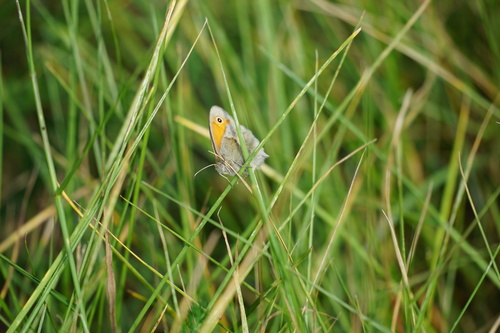
Oak Lantern

Oak Lantern

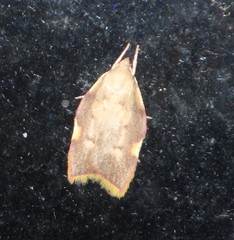
Carcina quercana

Daily sighting probability ~10% · With luck
at Bavarian Forest National Park

In 3 days ~20% in a week ~40%

16 Verified sightings at Bavarian Forest National Park From 2019 to 2026
85 In all 5 parks
August Best month
☀️🌙 Day & Night When it's spotted

About the Oak Lantern

Carcina quercana is a species of moth of the family Depressariidae. It is found in Europe. It has been introduced recently in North America, British Columbia and western Washington. It is occasionally known by several common names including oak lantern, long-horned flat-body, and oak-skeletonizer moth (the last most common in North America).

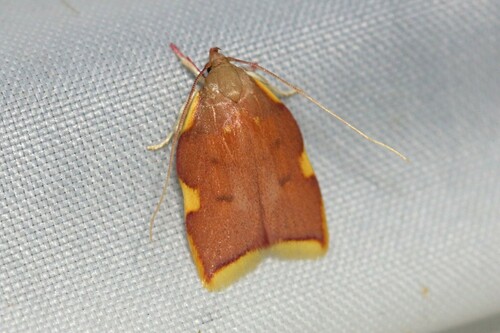
The wingspan is 16–20 mm. The forewings are light ochreous, more or less purple-tinged, sprinkled with dark fuscous; costal edge purple; a yellow blotch along costa near base, and another beyond middle; a fuscous transverse line at 1/4, followed by a yellowish suffusion towards dorsum; stigmata dark grey, plical usually faint; a terminal purple line; cilia bright yellow except on tornus. Hindwings are yellow-whitish, apex rosy-tinged. The larva is pale green; dorsal line darker, paler -edged; head yellowish-green,

The larvae feed on various deciduous trees, including oak and beech. Wikipedia →
Global Distribution

Parks Where Found

# Park Country Daily sighting probability
1 Bavarian Forest National Park 🇩🇪 Germany
~10%
2 Wadden Sea National Park 🇩🇪 Germany
~10%
3 Snowdonia National Park 🇬🇧 United Kingdom
~10%
4 Cévennes National Park 🇫🇷 France
~10%
5 Pyrénées National Park 🇫🇷 France
<5%

Cities Where Found

# City Country Daily sighting probability
1 Liverpool 🇬🇧 United Kingdom
~20%
2 London 🇬🇧 United Kingdom
~10%
3 Porto 🇵🇹 Portugal
~10%
4 Manchester 🇬🇧 United Kingdom
~10%
5 Birmingham 🇬🇧 United Kingdom
~10%
6 Copenhagen 🇩🇰 Denmark
<5%
7 Hamburg 🇩🇪 Germany
<5%
8 Prague 🇨🇿 Czechia
<5%
9 Paris 🇫🇷 France
<5%
10 Berlin 🇩🇪 Germany
<5%

Before you go

What are the chances of seeing an Oak Lantern in Bavarian Forest National Park?

With luck

About 10% of wildlife watchers report an Oak Lantern sighting in Bavarian Forest National Park on a given day, based on 16 verified sightings from GBIF citizen-science data from 2019 to 2026. It is the 317th most-seen of the 1115 insects we can rate there. Over three days the chance rises to about 20%, and over a week to about 40%, if each day is a fresh chance.

When is the best time to see an Oak Lantern in Bavarian Forest National Park?

July to September

In those months about 10% of wildlife watchers report an Oak Lantern in Bavarian Forest National Park on a given day, against under 5% in October to June, the lowest months.

What time of day is best to see an Oak Lantern?

Between 10 pm and 1 am

Across all the parks we cover, that three-hour window holds the most Oak Lantern sightings with a recorded time, and about 6 in 10 of them come between 6 pm and 6 am: it is seen both by day and at night.

Is Bavarian Forest National Park the best place to see an Oak Lantern?

Yes

Of the 5 parks where we can rate Oak Lantern sightings, Bavarian Forest National Park has the highest daily chance: about 10%. Next come Wadden Sea National Park (Germany, about 10%) and Snowdonia National Park (United Kingdom, about 10%).

Which relatives of the Oak Lantern live in Bavarian Forest National Park?

Same order: Lepidoptera

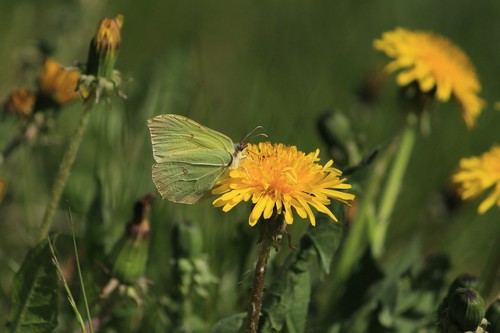
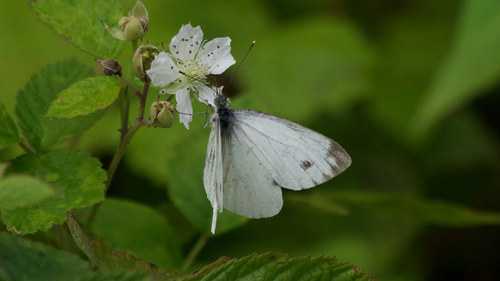
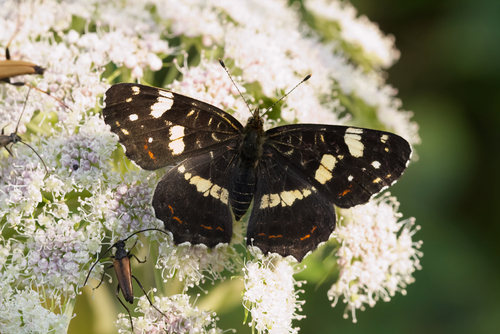
The closest relatives of the Oak Lantern that you can see in Bavarian Forest National Park (order Lepidoptera, Butterflies and Moths) are European Peacock Butterfly (about 40%), Common Blue (about 30%) and Meadow Brown (about 30%), with each one's daily chance of a sighting.

Where does the Oak Lantern sighting chance come from?

GBIF citizen-science records

It is estimated from how often the Oak Lantern is recorded against all the insects logged in Bavarian Forest National Park (16 verified sightings from 2019 to 2026), calibrated against known sighting rates. Figures are rounded to the nearest 10% because citizen-science data supports honest approximations, not decimals, and months with records from fewer than five people show "—". How it works.

← Back to Bavarian Forest National Park