Diploid Checkered Whiptail

Diploid Checkered Whiptail

Aspidoscelis tesselatus

Silhouette: Jose Carlos Arenas-Monroy · PhyloPic

LCLeast ConcernNTVUENCR
Daily sighting probability ~20% · Possible
at Big Bend National Park

In 3 days ~60% in a week ~90%

74 Verified sightings at Big Bend National Park From 2019 to 2026
93 In all 2 parks
June Best month
☀️ Diurnal When it's spotted

About the Diploid Checkered Whiptail

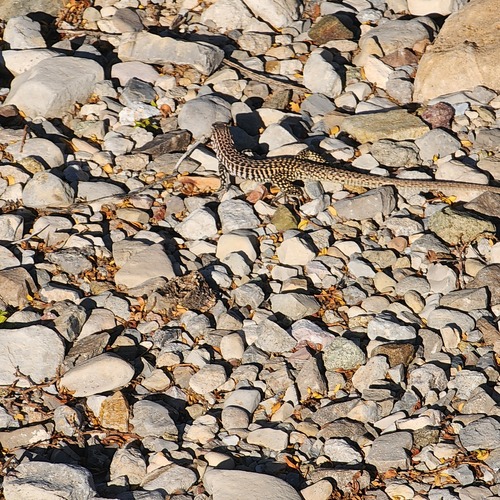
The checkered whiptail (Aspidoscelis tesselatus) is a species of lizard found in the southwestern United States in Colorado, Texas and New Mexico, and in northern Mexico in Chihuahua and Coahuila. Many sources believe that the species originated from the hybridization of the marbled whiptail, Aspidoscelis marmoratus, the plateau spotted whiptail, Aspidoscelis septemvittatus, and possibly the six-lined racerunner, Aspidoscelis sexlineatus. It is one of many lizard species known to be parthenogenic. It is sometimes referred to as the common checkered whiptail to differentiate it from several other species known as checkered whiptails.

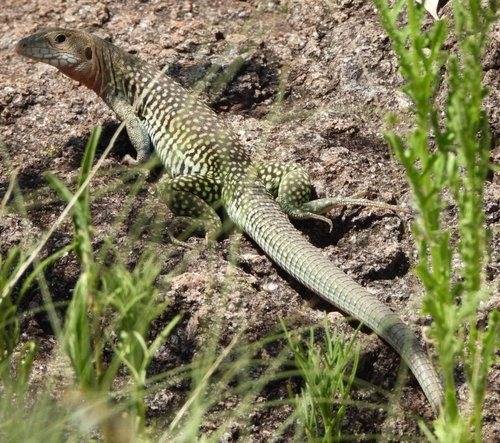
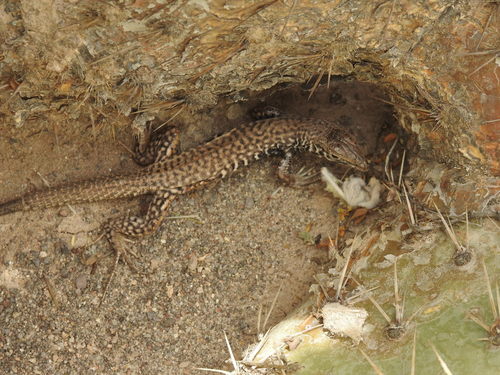
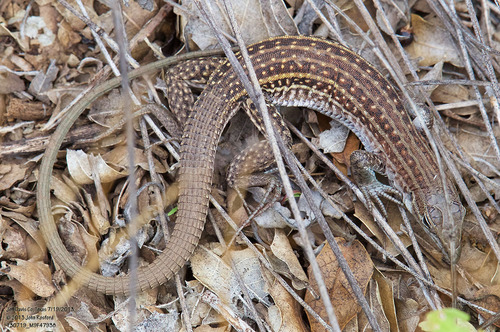
The checkered whiptail grows to about 4 inches in length. Their pattern and base coloration varies widely, with brown or black blotching, checkering or striping on a pale yellow or white base color. Their rear legs often have dark spotting, and their underside is usually white with dark flecking on the throat area. They are slender bodied, with a long tail.

Like other species of whiptail lizard, the checkered whiptail is diurnal and insectivorous. They are wary, energetic, and fast moving, darting for cover if approached... Wikipedia →

Global Distribution

Parks Where Found

# Park Country Daily sighting probability
1 Guadalupe Mountains National Park 🇺🇸 United States
~30%
2 Big Bend National Park 🇺🇸 United States
~20%

Before you go

What are the chances of seeing a Diploid Checkered Whiptail in Big Bend National Park?

Possible

About 20% of wildlife watchers report a Diploid Checkered Whiptail sighting in Big Bend National Park on a given day, based on 74 verified sightings from GBIF citizen-science data from 2019 to 2026. It is the 11th most-seen of the 48 reptiles we can rate there. Over three days the chance rises to about 60%, and over a week to about 90%, if each day is a fresh chance.

When is the best time to see a Diploid Checkered Whiptail in Big Bend National Park?

June

In that month about 40% of wildlife watchers report a Diploid Checkered Whiptail in Big Bend National Park on a given day, against under 5% in December to February, the lowest months.

What time of day is best to see a Diploid Checkered Whiptail?

Between 9 am and noon

Across all the parks we cover, that three-hour window holds the most Diploid Checkered Whiptail sightings with a recorded time, and about 9 in 10 of them come between 6 am and 6 pm: it is a daytime animal.

Is Big Bend National Park the best place to see a Diploid Checkered Whiptail?

2nd of 2

Of the 2 parks where we can rate Diploid Checkered Whiptail sightings, Big Bend National Park ranks 2nd at about 20%. The best odds are in Guadalupe Mountains National Park (United States, about 30%).

Which relatives of the Diploid Checkered Whiptail live in Big Bend National Park?

Same genus: Aspidoscelis

The closest relatives of the Diploid Checkered Whiptail that you can see in Big Bend National Park (genus Aspidoscelis, Northern Whiptails) are Plateau Spotted Whiptail (about 40%), Marbled Whiptail (about 30%) and Little Striped Whiptail (about 10%), with each one's daily chance of a sighting.

Where does the Diploid Checkered Whiptail sighting chance come from?

GBIF citizen-science records

It is estimated from how often the Diploid Checkered Whiptail is recorded against all the reptiles logged in Big Bend National Park (74 verified sightings from 2019 to 2026), calibrated against known sighting rates. Figures are rounded to the nearest 10% because citizen-science data supports honest approximations, not decimals, and months with records from fewer than five people show "—". How it works.

← Back to Big Bend National Park