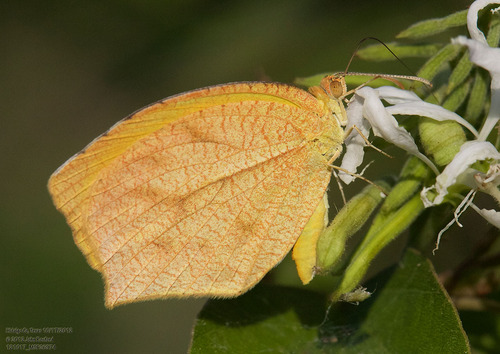
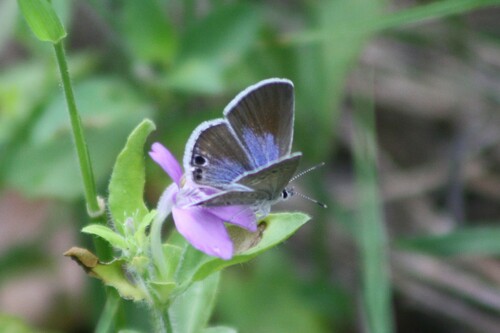
Little Yellow
Daily sighting probability ~10% · With luck
at Big Bend National Park

In 3 days ~20% in a week ~30%

6 Verified sightings at Big Bend National Park From 2019 to 2026
152 In all 7 parks
October Best month
☀️ Diurnal When it's spotted

About the Little Yellow

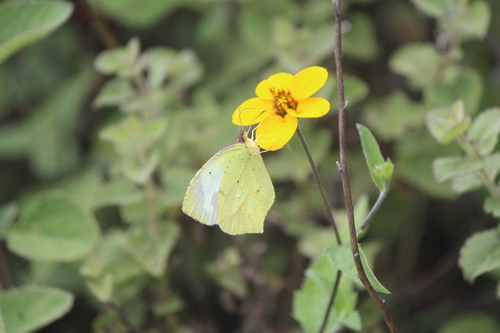
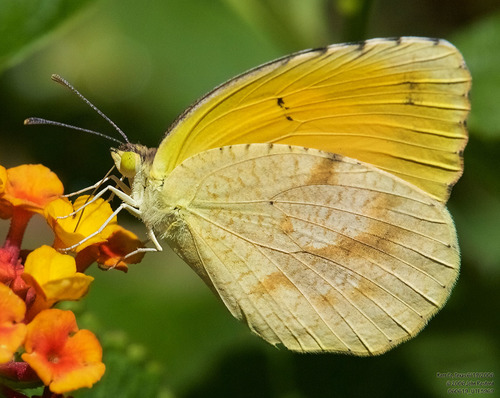
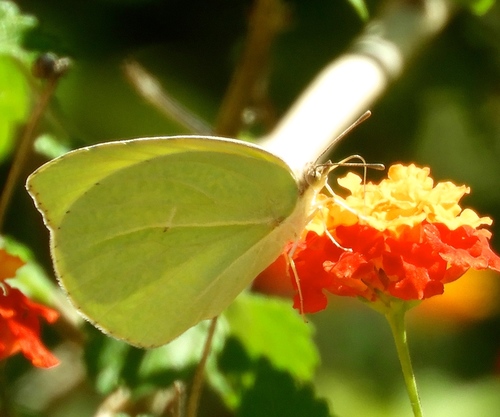
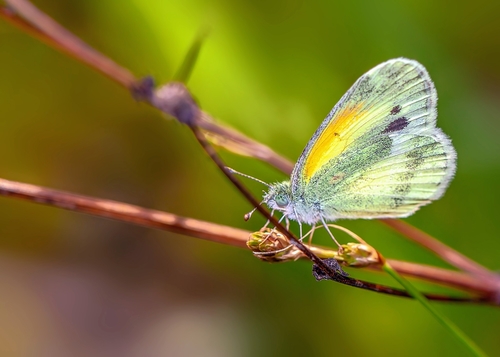
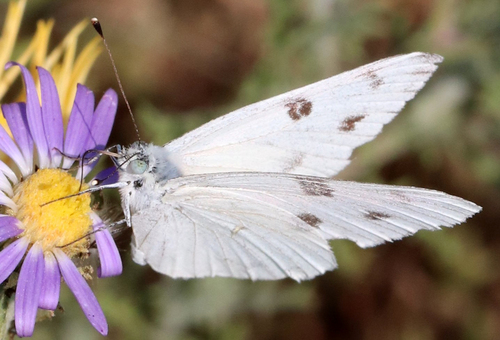
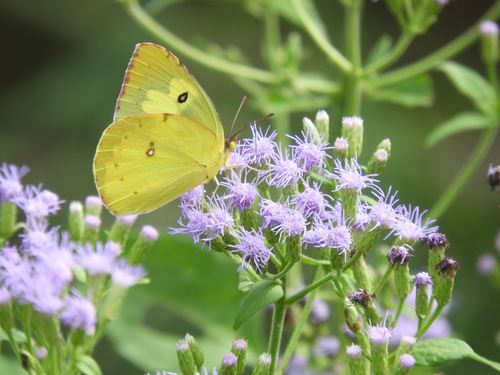
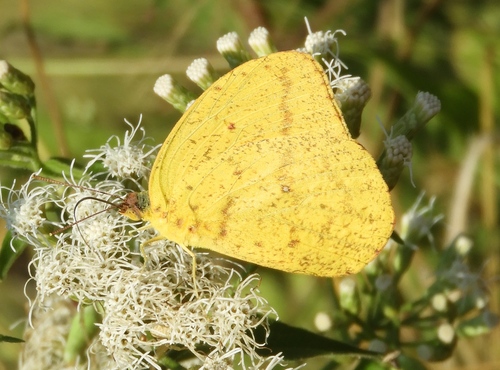
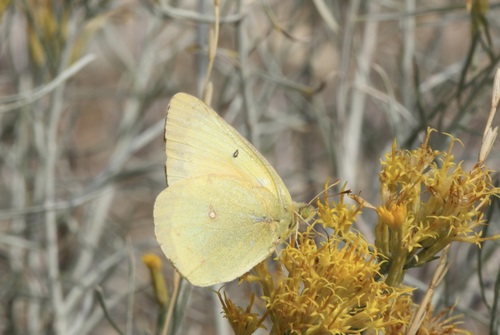
Eurema lisa, commonly known as the little yellow, little sulphur or little sulfur, is a butterfly species of subfamily Coliadinae that occurs in Central America and the southern part of North America. The wingspan is between 32 and 44 mm, not to be confused with the sleepy orange that is large and orange not yellow. The dorsal view of the forewing has a broad dark margin and the hindwing's ventral view has two basal blacks spots. Females have a white morph (alba). Males reflect ultraviolet.

The little yellow lives in the southern United States and as far south as Costa Rica and the Antilles. They can seasonally colonize the northern United States (and as far north as Quebec). Migration to Bermuda occurs, but it is not established. Within their range they can be seen in open areas, most commonly old fields.

In the southern part of its range there can be up to five broods per year, while in the northern range there are between one and three. During warm days males patrol for females so they can mate. Females lay eggs singly on the midveins or rachis of their host plant.

Source: Cassia fasciculata Cassia marilandica... Wikipedia →
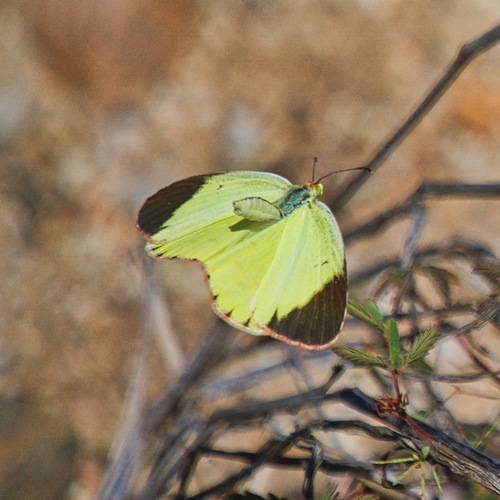
Global Distribution

Parks Where Found

# Park Country Daily sighting probability
1 Congaree National Park 🇺🇸 United States
~20%
2 Padre Island National Seashore 🇺🇸 United States
~20%
3 Merritt Island National Wildlife Refuge 🇺🇸 United States
~10%
4 Everglades National Park 🇺🇸 United States
~10%
5 Big Bend National Park 🇺🇸 United States
~10%
6 Cumbres de Monterrey National Park 🇲🇽 Mexico
<5%
7 Great Smoky Mountains National Park 🇺🇸 United States
<5%

Cities Where Found

# City Country Daily sighting probability
1 San Antonio 🇺🇸 United States
~20%
2 Austin 🇺🇸 United States
~10%
3 Houston 🇺🇸 United States
~10%
4 Dallas 🇺🇸 United States
~10%
5 Monterrey 🇲🇽 México
~10%
6 Chicago 🇺🇸 United States
<5%
7 Miami 🇺🇸 United States
<5%

Before you go

What are the chances of seeing a Little Yellow in Big Bend National Park?

With luck

About 10% of wildlife watchers report a Little Yellow sighting in Big Bend National Park on a given day, based on 6 verified sightings from GBIF citizen-science data from 2019 to 2026. It is the 255th most-seen of the 329 insects we can rate there. Over three days the chance rises to about 20%, and over a week to about 30%, if each day is a fresh chance.

When is the best time to see a Little Yellow in Big Bend National Park?

October

In that month about 20% of wildlife watchers report a Little Yellow in Big Bend National Park on a given day, against under 5% in December to July, the lowest months.

What time of day is best to see a Little Yellow?

Between 10 am and 1 pm

Across all the parks we cover, that three-hour window holds the most Little Yellow sightings with a recorded time, and nearly all of them come between 6 am and 6 pm: it is a daytime animal.

Where does the Little Yellow sighting chance come from?

GBIF citizen-science records

It is estimated from how often the Little Yellow is recorded against all the insects logged in Big Bend National Park (6 verified sightings from 2019 to 2026), calibrated against known sighting rates. Figures are rounded to the nearest 10% because citizen-science data supports honest approximations, not decimals, and months with records from fewer than five people show "—". How it works.

← Back to Big Bend National Park