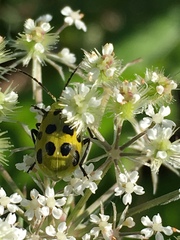
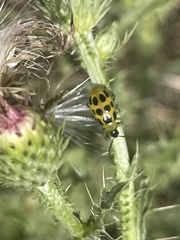
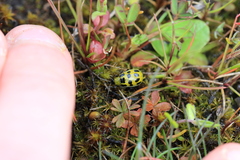
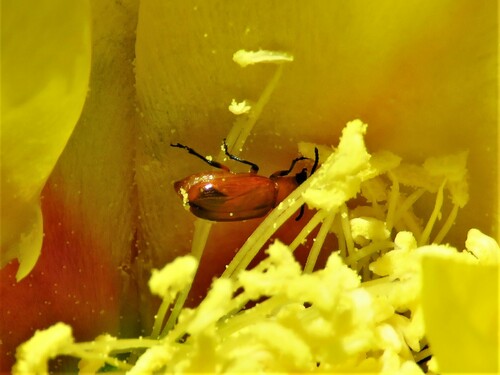
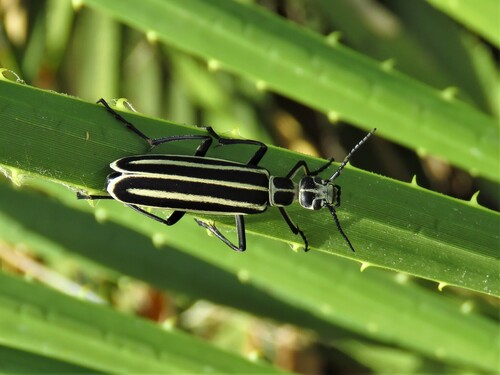
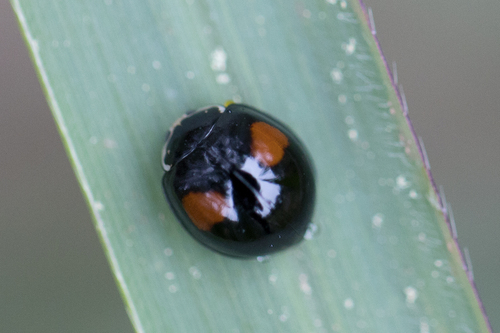
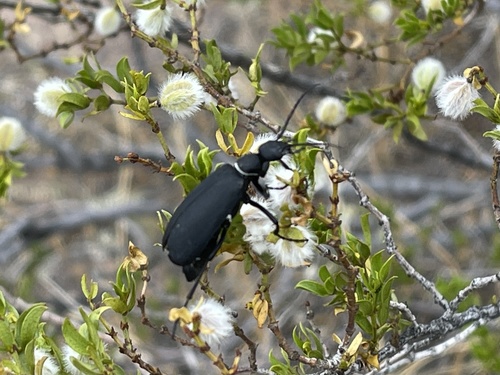
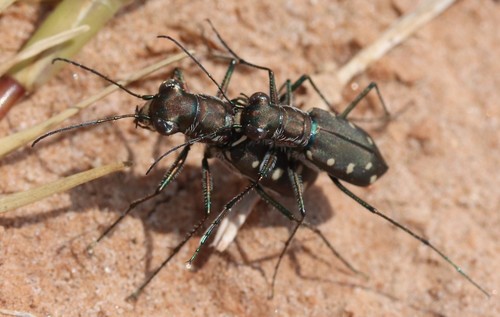
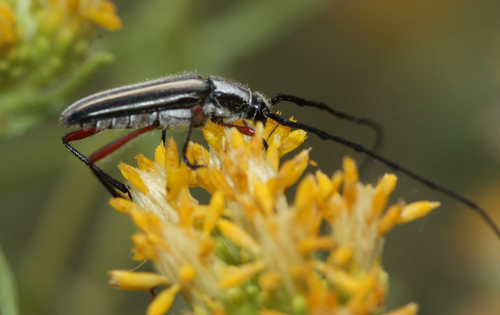
Spotted Cucumber Beetle

Spotted Cucumber Beetle

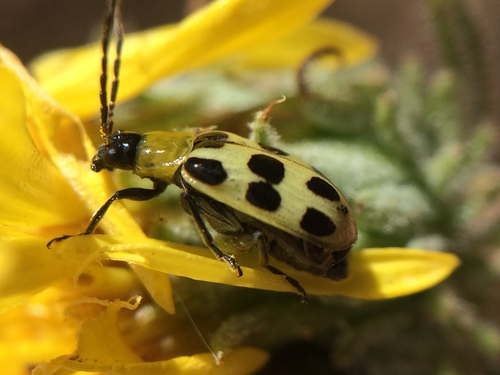
Diabrotica undecimpunctata

Daily sighting probability ~10% · With luck
at Big Bend National Park

In 3 days ~20% in a week ~40%

9 Verified sightings at Big Bend National Park From 2019 to 2026
262 In all 10 parks
October Best month
☀️ Diurnal When it's spotted

About the Spotted Cucumber Beetle

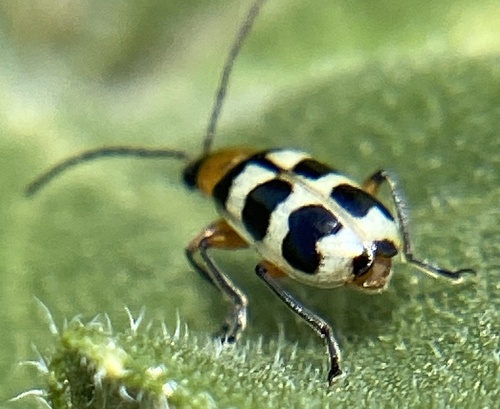
Diabrotica undecimpunctata, the spotted cucumber beetle or southern corn rootworm, is a species of cucumber beetle that is native to North America. The species can be a major agricultural pest insect in North America. Spotted cucumber beetles cause damage to crops in the larval and adult stages of their life cycle. Larvae feed on the roots of the emerging plants, which causes the most damage since the young plants are more vulnerable. In the adult stage the beetles cause damage by eating the flowers, leaves, stems, and fruits of the plant. The beetles can also spread diseases such as bacterial wilt and mosaic virus.

The three primary types of cucumber beetles are the spotted cucumber beetle, the banded cucumber beetle (Diabrotica balteata), and the striped cucumber beetle (Acalymma vittatum). In North America, the spotted and striped cucumber beetles are the most commonly encountered varieties.

The spotted cucumber beetle has three subspecies, each with a different common name: Diabrotica undecimpunctata howardi – spotted cucumber beetle or southern corn rootworm Diabrotica undecimpunctata tenella – western cucumber beetle

Diabrotica undecimpunctata undecimpunctata... Wikipedia →
Global Distribution

Parks Where Found

# Park Country Daily sighting probability
1 Point Pelee National Park 🇨🇦 Canada
~20%
2 Shenandoah National Park 🇺🇸 United States
~20%
3 Great Smoky Mountains National Park 🇺🇸 United States
~20%
4 Redwood National Park 🇺🇸 United States
~10%
5 Padre Island National Seashore 🇺🇸 United States
~10%
6 Yosemite National Park 🇺🇸 United States
~10%
7 Big Bend National Park 🇺🇸 United States
~10%
8 Saguaro National Park 🇺🇸 United States
<5%
9 Acadia National Park 🇺🇸 United States
<5%
10 Cumbres de Monterrey National Park 🇲🇽 Mexico
<5%

Cities Where Found

# City Country Daily sighting probability
1 Dallas 🇺🇸 United States
~20%
2 Austin 🇺🇸 United States
~20%
3 Baltimore 🇺🇸 United States
~10%
4 Washington 🇺🇸 United States
~10%
5 Detroit 🇺🇸 United States
~10%
6 Portland 🇺🇸 United States
~10%
7 San Antonio 🇺🇸 United States
~10%
8 Houston 🇺🇸 United States
~10%
9 Philadelphia 🇺🇸 United States
~10%
10 San Francisco 🇺🇸 United States
~10%

Before you go

What are the chances of seeing a Spotted Cucumber Beetle in Big Bend National Park?

With luck

About 10% of wildlife watchers report a Spotted Cucumber Beetle sighting in Big Bend National Park on a given day, based on 9 verified sightings from GBIF citizen-science data from 2019 to 2026. It is the 193rd most-seen of the 329 insects we can rate there. Over three days the chance rises to about 20%, and over a week to about 40%, if each day is a fresh chance.

When is the best time to see a Spotted Cucumber Beetle in Big Bend National Park?

September and October

In those months about 20% of wildlife watchers report a Spotted Cucumber Beetle in Big Bend National Park on a given day, against under 5% in January to August, the lowest months. Those are among Big Bend National Park's wettest months, with about 35 mm of rain a month against 10 mm in April.

What time of day is best to see a Spotted Cucumber Beetle?

Between noon and 3 pm

Across all the parks we cover, that three-hour window holds the most Spotted Cucumber Beetle sightings with a recorded time, and about 9 in 10 of them come between 6 am and 6 pm: it is a daytime animal.

Where does the Spotted Cucumber Beetle sighting chance come from?

GBIF citizen-science records

It is estimated from how often the Spotted Cucumber Beetle is recorded against all the insects logged in Big Bend National Park (9 verified sightings from 2019 to 2026), calibrated against known sighting rates. Figures are rounded to the nearest 10% because citizen-science data supports honest approximations, not decimals, and months with records from fewer than five people show "—". How it works.

← Back to Big Bend National Park