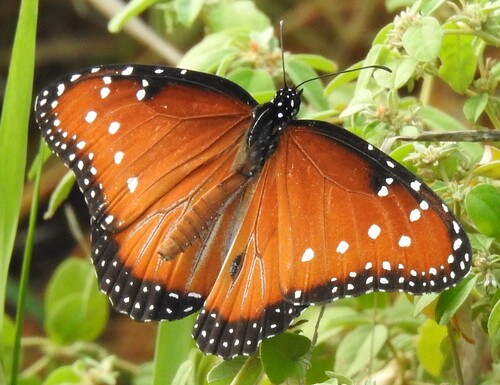
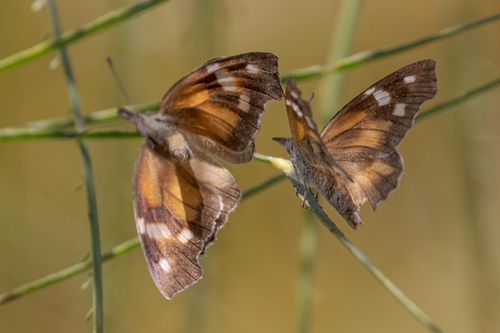
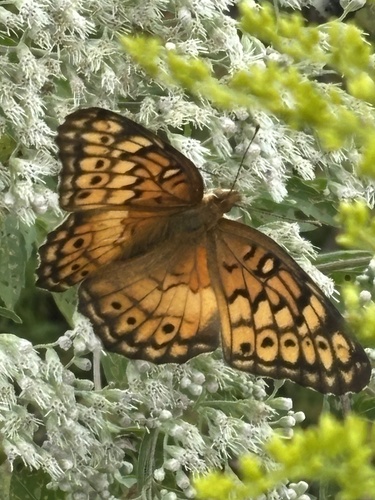
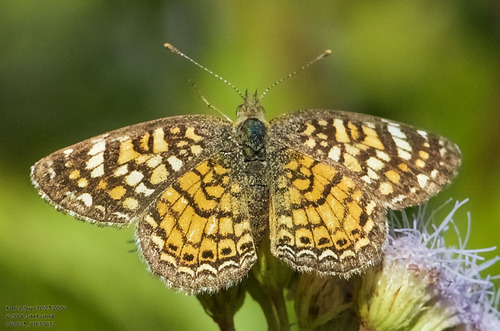
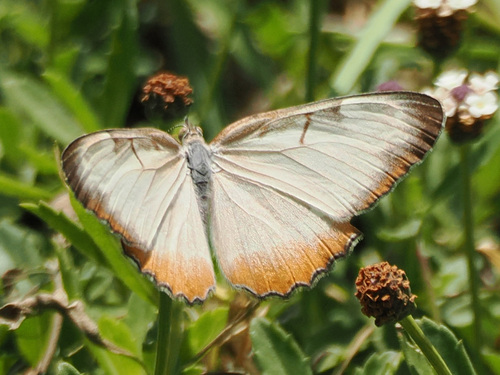
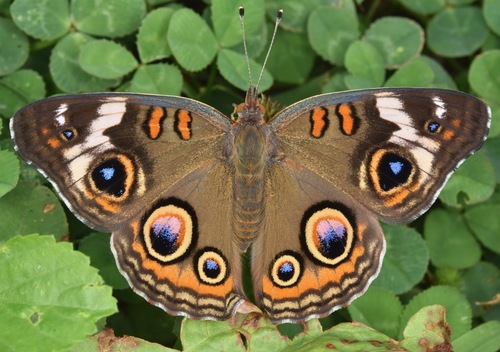
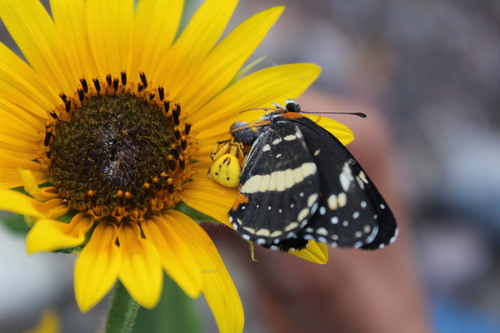
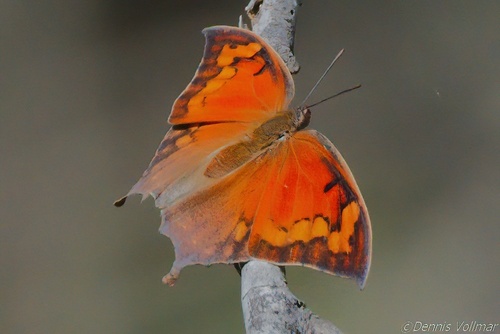
Texan Crescent

Texan Crescent

Anthanassa texana

Daily sighting probability ~20% · Possible
at Big Bend National Park

In 3 days ~40% in a week ~70%

49 Verified sightings at Big Bend National Park From 2019 to 2026
457 In all 5 parks
August Best month
☀️ Diurnal When it's spotted

About the Texan Crescent

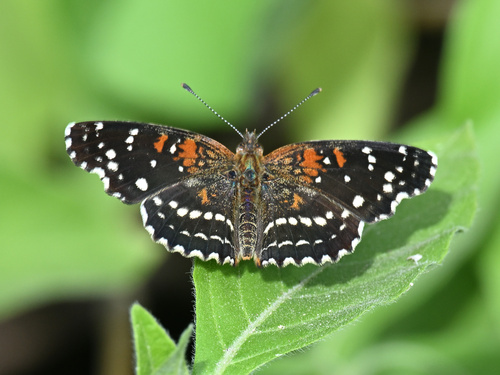
Anthanassa texana, the Texan crescentspot, is a species of butterfly in the family Nymphalidae. It is found from Guatemala north through Mexico to southern California, east across the southern United States to northern Florida, Georgia and South Carolina. Strays may be found up to Arkansas, Missouri, Illinois, South Dakota, and central Nevada. The habitat consists of deserts, dry gulches, open areas, streamsides, road edges, and city parks.

The wingspan is 32–48 mm. Adults are on wing from March to November in southern Florida and Arizona. They are on wing year round in southern Texas and the tropics. There are several generations per year. Adults feed on flower nectar.

The larvae feed on the leaves of various low-growing plants of the family Acanthaceae, including Diciliptera brachiata, Jacobinia carnea, Beloperone, Siphonoglossa, and Ruellia species. Wikipedia →
Global Distribution

Parks Where Found

# Park Country Daily sighting probability
1 Cabo Pulmo National Park 🇲🇽 Mexico
~30%
2 Bahía de Loreto National Park 🇲🇽 Mexico
~30%
3 Saguaro National Park 🇺🇸 United States
~20%
4 Cumbres de Monterrey National Park 🇲🇽 Mexico
~20%
5 Big Bend National Park 🇺🇸 United States
~20%

Cities Where Found

# City Country Daily sighting probability
1 Puebla 🇲🇽 México
~20%
2 Mexico City 🇲🇽 México
~20%
3 San Luis Potosí 🇲🇽 México
~10%
4 Monterrey 🇲🇽 México
~10%
5 Guadalajara 🇲🇽 México
~10%
6 Torreón 🇲🇽 México
~10%
7 San Antonio 🇺🇸 United States
~10%
8 Austin 🇺🇸 United States
~10%
9 Houston 🇺🇸 United States
~10%
10 Mesa 🇺🇸 United States
~10%

Before you go

What are the chances of seeing a Texan Crescent in Big Bend National Park?

Possible

About 20% of wildlife watchers report a Texan Crescent sighting in Big Bend National Park on a given day, based on 49 verified sightings from GBIF citizen-science data from 2019 to 2026. It is the 38th most-seen of the 329 insects we can rate there. Over three days the chance rises to about 40%, and over a week to about 70%, if each day is a fresh chance.

When is the best time to see a Texan Crescent in Big Bend National Park?

March–June, August–September and November

In those months about 20% of wildlife watchers report a Texan Crescent in Big Bend National Park on a given day, against under 5% in February and December, the lowest months.

What time of day is best to see a Texan Crescent?

Between 11 am and 2 pm

Across all the parks we cover, that three-hour window holds the most Texan Crescent sightings with a recorded time, and nearly all of them come between 6 am and 6 pm: it is a daytime animal.

Which relatives of the Texan Crescent live in Big Bend National Park?

Same family: Nymphalidae

The closest relatives of the Texan Crescent that you can see in Big Bend National Park (family Nymphalidae, Brush-footed Butterflies) are Empress Leilia (about 40%), Queen (about 30%) and Limenitis bredowii (about 30%), with each one's daily chance of a sighting.

Where does the Texan Crescent sighting chance come from?

GBIF citizen-science records

It is estimated from how often the Texan Crescent is recorded against all the insects logged in Big Bend National Park (49 verified sightings from 2019 to 2026), calibrated against known sighting rates. Figures are rounded to the nearest 10% because citizen-science data supports honest approximations, not decimals, and months with records from fewer than five people show "—". How it works.

← Back to Big Bend National Park