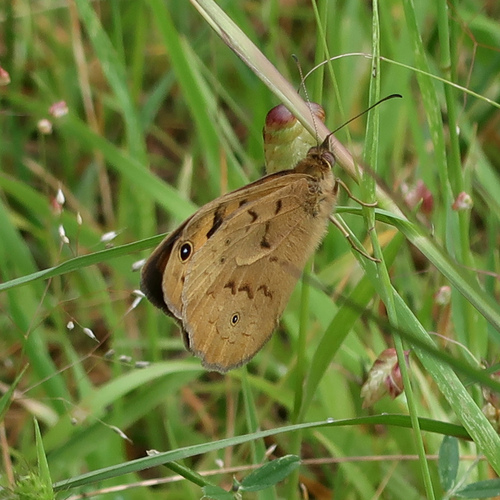
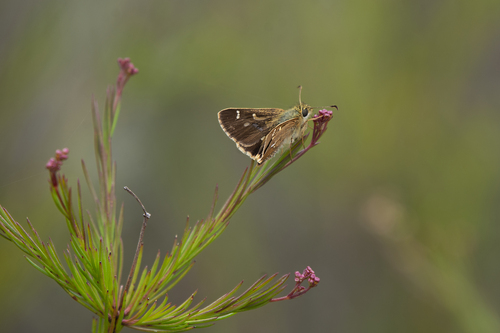
Barred Skipper

Barred Skipper

Dispar compacta

Daily sighting probability <5% · Rare
at Blue Mountains National Park

In 3 days ~10% in a week ~30%

9 Verified sightings at Blue Mountains National Park From 2019 to 2026
67 In all 3 parks
February Best month
☀️ Diurnal When it's spotted

About the Barred Skipper

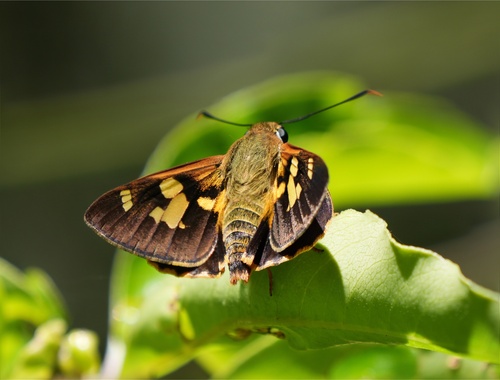
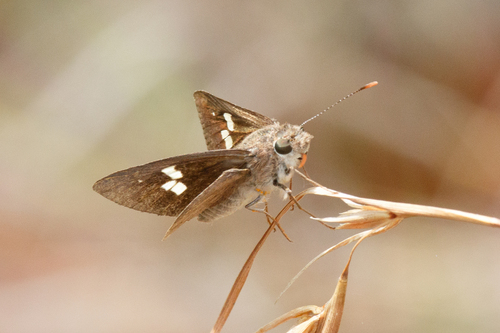
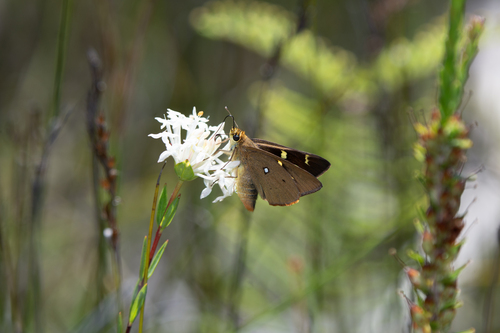
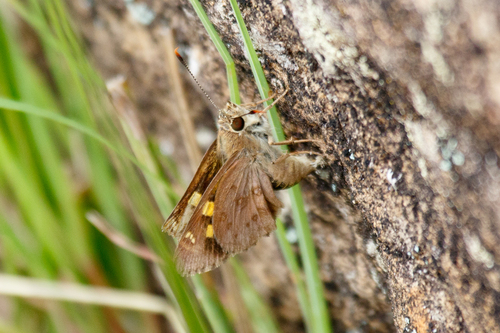
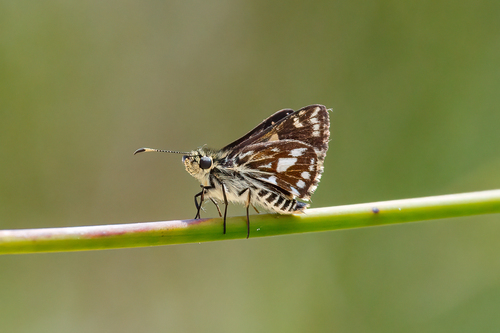
Dispar compacta, commonly known as the dispar skipper, barred skipper, or barred grass-skipper, is a species of butterfly in the family Hesperiidae. It was described by Arthur Gardiner Butler in 1882 as Telesto compacta and is endemic to eastern Australia.

Dispar compacta occurs in the Australian Capital Territory, New South Wales, Queensland, South Australia, and Victoria. It can be found in moist grasslands, open forests, and urban parks and gardens in shaded areas where grasses grow.

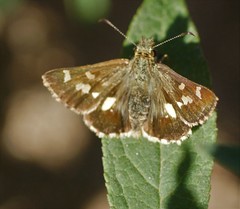
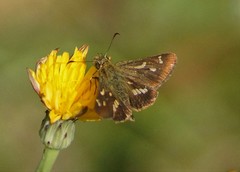
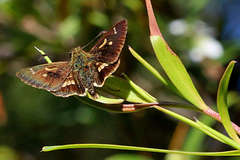
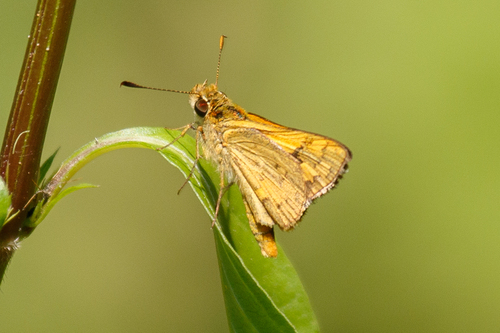
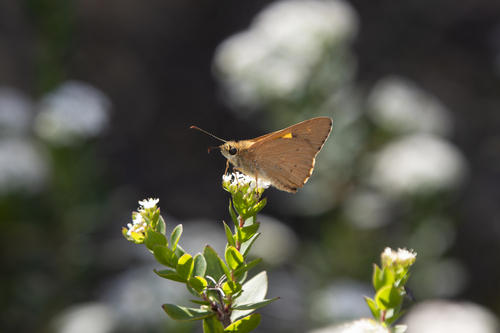
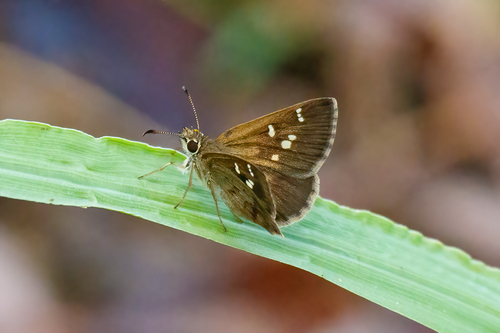
Dispar compacta adults are brown above and orange-brown below with white or cream-coloured markings on the wings and a wingspan of approximately 23 mm (0.91 in). Males and females exhibit different markings on the wings. From above, the forewings of males each have a cream-coloured hook-shaped marking, a central spot, a band of three subapical spots, and a central band of grey sex scales, while the hindwings each have a band of four cream-coloured postmedian spots. From above, the forewings of females each have two central spots, a band of three subapical spots, a spot near the middle of the leading edge of the forewing, and a spot near the trailing edge... Wikipedia →
Global Distribution

Parks Where Found

# Park Country Daily sighting probability
1 Great Otway National Park 🇦🇺 Australia
~10%
2 Wilsons Promontory National Park 🇦🇺 Australia
~10%
3 Blue Mountains National Park 🇦🇺 Australia
<5%

Cities Where Found

# City Country Daily sighting probability
1 Melbourne 🇦🇺 Australia
~10%

Before you go

What are the chances of seeing a Barred Skipper in Blue Mountains National Park?

Rare

Under 5% of wildlife watchers report a Barred Skipper sighting in Blue Mountains National Park on a given day, based on 9 verified sightings from GBIF citizen-science data from 2019 to 2026. It is the 554th most-seen of the 789 insects we can rate there. Over three days the chance rises to about 10%, and over a week to about 30%, if each day is a fresh chance.

When is the best time to see a Barred Skipper in Blue Mountains National Park?

February and March

In those months about 10% of wildlife watchers report a Barred Skipper in Blue Mountains National Park on a given day, against under 5% in April to January, the lowest months. Those are among Blue Mountains National Park's wettest months, with about 140 mm of rain a month against 40 mm in May.

What time of day is best to see a Barred Skipper?

Between 11 am and 2 pm

Across all the parks we cover, that three-hour window holds the most Barred Skipper sightings with a recorded time, and nearly all of them come between 6 am and 6 pm: it is a daytime animal.

Is Blue Mountains National Park the best place to see a Barred Skipper?

3rd of 3

Of the 3 parks where we can rate Barred Skipper sightings, Blue Mountains National Park ranks 3rd at under 5%. The best odds are in Great Otway National Park (Australia, about 10%) and Wilsons Promontory National Park (Australia, about 10%).

Which relatives of the Barred Skipper live in Blue Mountains National Park?

Same family: Hesperiidae

The closest relatives of the Barred Skipper that you can see in Blue Mountains National Park (family Hesperiidae, Skippers) are Yellow-Banded Dart (about 10%), Splendid Ochre (about 10%) and Eastern Iris-Skipper (about 10%), with each one's daily chance of a sighting.

Where does the Barred Skipper sighting chance come from?

GBIF citizen-science records

It is estimated from how often the Barred Skipper is recorded against all the insects logged in Blue Mountains National Park (9 verified sightings from 2019 to 2026), calibrated against known sighting rates. Figures are rounded to the nearest 10% because citizen-science data supports honest approximations, not decimals, and months with records from fewer than five people show "—". How it works.

← Back to Blue Mountains National Park