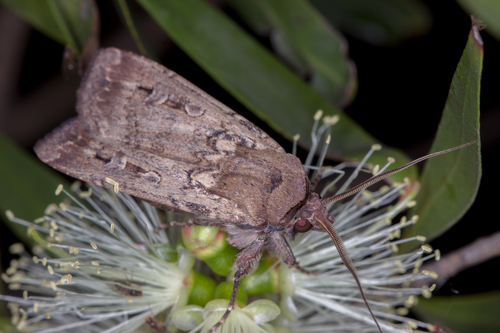
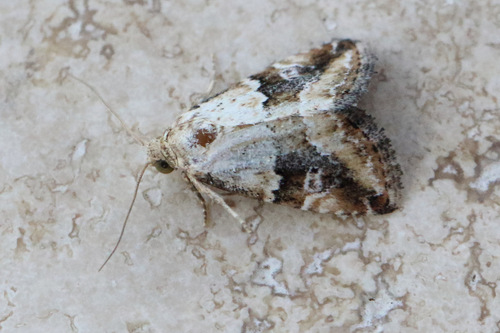
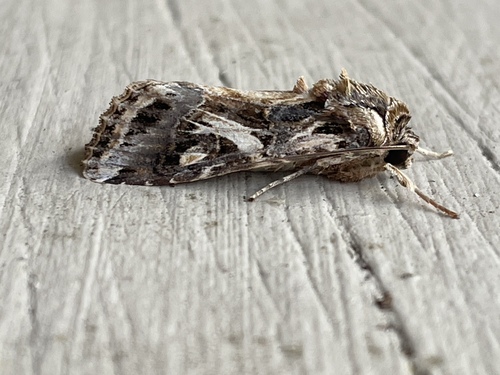
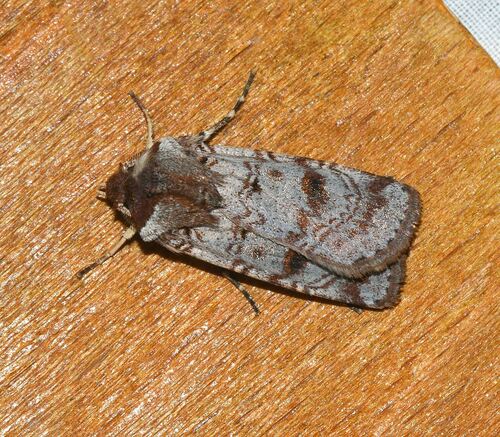
Scar Bank Gem

Scar Bank Gem

Ctenoplusia limbirena

Daily sighting probability <5% · Rare
at Blue Mountains National Park

In 3 days ~10% in a week ~20%

5 Verified sightings at Blue Mountains National Park From 2019 to 2026
12 In all 2 parks
February Best month
🌅 Crepuscular When it's spotted

About the Scar Bank Gem

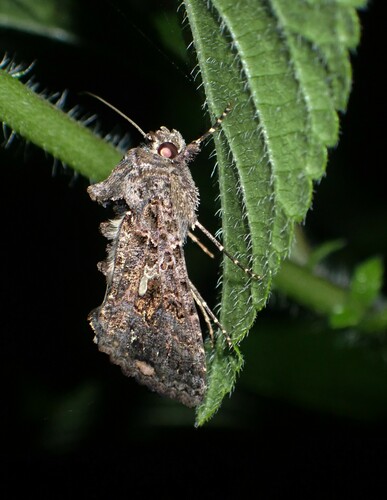
Ctenoplusia limbirena, the Scar Bank gem, or silver U-tail, is a moth of the family Noctuidae. It is found in south-western Europe, Africa (Lesotho, the Cape Province, KwaZulu-Natal, Transvaal, Mozambique, Zimbabwe, Zambia, Botswana, Malawi and eastern and equatorial Africa), the Canary Islands, Arabia, the southern Himalayas, India, Sri Lanka, Indochina to south-eastern China, Taiwan, Sulawesi, Bali and Timor. In New Zealand, it has been established since 2011.

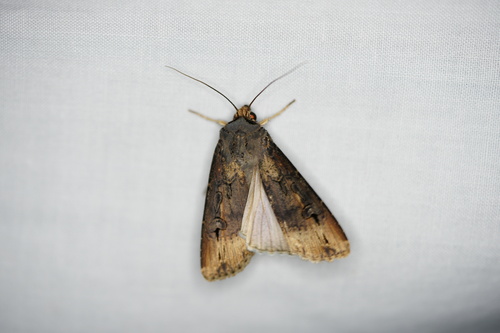
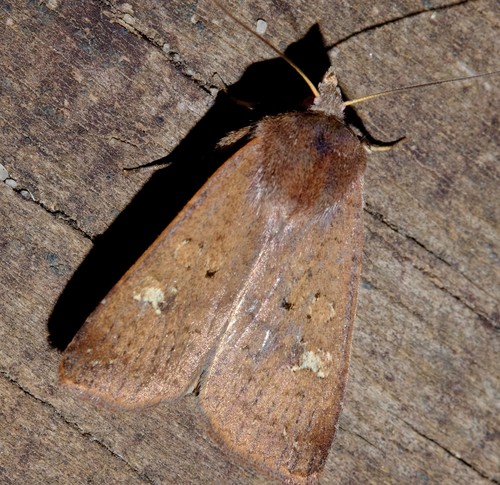
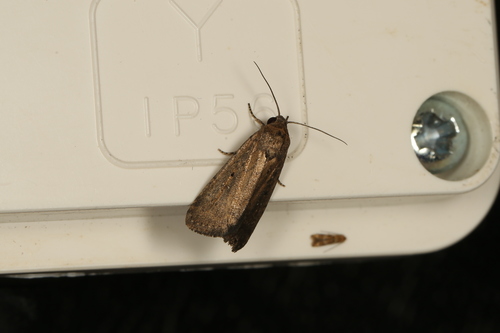
The wingspan is 40–45 mm. Palpi with short third joint. Hind femur of male not tufted with long hair. Head and thorax clothed with grey and black scales. Abdomen pale with dark dorsal tufts. Forewings fuscous with a copper tinged. There are ill-defined darker medial and submarginal patches can be seen. The minutely waved double sub-basal and antemedial lines with silvery specks on them. Orbicular and reniform small, indistinct and with pink edges. There is a prominent silvery "Y-mark" can be seen below the cell. The minutely waved double postmedial line angled inwards above vein 1. There are traces of an irregularly sinuous sub-marginal line and a small pinkish patch found on center of outer margin. A marginal... Wikipedia →
Global Distribution

Parks Where Found

# Park Country Daily sighting probability
1 Blue Mountains National Park 🇦🇺 Australia
<5%
2 Kruger National Park 🇿🇦 South Africa
<5%

Cities Where Found

# City Country Daily sighting probability
1 Auckland 🇳🇿 New Zealand
~20%
2 Porto 🇵🇹 Portugal
~10%
3 Lisbon 🇵🇹 Portugal
<5%
4 Melbourne 🇦🇺 Australia
<5%

Before you go

What are the chances of seeing a Scar Bank Gem in Blue Mountains National Park?

Rare

Under 5% of wildlife watchers report a Scar Bank Gem sighting in Blue Mountains National Park on a given day, based on 5 verified sightings from GBIF citizen-science data from 2019 to 2026. It is the 681st most-seen of the 789 insects we can rate there. Over three days the chance rises to about 10%, and over a week to about 20%, if each day is a fresh chance.

When is the best time to see a Scar Bank Gem in Blue Mountains National Park?

February, April and October

In those months about 10% of wildlife watchers report a Scar Bank Gem in Blue Mountains National Park on a given day, against under 5% in March, May–September and November–January, the lowest months.

What time of day is best to see a Scar Bank Gem?

Between 7 and 10 pm

Across all the parks we cover, that three-hour window holds the most Scar Bank Gem sightings with a recorded time, and about 7 in 10 of them come between 6 pm and 6 am: it is most active around dawn and dusk.

Is Blue Mountains National Park the best place to see a Scar Bank Gem?

Yes

Of the 2 parks where we can rate Scar Bank Gem sightings, Blue Mountains National Park has the highest daily chance: under 5%. Next come Kruger National Park (South Africa, under 5%).

Which relatives of the Scar Bank Gem live in Blue Mountains National Park?

Same family: Noctuidae

The closest relatives of the Scar Bank Gem that you can see in Blue Mountains National Park (family Noctuidae, Cutworm Moths and Allies) are Brown Cutworm (about 20%), Green-Blotched Moth (about 20%) and Bogong Moth (about 10%), with each one's daily chance of a sighting.

Where does the Scar Bank Gem sighting chance come from?

GBIF citizen-science records

It is estimated from how often the Scar Bank Gem is recorded against all the insects logged in Blue Mountains National Park (5 verified sightings from 2019 to 2026), calibrated against known sighting rates. Figures are rounded to the nearest 10% because citizen-science data supports honest approximations, not decimals, and months with records from fewer than five people show "—". How it works.

← Back to Blue Mountains National Park